Witherspoon Institute
2026 Summer Seminars
Held in Princeton, NJ
For rising high school juniors and seniors, undergraduates, and graduate students.
Keep up with the conversation! Subscribe to Public Discourse today.
Book Reviews
This book illuminates the path the modern conservative movement has taken heretofore and therefore will be an important aid to conservatism’s ongoing quest for self-definition.
By Joshua Katz
The first word of Emily Wilson’s new translation of the Iliad signals that this is not quite the Homer we’re used to. You may well ask whether anyone today can be used to an epic, conventionally attributed to a blind bard named Homer, that was composed some 2,750 years ago in a stylized form of Greek that no one spoke natively. But surprisingly, there have been more than a dozen translations into English in the past thirty-five years alone.
By Ronen Shoval
Hörcher adeptly elucidates how Scruton’s belief in the intertwining of aesthetics, morality, and politics stands as a bulwark against the often fragmented worldview of today’s modern thinkers.
By co-creating with God, we imitate his goodness, participate in his governance, and bring more of creation into the divine unity.
The liberal tradition is an ongoing conversation in which participants speak in a wide range of accents, reflecting the various “nouns” to which speakers are committed: liberal individualists and liberal communitarians, liberal nationalists and liberal internationalists, liberal believers and liberal skeptics, liberal socialists and—yes—liberal free marketeers.
At the moment, large language models are nothing like us, however easy it is for us to anthropomorphize their outputs. But as AIs develop, it will become increasingly necessary to ask: How much do we want them to become like us? Answering that question will certainly require human wisdom.
In his impressive 2020 book, Carl Trueman rightly exhorts readers to solidify their commitments to God and moral truth in a world of “expressive individualism.” But by reading human nature through the Marxist-Hegelian lens of Alasdair MacIntyre and Charles Taylor, he undermines the true individualism at the heart of the ethics that he wants to defend.
Nicholas Spencer’s new book is an important resource for anyone who wishes to understand the scientific and religious entanglements that have shaped, and continue to frame, our views of God, humanity, and the cosmos.
In her new book A Philosopher Looks at the Religious Life, Zena Hitz situates her philosophical ponderings within the context of her own life, here spotlighting a crisis precipitated by her conversion to the Catholic faith. Like Abraham about to sacrifice his son Isaac at the Lord’s behest, Hitz realizes that unconditional love of God, “wholehearted commitment without compromise,” might demand the renunciation even of what she has held most dear.
Long Reads
By Serena Sigillito and Erika Bachiochi
The question that divides us is how we ought to respond to reproductive asymmetry: the reality that women carry disproportionate burdens due to our special role in human reproduction. What makes one a feminist is the view that this basic inequality at the heart of reproduction is one that deserves, in justice, an affirmative cultural response. We wish not only for maternity to be celebrated for the true privilege it most certainly is, but also for women to be encouraged and supported in other contributions they make. This requires that the burdens of childbearing ought to be shared not only within the family, but also across the wider society too.
By Oren Cass and Bradford Littlejohn
If we think there’s too much government regulation, then the authentically conservative solution is not to say, “Well, let’s just try to operate a landscape of isolated individuals jostling in a competitively economic marketplace,” but “Let’s create institutions of countervailing power so that where exploitation is happening, the people themselves are equipped to resist it, and the government doesn’t need to intervene to fix it.” If designed correctly, a system of sectoral labor unions can actually help achieve the conservative goal of limited government.

Liberal justifications of liberal education are no longer effective. Teachers of humanities need a different way of defending the value of what we do and love. The Renaissance can teach us how to make a case for the study of old books that is compatible with the values of a pluralist society.
By Thomas Pink
Integralism delivers a more realistic view of how states actually function—including states that are secular—than do models currently dominant in political and legal philosophy.
By Hadley Arkes and Robert T. Miller
Hadley Arkes and Robert Miller go one more round on the moral norms that govern speech and the government’s authority in prohibiting immoral speech.
Newman is a model of stability amid hostilities that arise from without. But he is also a model for spiritual resistance to the suspicion and distrust that arise within one’s own ranks.
Christians cannot support so-called “Fairness For All” for this overarching reason: it is grounded in an unbiblical conception of the human person. The Scripture will not allow us to see any ungodly “orientation” or “identity” as essential to our humanity, as directed toward our flourishing, and thus enshrined in law as a protected category.
The people most harmed by this agenda are seriously ill people hearing from society and physicians that death by overdose will end their problems; other patients suffering from a reduced commitment to care; people with disabilities who are next in line to be seen as a “burden” on others; and lonely and depressed people of any age, seduced by the message that suicide is a positive solution. Adapted from a lecture delivered in June 2019 at the Vita Institute, an educational program for pro-life leaders sponsored by the University of Notre Dame's de Nicola Center for Ethics and Culture.
By Jane Robbins
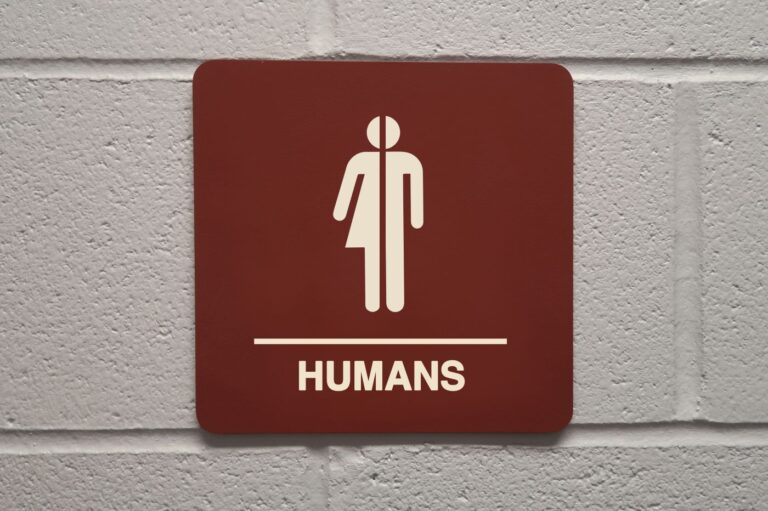
The transgender castle that radicals have constructed by sheer force of will is built on shifting sand without supports of any kind. The wave that will sweep it away is gaining strength. May the time come soon when we will all say, with observers of past hysterias, “How could we have believed that?”
Newsletters
By The Editors
In celebration of our tenth anniversary, we're revisiting the most popular essays Public Discourse has ever published. Although we publish on a diverse array of topics, our most popular pieces tend to be first-person narratives on hot-button social issues, such as marriage, sexuality, and gender. These essays pair personal experience with philosophical analysis and solid social science.
Don't miss Public Discourse Editor Ryan T. Anderson's picks for the best articles we've published this quarter!
By The Editors
On August 2, 2018, Pope Francis announced an update to the Catechism of the Catholic Church, making a prohibition on the death penalty official Catholic teaching. Prior to this change, many scholars believed that the historic teaching of the Church did not declare capital punishment intrinsically immoral, even if the practice is, as a matter of prudence, not required in countries with modern prison systems that can safely isolate dangerous criminals. Other scholars argued that the natural law duty to respect all human life does in fact render any intentional taking of human life morally unacceptable, and that this development of doctrine does not contradict any infallible teaching.
The articles below lay out this debate, with clear summaries of the arguments on both sides.
Don't miss Public Discourse Editor Ryan T. Anderson's picks for the best articles we've published this quarter!
Don't miss Public Discourse Editor Ryan T. Anderson's picks for the best articles we've published this quarter.
By The Editors
Should business owners be allowed to discriminate against their customers in light of their religious or moral convictions? With the Supreme Court case Masterpiece Cakeshop v. Colorado Civil Rights Commission in mind, these authors staunchly defend our constitutional right to free exercise of religion.
Don't miss PD Editor Ryan T. Anderson's picks for the best articles we've published this quarter.
By The Editors
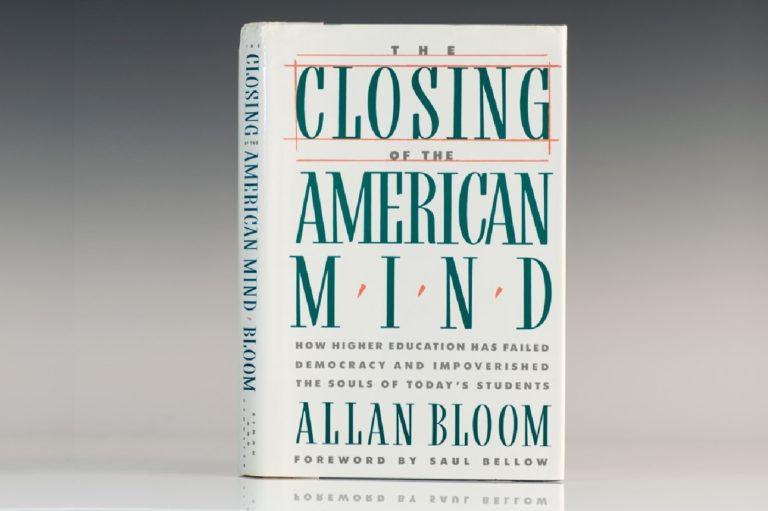
All is not well in America—or in the University. Allan Bloom’s The Closing of the American Mind offers a profound and compelling diagnosis of the common illness infecting them both and of the intimate connection between liberal education and liberty. A best-seller from its release in 1987, Bloom offers an enlightening exposition of the state of education and culture in his decade that is eerily prophetic of our current environment. In commemoration of the thirtieth anniversary of the book, this symposium assesses and comments on Bloom's three main themes: students, American Nihilism, and the university.