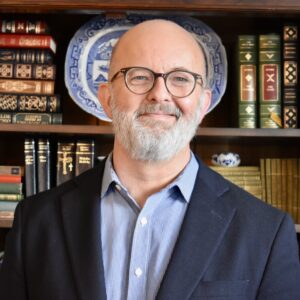
Bryan T. McGraw is Dean of Natural and Social Sciences, Director of the Aequitas Fellows Program, and a Professor of Politics and International Relations at Wheaton College. His first book, Faith in Politics: Religion and Liberal Democracy, was published in 2010 by Cambridge University Press. He is the co-editor of Natural Law and Evangelical Political Thought and has published work in Perspectives on Political Science, Critical Review of Social and Political Philosophy, Political Studies, and several other places. He teaches classes on classical and medieval political thought, modern political thought, church and state, and political ethics. His co-authored book Hopeful Realism: Evangelical Natural Law and Democratic Politics was published in early 2025.




| Cookie | Duration | Description |
|---|---|---|
| cookielawinfo-checkbox-analytics | 11 months | This cookie is set by GDPR Cookie Consent plugin. The cookie is used to store the user consent for the cookies in the category "Analytics". |
| cookielawinfo-checkbox-functional | 11 months | The cookie is set by GDPR cookie consent to record the user consent for the cookies in the category "Functional". |
| cookielawinfo-checkbox-necessary | 11 months | This cookie is set by GDPR Cookie Consent plugin. The cookies is used to store the user consent for the cookies in the category "Necessary". |
| cookielawinfo-checkbox-others | 11 months | This cookie is set by GDPR Cookie Consent plugin. The cookie is used to store the user consent for the cookies in the category "Other. |
| cookielawinfo-checkbox-performance | 11 months | This cookie is set by GDPR Cookie Consent plugin. The cookie is used to store the user consent for the cookies in the category "Performance". |
| viewed_cookie_policy | 11 months | The cookie is set by the GDPR Cookie Consent plugin and is used to store whether or not user has consented to the use of cookies. It does not store any personal data. |