













What counts as serious? At what point does difficulty signal a disability? Much of that is up to the disabled one, whose lived experience is decisive.   
The Talmudic and rabbinic tradition diverges from the latest encyclical, and the divergence highlights a paradox in the papal logic. Leo XIV’s strongest move, his categorical prohibition against the use of AI to make “lethal or otherwise irreversible decisions,” demands a more principled distinction between the Switchblade and the CyberKnife.
Despite the drawbacks of his approach and the unfortunate flaws in execution, Persico succeeds in showing that history is not a never-ending succession of contingent self-descriptions. It is one ultimately constituted by our questioning search for God who, as Abraham Joshua Heschel reminds us, is always himself “searching for man.”  
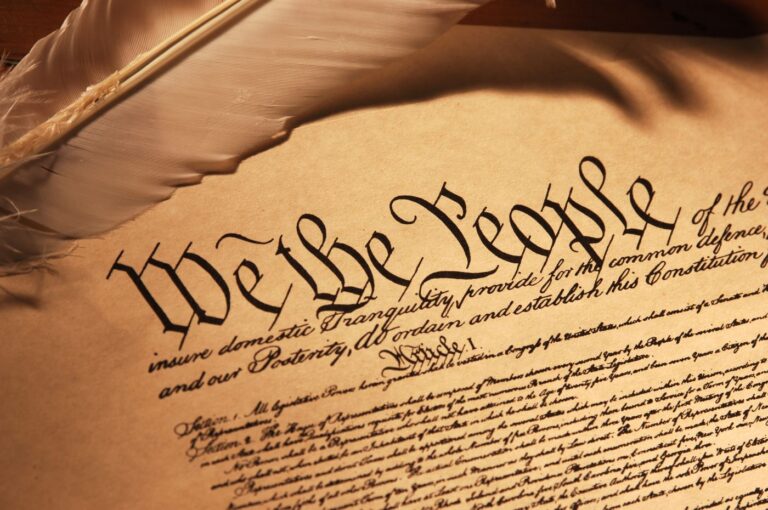
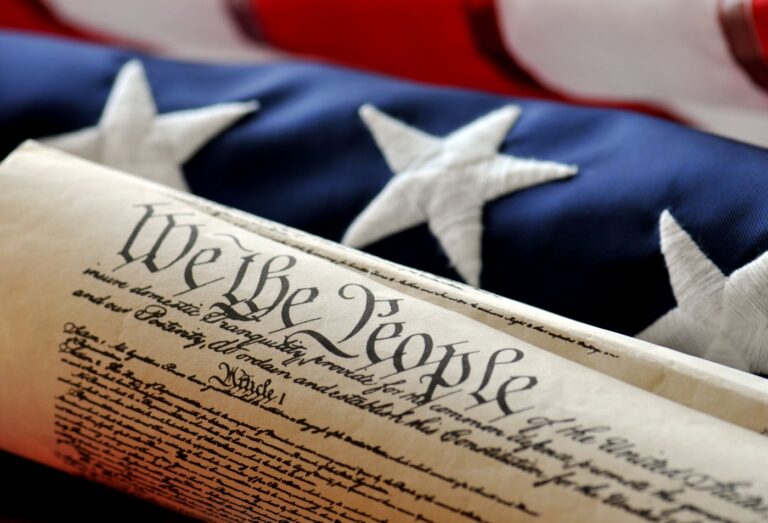
From the covenants of seventeenth-century England and colonial America to the doctrine of judicial review developed by Madison, Hamilton, and Marshall, the visible institutions of modern constitutionalism owe more to Christian traditions of covenant, jurisdictional pluralism, and Augustinian anthropology than is commonly recognized. 
Long before the separation of powers and judicial review were given written form, Greek philosophy, Roman law, Christian theology, and the medieval doctrine of paired jurisdictions laid the deeper architecture of constitutional government.  
The elimination of suffering will not produce joy. If we seek to be truly free, we must acknowledge our responsibilities to one another. We will flourish to the extent that we all can flourish. 
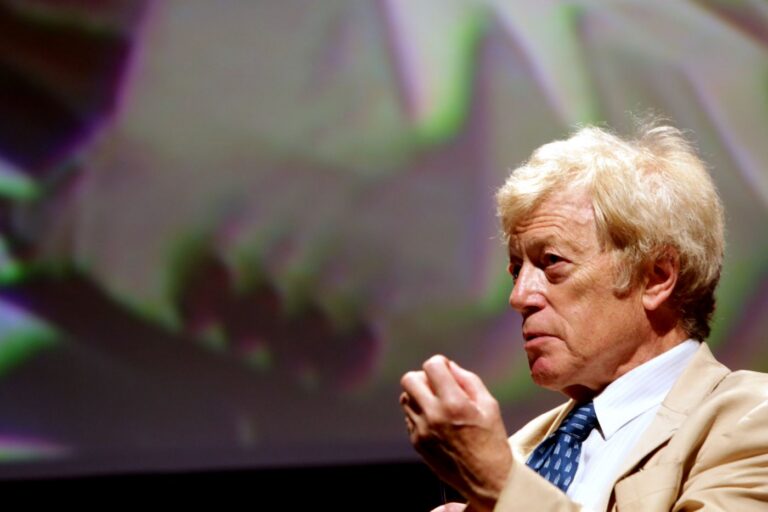
Rather than consign Scruton to the camp of the nihilists, I think it is more just to be grateful for his efforts to liberate and defend the soul and to fight so courageously against the ubiquitous “culture of repudiation.” 
The seminar cannot, by itself, heal our public life. No educational form can bear that burden alone. But if we want a society capable of civil disagreement, we will need to create and sustain places where we can safely learn it.
Taken as a whole, Rosen’s book offers a learned and sober account of the relevance of Hamilton’s and Jefferson’s principles to America’s past, present, and possible future. 
As we approach the semiquincentennial, it is important to reflect on the spirit of 1776 and the principles of the Revolution that have shaped the American ethos. But it is also a time to reflect on how our various governmental structures uphold and preserve liberty. 
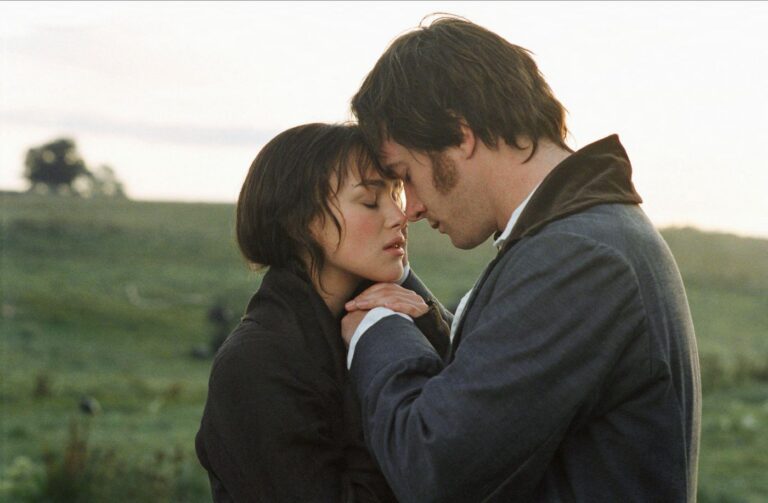
For a generation marked by a noticeable gender split on political beliefs as well as by ever declining marriage rates, it would seem that young women still retain a desire for a specific vision of manhood. But what exactly is that vision?  
The broad acceptance by self-described conservatives of casual war, initiated without the approval of the clear constitutional authority of Congress, is in sharp contrast to the caution and prudence at the heart of the conservative disposition.
By re-energizing a state’s pro-life base and attracting enough swing voters to tip the scales, the movement can make real, even if “imperfect,” progress toward ending elective abortion in America.  
AI can shift how we communicate with one another, what work looks like for many roles, how relationships unfold, and how we order our lives. Much of our reaction to these projects reflects the understanding that this technology has the power to reshape the way humanity marches into the future, and not always in a way that serves the greater good.  
Apart from any further consideration of ultimate intention, euthanasia and assisted suicide are actions that directly and purposely seek to kill the patient for the “crime” of being ill or sick. They necessarily contradict our human dignity and cannot be ordered to the love of God and neighbor, including and especially the sick and suffering. 
From the Gospel, to Acts, to the Church Fathers, to the doctrine of the two swords and the freedom of the Church, to the recognition in modern times of the freedom of conscience as an unalienable right at the foundation of a free society: the very ideas of human equality, freedom, and limited government would never have borne the fruit we see in American society without the Christian—and Catholic—intellectual tradition supplying the argument.
A civilization that can reach the stars but has forgotten why it wanted to in the first place is not a triumphant civilization. It is a lost one.
Games might just be one way to shake us free from the shackles of metrics and reclaim the human goods that deserve much more than a number. 
Abortion opponents have not provided a good answer to the objection that restricting abortion will endanger pregnant women.  
The church’s task is neither to baptize the sword nor to pretend the sword has no place in a fallen world. It is to stand beneath the cross, telling the truth. 
As St. Augustine reminds us, “men build cities, and men destroy cities, but there is also the City of God, and that’s where we all belong.” Christians live in both. The task is not to sanctify our politics, but to order them rightly in light of that higher allegiance.
Authenticity was a cultural force that risked destroying culture itself. In the early twenty-first century, the time has perhaps come to rediscover it.  
The immersive world flees embodiment and death. It embraces excarnation. But absent Incarnation, the world languishes and grows old, bereft of Eucharist. 
Atheism is at least as much an act of faith as theism is.