In 2024, Jake Moffatt booked a flight to his grandmother’s funeral. Air Canada’s website chatbot told him he should book the ticket, pay for full fare, and apply for a bereavement discount, which would amount to about $800, within sixty days of flying. That’s what Moffatt did. When he applied for the discount, Air Canada denied his claim. Its policy, set out elsewhere on its website, clearly said that passengers wanting a bereavement discount had to apply before flying. Air Canada’s chatbot got the policy wrong.
When Moffatt sued in a British Columbia tribunal, Air Canada argued that its chatbot “is a separate legal entity that is responsible for its own actions.” The tribunal called this a “remarkable submission” (read: legally absurd) and held the airline liable for what its machine said. This seems clearly correct.
Now raise the stakes. A U.S. Army commander can now deploy the AeroVironment Switchblade 600, a “loitering munition” that delivers a 33-pound warhead with AI-driven target recognition. AeroVironment’s CEO has said the technology for a fully autonomous strike with this system “pretty much exists today.” When the weapon selects and strikes a target, who killed someone? Following the reasoning of the British Columbia court, the answer would seem to be the human being who chose to deploy the Switchblade.
Pope Leo XIV’s recent encyclical, Magnifica Humanitas, would ban all such weapons. I will return to Leo below. First, however, I want to consider the Talmudic and rabbinic law of the golem, for it asks and answers many questions about powerful, and lethal, automatons.
A Golem Has No Soul
Start your day with Public Discourse
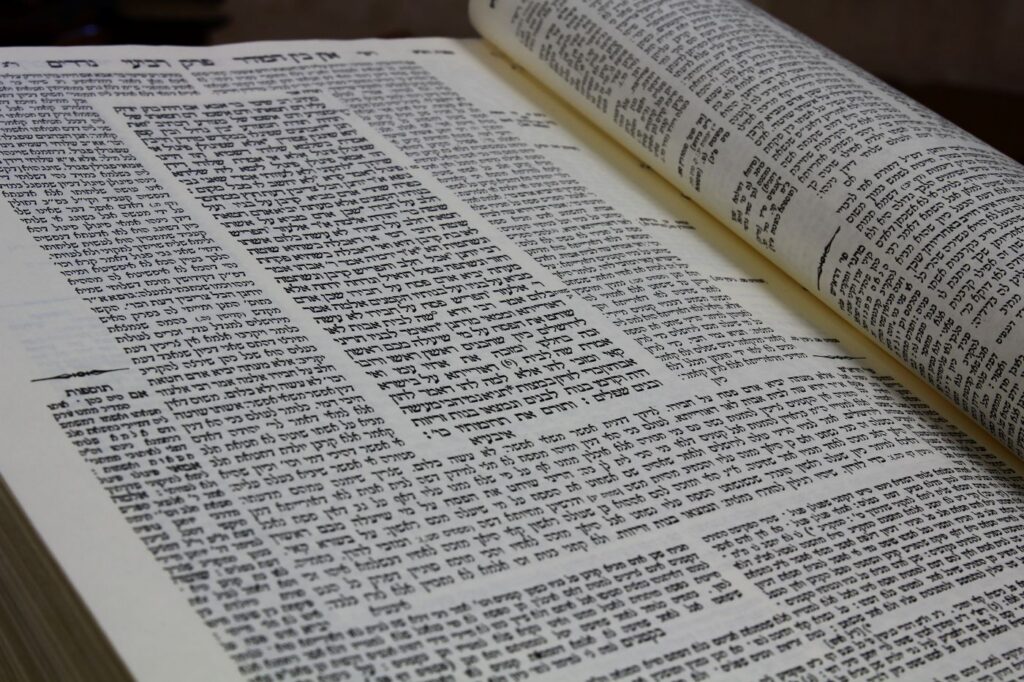
Sign up and get our daily essays sent straight to your inbox.A golem is something made by human beings, usually imagined as having a humanoid appearance, that moves on its own and obeys commands. According to Sanhedrin 65b in the Talmud, Rabbi Rava, a Babylonian sage of the fourth century, formed a golem and sent it to his colleague, Rabbi Zeira. Zeira spoke to the golem, and it did not answer. “You are from the companions,” Zeira said, recognizing that the golem was a fellow rabbi’s handiwork. He commanded the golem to return to dust, and it immediately crumbled.
The Talmud records no hesitation from Zeira. He spoke; the golem failed to speak back; he destroyed it. But this was not about mute artifacts. Zeira tested the golem’s capacity to morally answer for its own action. The lesson, as rabbis and commentators have read this passage, is that although the golem could obey commands in the sense that it would do what it was told to do, it was not morally obligated to do anything because it was not the kind of thing to which moral obligations attach. When a person is commanded to do something, that person makes a moral choice to obey or not to obey, and in either case should be able to answer for his choice: to explain why it was right or to admit that it was wrong. In the Talmudic story, the golem’s inability to speak is taken as proof that it cannot answer for its choices and thus it is not a moral agent. That is why Rabbi Zeira does not hesitate to destroy it: an automaton has no moral standing.
Rabbi Rava had made the golem out of dust, which should remind us of God’s making Adam in Genesis. According to Sanhedrin 38b in the Talmud, Adam was a golem, but with this critical difference: God breathed life into the first man, and, in the words of Genesis, “he became a living soul.” This is why, later, when Adam had disobeyed God, God asks Adam, “Where are you?” God demands an explanation for Adam’s actions, and Adam, unlike Rava’s golem, can and does answer.
Targum Onkelos, the ancient Aramaic translation of the Torah, renders “living soul” as the “speaking spirit.” Rava’s golem lacked this speaking spirit. A golem has no capacity to answer to God or to be called to account for its actions, and thus it has no moral standing.
A Golem Does Not Count
Fourteen centuries later and a third of the world away, the law of the golem appeared in the rabbinic tradition. Rabbi Elijah of Chełm, Poland, made a golem of his own. It walked and worked, following the rabbi’s commands. It also grew, and, in an eerie parallel with contemporary artificial intelligence systems, the golem grew so large that Rabbi Elijah judged that it would soon be able to destroy the world. At that point, he destroyed the golem, but as it fell back into dust, it scratched Elijah’s face.
Why did the golem scratch its creator? Elijah retained moral responsibility for his golem’s actions across the entire span of its existence, from the moment he created it to the moment he destroyed it. Nothing the golem did in between belonged, in a moral sense, to the golem; everything it did belonged to the man who had animated it. The scratch was the physical testimony of this: Elijah bore the consequences of the golem’s creation on his own face.
The person who sends into the world something that cannot answer for itself is morally and legally responsible for what that instrument does. The responsibility stays with the sender, and it grows heavier when the sender cannot recall the instrument once sent.
Four generations later, a student asked Tzvi Hirsch Ashkenazi, the Chief Rabbi of Amsterdam and Rabbi Elijah’s great-grandson, whether his great-grandfather’s golem could count as one of the ten Jewish men required for communal prayer. The wise rabbi ruled no, and for reasons similar to those given above. A golem may be able to carry out a command, but it is under no moral obligation to do so. Neither can it be in a covenantal relationship with God. What is not capable of obligation is not a person and cannot be counted as one.
The ruling states a categorical rule about what legal-moral personhood requires. A person is one who is capable of bearing obligation and capable of doing what is morally right regarding the fulfilment of that obligation.
When Golems Do Damage
So far this essay has discussed moral responsibility. What about legal responsibility for golems?
The Talmud states the rule in its law of damages: “a man’s fire is his arrow.” When a man’s fire spreads and burns his neighbor’s field, he pays. The fire is the man’s arrow loosed at a distance.
The Talmud then applies a further test: did the fire pass through an intermediary who could have refused? If a person sends fire through the hand of a competent adult who could have refused, that adult’s free choice breaks the chain back to the sender. But if a person hands fire directly to the instrument of destruction, leaving no intervening free choice to break the chain, he remains the one who set it moving.
This ancient law sets up a simple framework we can apply today: anyone may set an automaton in motion, but he remains responsible for all its actions, regardless of whether they were intended.
The person who sends into the world something that cannot answer for itself is morally and legally responsible for what that instrument does.
Chatbots Are Golems
Artificial intelligence is today’s golem. While modern large language models (LLMs) can “speak” in some superficial sense, they are not speaking spirits because they were not imbued with a soul from a Creator.
As suggested by the Air Canada case discussed above, the common law has reached essentially the same conclusions that Jewish law did. The Restatement (Third) of Agency § 1.04 explains that computer programs, since they are not persons, cannot be held legally liable:
A computer program is not capable of acting as a principal or an agent as defined by the common law. At present, computer programs are instrumentalities of the persons who use them. If a program malfunctions, even in ways unanticipated by its designer or user, the legal consequences for the person who uses it are no different than the consequences stemming from the malfunction of any other type of instrumentality.
From Babylon to Amsterdam to British Columbia, across many centuries and at least two traditions, something that cannot bear a moral obligation, whether a golem or a computer program, cannot bear a legal duty either. Such things are instrumentalities of the person who chooses to use them or send them out into the world. The sender of the instrument remains liable for its actions.
Pope Leo’s Prohibition
While the authorities above are clear that humans are responsible for the golems they unleash on the world, Pope Leo XIV goes much further by banning lethal golems entirely. In Magnifica Humanitas, he writes that “it is not permissible to entrust lethal or otherwise irreversible decisions to artificial systems.”
This is a massive leap from rabbinic tradition and common law responsibility doctrines. Both assign the consequences of an autonomous instrumentality to the person who set it in motion, and both leave the person free to set it in motion. The rabbi may make his golem, knowing he will answer for what it does. The commander may deploy his Switchblade, knowing the same. If that golem does something wrong, the law will assign damages after the fact.
The encyclical, however, forbids autonomous weapons categorically. If Leo is right, then the rabbi who makes a lethal golem and the commander who deploys a Switchblade have both done something wrong before anyone is harmed. But this logic seems to create a paradox. Under the encyclical’s prohibition, using AI-powered weapons is morally wrong even where it saves lives. Advocates argue that machines apply the laws of armed conflict more reliably than tired, frightened soldiers, and, on its own terms, the claim may be true.
The papal prohibition also puts other AI-powered instruments into question. Self-driving cars, for example, are lethal instruments that travel with substantially more force than a bullet. Early data show these autonomous features save lives. Likewise, consider the CyberKnife, an AI-guided radiation therapy for cancerous tumors. Destroying the tumor is, hopefully, an irreversible decision. What is the principle that distinguishes AI that shoots radiation into a tumor from AI that shoots a missile into a terrorist cell?
Humans Remain Responsible for Their Golems
The Talmudic and rabbinic tradition diverges from the latest encyclical, and the divergence highlights a paradox in the papal logic. Leo XIV’s strongest move, his categorical prohibition against the use of AI to make “lethal or otherwise irreversible decisions,” demands a more principled distinction between the Switchblade and the CyberKnife. Until that principle arrives, the doctrine that controls is older and simpler: no technology is strictly forbidden, but its sender bears full moral responsibility for its acts.