Witherspoon Institute
2026 Summer Seminars
Held in Princeton, NJ
For rising high school juniors and seniors, undergraduates, and graduate students.
Keep up with the conversation! Subscribe to Public Discourse today.
Interviews
By Alexandra Davis and Luke Burgis
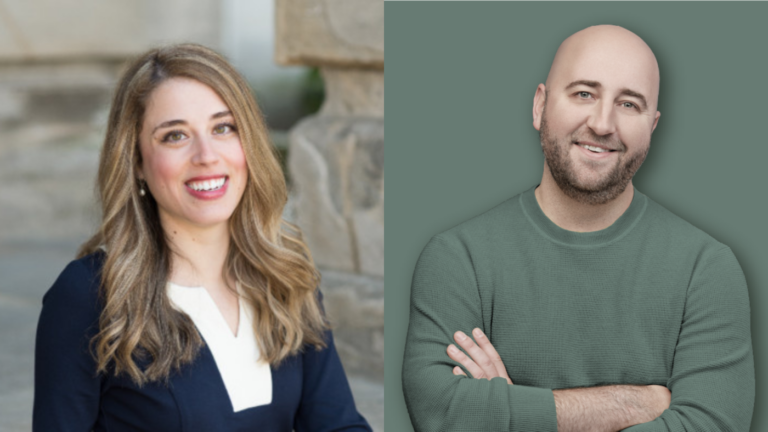
It’s useful to heed the words of Gabriel Marcel when it comes to desire. To paraphrase his “Life is not a problem to be solved, but a mystery to be lived,” perhaps we could instead say: “Desire is not a problem to be solved, but a mystery to be lived.” Girard himself refers to desire as a “mystery” on numerous occasions. I think he spent his entire life trying to understand that mystery.
As this idea of self-creation, telling our own story, self-determination has become seen as the fundamental element of human life, that means those of us who participate more fully in self-creation are more human, and those of us who participate less fully are, in some sense, less human.
Whenever you redistribute income, you never actually redistribute income. You destroy total income completely. Every revolution on planet Earth has been fought in order to change the distribution of income. Not one of those revolutions has ever succeeded in redistributing income, but all of them have succeeded in destroying the entire quality and quantity of total income.
Six panelists share how they structure their lives in a way that allows them to pursue creative, intellectually inspiring work, while remaining open to life and faithful to the good work of the home.
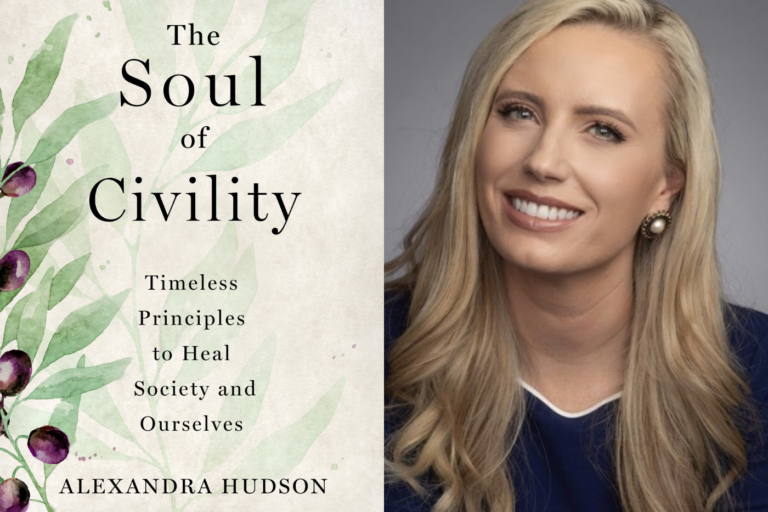
By Alexandra Davis and Alexandra Hudson
Politeness is manners, it’s technique, it’s etiquette, it’s behavior, it’s at the superficial, external level alone. But civility is a disposition of the heart. It’s a way of seeing others as our moral equals and treating them with the respect that they’re owed and deserve.
These desires—freedom, virtue, and safety—were the underlying impulses of the libertarian, traditionalist, and national security elements of the “fusionist” conservative movement during the Cold War era. And, it seems to me that when you look at it this way, you will recognize that these yearnings persist on the Right to this day.
By Devorah Goldman and Miriam Grossman
“My book is based on a series of dangerous ideas that have led us to where we are now. Beginning with the insidious theories of John Money, these ideas progressed through the fields of psychology and psychiatry and eventually infiltrated our educational and legal systems—corrupting many of the country’s most powerful institutions.”
That’s really what I want out of this whole project: for us to see that it’s all saying something, whether it’s a cheesy T-shirt, or a simple country church building, or a medieval cathedral. I want us to really pay attention and ask, “What is it saying? What is true and good and beautiful in what it’s saying, and what is not?”
We align with people who are pro-reality, who respect core community values such as truth and honesty, and who see the human being as a whole: body and soul. There is no metaphysical “gendered soul” separate from the body. Teaching body dissociation to kids (“born in the wrong body”) has led to a tidal wave of self-hatred, body dysmorphia, depression, anxiety, and self-harm.
Book Reviews
By Luke Foster
Pascal’s theology is sublime, beautiful, and all-consuming. But it reflects the life of a celibate mystic rather than that of the statesman who must transmit Christian culture. Statesmen after all must wager.
Regrettably, Gress's latest book is an exercise in dispatching straw men of its own making.
Is this tale imperfect? Yes. But it’s one that’s worth hearing regardless.
Ideas about the political conditions for human flourishing sometimes have unforeseen consequences. But the consequences of refusing to traffic in these ideas are foreseeably very bad indeed.
Kingsnorth sees the problems of technology; but he also realizes (and acknowledges) that he is embedded in the Machine. What he proposes toward the end is not a naïve and impossible utopian withdrawal but selective resistance to the Machine, resistance that can take various forms but that will always involve some level of complicity.
It is plain to this grateful reader that the tradition of the university has deeply formed Professor Hankins and Professor Guelzo into the kind of people capable of bringing to fruition the Herculean labor of love and learning that is The Golden Thread.
By Kevin Walsh
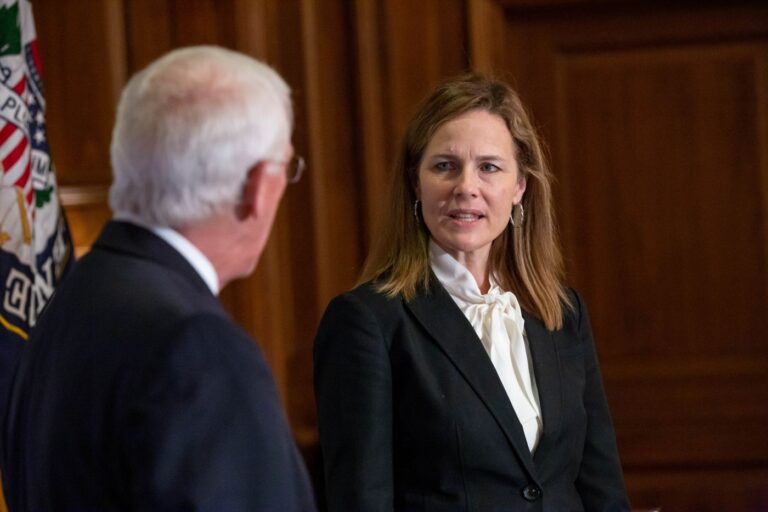
Questions about how to interpret our Constitution, the reader can conclude, ought to be approached from within the broader enterprise of understanding how to inherit it. The inheritance-based understanding of American constitutionalism that Barrett transmits through this book is itself worthy of being handed on with interest and appreciation.
West shows us in Maritain what a Christian philosopher in our time should look like.
Chernow’s biography denies us the gift that Mark Twain would so generously bestow on his fellow Americans. For her 250th birthday, America deserves better.
Long Reads
Al-Gharbi argues that the central social function of wokeness is not the pursuit of social equality, but the empowerment of the professional class and its own defense of inequality.
By Micah Watson
Civility is an important but secondary virtue. It cannot sustain itself. We can find hope for a healthier culture in a rather surprising place.
Each of these books presents valuable and insightful contributions to ongoing conversations about the role of the Constitution in contemporary American political life.
Christopher and Richard Hays have presented plausible arguments supported by biblical warrants for welcoming sexual minorities into church membership and leadership. Yet their mercy trajectory approach falls far short of building a coherent, convincing cumulative case to support their vision of blessing same-sex unions in the church.
Today we might instinctively look at Nazi criteria for death as utterly baseless, but at the time seasoned medical professionals regarded them as reasonable. To have a sense of history is to grasp the arbitrariness of such criteria. When it comes to killing patients, there is no way to get the criteria just right because the stamp of medical approval sends a social message that there is a category of persons who should not exist.
By Daniel Kane
The enduring source of the Children of Israel’s exceptional, future-oriented natalism is their intense, equally exceptional rootedness in their shared past.
By Ivana Greco
Popular culture tells us it is often more efficient to outsource routine household tasks than do them yourself. This leaves an important question unanswered, however: efficient at what?
As I revisited the familiar lyrics from my childhood, I noticed new themes and deeper meanings. To my surprise, I soon reached the unlikely conclusion that this classic family film has much to teach us about women, work, and feminism.
Human flourishing does not require escaping the cares and travails of this world, but rather, it imbues them with significance in the light of the Eternal One, in whom we live and move and have our being.
Newsletters
By R.J. Snell
Reflections on college drop-off and the centrality of kids to the human experience - plus, a roundup of this month's essays
A welcome from the new managing editor, plus a review of this month’s essays.
By R.J. Snell
Rather than sandlot games and diving contests, June is, for us, a month of contested visions about the body, about sex, gender, race, birth, and death. Perhaps the poet was wrong in declaring April the cruelest month—perhaps that title should go to June.
Public Discourse continues to believe that a free and flourishing society is possible. But it depends on the hard work of strengthening our roots—marriage, families, communities, and institutions. We do this work not because we want things to be fixed in place, but because without healthy roots we’ll be thwarted in the task of lifting our sights to the true and the good.
By R.J. Snell
At Public Discourse, we intend to play the role of moderation and calm. We know our society is in the middle of a Revolution—and not a good one—and we know conservatives are experimenting and fracturing in their responses. We try to read and understand all the trends, all the possibilities, and stay calm and reasonable as we host debate and conversation about the best way forward.
By Elayne Allen
A lot of readers might wonder: what makes Public Discourse different from other journals? In recent years, a lot of publications have become foot soldiers in the culture wars. Their content is more about political messaging rather than serious thinking. We at Public Discourse aim to be a voice of integrity that readers trust most: we readily acknowledge when interlocutors are right, and we strive to give debate its due. We also think tone and conduct matter, which is why you don’t see our team engaging in Twitter crusades.
As we decide what habits to adopt or discard in 2023, it’s important to carefully sort through the advice on offer to see if it’s based on a sound vision of human nature and of what constitutes a good life. Thankfully, the Public Discourse archives can offer guidance here, as on so many other topics.
By Elayne Allen
There’s a lot to commend about EA. It endorses good stewardship of resources; it recognizes the dignity of every human being; and it pushes back against the kind of presentism that disregards generations to come. But some iterations of EA should give us pause. Its core defect is its tie to utilitarianism, which is ultimately untenable as a philosophy.