Witherspoon Institute
2026 Summer Seminars
Held in Princeton, NJ
For rising high school juniors and seniors, undergraduates, and graduate students.
Keep up with the conversation! Subscribe to Public Discourse today.
Interviews
By Ryan T. Anderson and Micah Watson
Micah Watson and Ryan Anderson look back on his Piers Morgan interview, how the debate on same-sex marriage played out, what that might mean for our debates on transgender ideology, the nature of political discourse in America today, the future of the conservative movement, and what to look for in the next decade.
By Samuel Gregg and Kelly Hanlon
Key Founders believed that America’s future was to be a polity in which free and dynamic commerce would play a powerful role in defining society, as opposed to, say, the priorities of aristocratic or feudal societies. The “republic” side of this political economy equation is that this commercial society would operate within the context of institutions and sets of virtues that draw upon classical, religious, and moderate Enlightenment sources.
It’s very rewarding to practice excellent women’s health that is collaborative, integrated, holistic, and listens to their bodies. Children are not STDs. Fertility is something to be collaborated with rather than suppressed.
By David French and R.J. Snell
“What I see in modern America is something maybe a little bit different than what other folks see. I think the nation vis-à-vis its laws is far more just than it has been at virtually any point in its previous history. Racial discrimination is outlawed de jure. You have an extension of the First Amendment to all American communities. You have greater religious freedoms in a concrete way than we’ve ever enjoyed in the history of the United States. We have a lot of problems, but we’re better than we’ve been.”
By Richard Reeves and Serena Sigillito
“Masculinity is more socially constructed than femininity. The script is more important. It has to be nurturing, not in the same way as mothers, but by being similarly other-centered. Creating a surplus, caring for others, sacrificing for others. The question then is, what are we going to build that script around? That sense of being needed, giving, other-centered? My answer to that is fatherhood.”
By Mary Harrington and Elayne Allen
The final frontier for equality between the sexes—the missing tech fix—was always, how do we deal with reproduction? How do we deal with the different reproductive roles between the sexes? How can we use tech to flatten those differences? So reproductive inequality is the final frontier in replacing the sexes with the atomized, sexless, liberal person.
By James Orr and Jamie Boulding
An ideologically captured university creates the illusion of consensus on questions that in fact are highly contested off campus. That makes public disagreement a puzzling and unintelligible phenomenon. It creates a cascade of resentment and negative sentiment throughout the rest of the elite classes towards any dissenting views in the public square. It shatters a society’s understanding of itself and its role in the world, of what social flourishing looks like.
By Ramesh Ponnuru and Matthew J. Franck
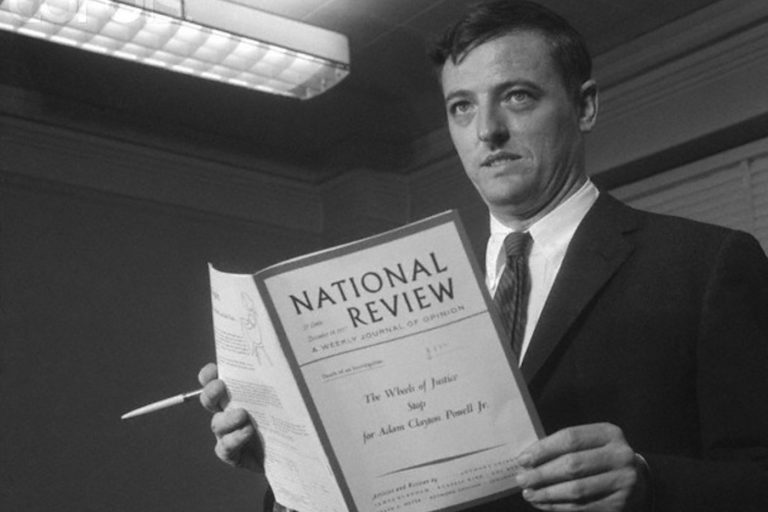
National Review midwifed and nurtured the modern conservative movement into being. Conservatism today is in a very different situation from the one that Bill Buckley confronted in 1955. There is this vast conservative enterprise now; it’s kind of hydra-headed. But the basic need is, first, to think about the circumstances in which we find ourselves and how to apply conservative principles to them—or a conservative disposition, if one prefers—and second, how to build a coalition that is large enough to take these ideas off of the shelf.
By Steven B. Smith and Jamie Boulding
We’re not born being patriots. It’s not something that’s inscribed in our moral DNA; rather, it’s something that has to be cultivated. It is love of country. But as Edmund Burke famously wrote, “To make us love our country, our country ought to be lovely.” What does it mean to have a lovable country, and what should the honest patriot do or think?
Book Reviews
Christopher and Richard Hays have presented plausible arguments supported by biblical warrants for welcoming sexual minorities into church membership and leadership. Yet their mercy trajectory approach falls far short of building a coherent, convincing cumulative case to support their vision of blessing same-sex unions in the church.
By David Phillips and Josh Craddock
Originalism in Theology and Law is a welcome salvo in an ecumenical and interdisciplinary conversation that has been too long dominated by originalism’s critics.
Readers will find in this book an insightful and witty commentary, suitable both for the serious student of the poem and for the layman reading it in translation. If it encourages anyone to read Virgil with fresh eyes or for the first time, it will have served its purpose.
Smith's book is an excellent reminder that conservatives should never prioritize an idealized individual or nation. Rather, we must work to preserve those institutions that point us to better lives.
Rana’s history prompts us to reflect on how we ought to conceive of American identity and defend the Constitution’s anti-majoritarian checks and balances in the twenty-first century.
By Hunter Baker
My interest is not in striking a blow either for or against Basham and the like-minded folks who feel empowered and justified by her claims. Rather, I want to talk about why I think the book is important and how a more expansive framework might help us understand the strife and atmosphere of suspicion more accurately.
Regoli’s book reminds us that the Holy Spirit is constantly at work—that the Church has overcome numerous crises, including in the recent past.
By A. M. Juster
Cosmic Connections has intermittent charms. Those blessings were not sufficient, however, to justify the time and effort necessary to read the book.
Originalism is a theory of interpretation, but like any form of legal interpretation, it means little unless applied to facts. And facts are wrapped up in stories. Judge Thapar’s book is a reminder not to forget this.
Long Reads
People have a right to protest supposed electoral fraud even if they are obviously and verifiably wrong. They do not have the right to commit violence. No one has the right to commit violence in a political cause. But not all political violence is insurrection.
The country is divided. Many people support Donald Trump, and many revile him. Whatever is decided on his eligibility, or his criminal culpability in federal and state prosecutions, large numbers of people are going to be very unhappy.
By using such a broad understanding of disability, and therefore limiting conversation about other social, environmental, or economic factors, the state can both absolve itself of needing to provide real policy solutions and proclaim itself the protector of a victimized class.
By R.J. Snell
There is no romance without the real presence of God, no sacramental imagination without the sacraments, and the wonders of fantasy cannot be asserted of primary reality itself.
For Newman, the discovery of any reasonable political settlement would first require what both the Letter to the Duke of Norfolk and the Oxford Movement had hoped to do: prepare the public imagination for an apostolic church, an institution in which obedience without mental slavery was married to liberty without self-will.
We need to study history as a subject in its own right, acquiring a deep appreciation for the story of Western civilization, with all its abysses of failure and all its deservedly celebrated achievements. We need to help our students understand old texts at a deeper level, in less anachronistic ways. Above all, we need to arm them against the hostility to their own tradition that has become such a destructive force in our culture.
By Ivana Greco
Prioritizing support to homemakers who care for children and the elderly is not only the right thing to do—it’s also a smart economic decision for the federal government.

We will never offer our beloved sisters the ghoulish pseudo-compassion of the abortionist’s knife. We will offer, instead, the healing balm of genuine compassion, compassion born of love, compassion that offers, not a quick and easy, but deadly, “solution,” but rather an open-ended, open-hearted, self-sacrificial commitment.

By David Corey
The New Right’s embrace of the “politics of war” is utterly reckless. No amount of friend–enemy Manichaeism or state-of-emergency governance will transform American pluralism into moral unity.
Newsletters
By R.J. Snell
In a republic such as ours, the people grant certain prerogatives to the state, for the government exists by the consent of the people. The people do not beg for privileges and rights from the state. Parents have by nature, by justice, the right to educate their children. The state does not have a similar right to educate children; instead, parents permit the state to educate children.
By R.J. Snell
It is not only fraudulent physicians and deluded therapists at fault for mutilating our children—they too are victims, in part. They also have been deceived, subject to the disintegration and dissolution of reality entrenched in our moment. Too many people are not flourishing in our society, and they are damaged and being damaged with false visions of emancipation.


By R.J. Snell
The state of the economy is on everyone’s mind. As you check (or avoid checking) your retirement account, the Public Discourse archives provide some excellent resources to consider the big picture of economic issues.
Our culture tends to conceive of the home in material terms, and the process of moving generates an endless list of practical questions. But it’s worth challenging this reductive view and reflecting more deeply on the nature and purpose of home, because home is where our life unfolds. Home is where we learn how to be ourselves and how to relate to others, prior to approaching big questions about politics and law, business and economics, or war and peace.
By R.J. Snell
If Roe falls, there will be difficult legal and political struggles, but three other areas will demand our thought, effort, and perseverance—engaging with those on the other side of the argument, developing pro-family policy, and protecting parental rights. In this Featured Collection from the Public Discourse archives, we revisit some excellent articles on these themes.
By Elayne Allen
As we look forward to celebrating all the moms we know and love on Mother’s Day, it’s also worth remembering that motherhood doesn’t happen in a vacuum. While the bond between mother and child is unique, there are webs of other human relationships upon which moms depend—fathers most importantly, but also extended friends, family, employers, faith communities, and even political bodies.
By R.J. Snell
As spring settles in, with ball games and tulips and dogwoods in bloom, it pays to turn off the news, to ignore the blather and chatter and anger. We should remember that we conservatives are deeply at home in the goodness of the world. There is a season for everything, including a season of hopefulness for life and its promise.
By R.J. Snell
Like all human things, war ought to be ordered by law and moral norms. In these selections from the Public Discourse archives, we see neither arguments for or against war, nor policy prescriptions on options for Ukraine, but first principles are never irrelevant.
By R.J. Snell
Public Discourse has hosted arguments about the Court since the publication’s inception. Here, from our archives, are some essays which remain timely, and which might provide some needed perspective on the role of the Court, originalism, and the role of morality and natural law in the Court.