




















While conversion may involve a love of beauty, a hunger for doctrinal security, the frisson of transgression, or a desire for the forgiveness of sins, it is ultimately a deep mystery of grace and therefore transcends our understanding.
Life is such that doing right, attending to the very real and inescapable moral fabric of the universe, is not some hapless, wooly-headed foolishness. It is instead, or at least it can be, the most effective way of pursuing a just and decent order in a fragmented and fallen world.
We tend to confuse the substantive protection of rights with the position that courts should always have the final word on what those rights are. But without slighting courts, we should also recognize the roles of the other two branches of government in defining rights. 
We need philosophical arguments to counter the empty voluntarism of our time, and this is a challenge the Church should meet head-on.
As our country marks its 250th birthday, and as we look to colonize an extraterrestrial orb, the western-become-science fiction appears to be on the way to becoming fact.
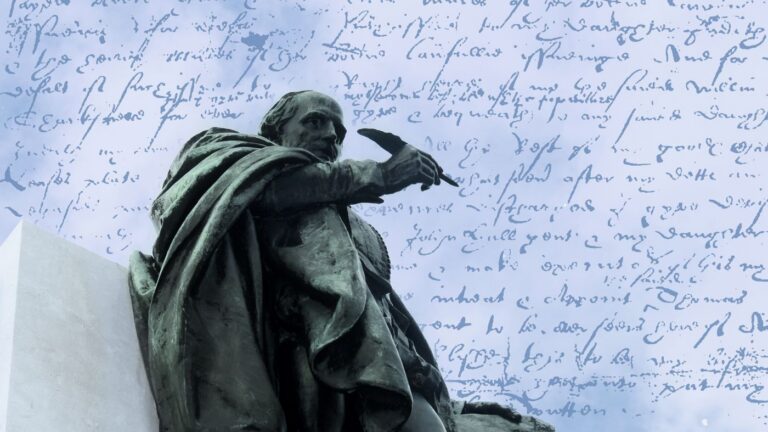
Marriage and family are among the basic goods of the good life, of flourishing, of delights. Shakespeare is cheering us on. May we take heart and enter the dance. 
What are the options for scholars or funders committed to encouraging more bright students and thus improving our university system?    
Religious freedom for everyone, everywhere? 
The rule of law endures only where law acknowledges that the state is not the highest authority.
Few Christians in the eighteenth century wore as many vocational hats, and accomplished as much in so many different fields, as John Witherspoon. The question is whether all these hats held together. I think they did, perhaps just barely, but they did. And I think they tell us something important about the founding of this country and the spirit of 1776. 
The decisive question for this and every age, Trueman argues, is Who and what is Man?
We can be Christians first, for the sake of the country we love. 
Padilla Peralta wants something, but the way he’s attempting to get it could potentially cost him, and all of us in academia, what little we already have.
Once a judge is relying on the odds, he has relinquished his agency over the decision. It is no longer a function of rational deliberation but a function of Fortune’s wheel, whose spin the judge has no choice but to accept.
The definition of “personhood” isn’t an issue we can push off much longer; technology will make us face it sooner than some might prefer.
Mirabelli’s reaffirmation of parental rights as genuine constitutional rights is not hypocritical; nor does it open the door to judicial activism. On the contrary, it’s an important and much-needed corrective to erroneous and historically inaccurate interpretations of Pierce that read it so weakly and narrowly that they render it practically impotent as precedent.
Being bound is a gift, not a curse.  
Joshua Herring offers a refreshing break from the mundane, a sort of punk rock alternative to gender orthodoxy. He reminds us again that, even as Lewis championed tradition and order, he refused to be conventional. 
When we think of Jesus as providing a model for behavior for the religious, private, or civic realm but not for politics and government, we adopt a fragmentation utterly foreign to the New Testament.
If Israelis see themselves as simply one more national identity among others, then the redemption will have been but a beautiful mirage in our long wanderings in the desert. And so, as Passover comes around again, we will read again the same story of our origin, and we will again remind ourselves that we are always still in Egypt.  
If God saves this nation from utter ruin, He surely will have used the young men and women being produced by classical Christian schools in this land. For they will have the intellectual firepower and strength of character to reform this nation both politically and socially.
When a university advertises Catholic identity, it is making a promise to students and families: that faith and reason will be engaged seriously, that moral questions will be treated as real, that the human person’s complexity will not be assumed away.
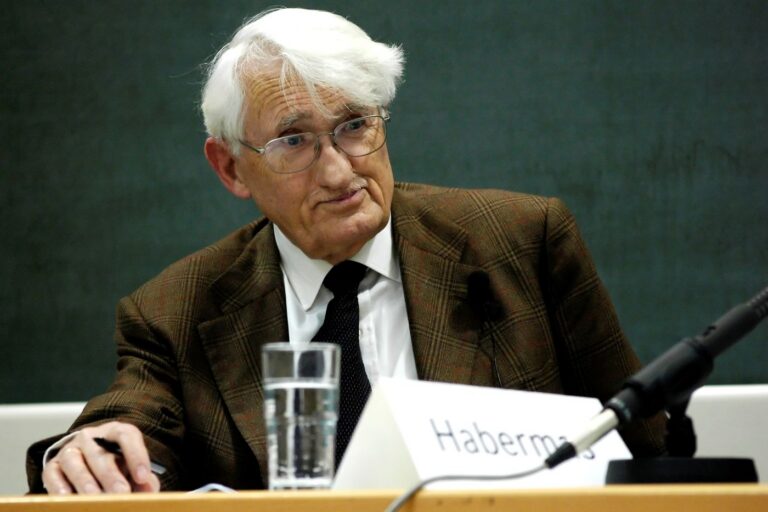
The ideal speech situation is not Habermas’s greatest legacy. For me, it was his rejection of that virulent form of Marxism that had infected the tradition to which he became the principal heir. That he did so with such personal dignity will stand before future generations as an example that did not require speech, but simply the power of a silent witness.   
This war does not appear to be genuinely defensive against an imminent threat; it is rather undertaken to prevent a threat that might, at some time in the future, materialize, and is therefore a “war of choice.” Natural law just war theory acknowledges no such category: justified warfare is always a matter of necessity.