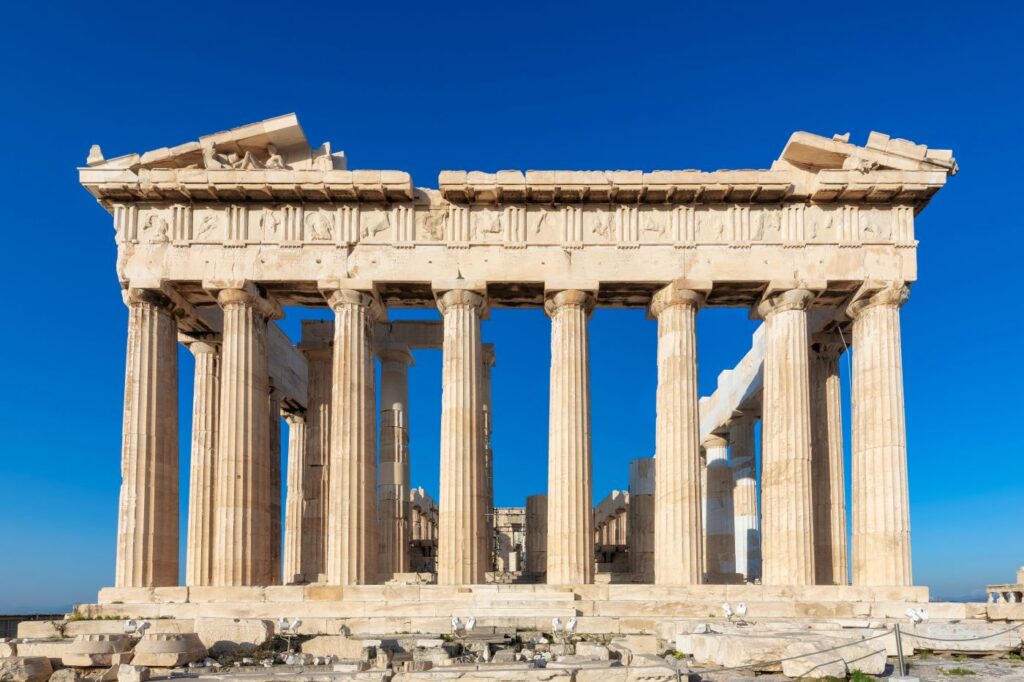
Dan-el Padilla Peralta’s Classicism and Other Phobias is a manifesto for re-engineering classics and classicism itself. It proposes to demote what he calls the “overrepresented” Euro-American, white-centering “mode of classicism” and to cultivate “other classicisms” in its stead. The book’s opening distinction—“classicism and not classics” as the object under investigation—treats the “classical” not as a stable object (Greece/Rome) but as a historically produced “system of aesthetic determination and calibration,” bound up with “normative presumptions of value.” From there the core historical claim follows: in the “racializing, imperializing, and settler-colonialist settings” of the “Euro-Americas,” Greco-Roman classics “becomes overrepresented as the dominant, and in time the only, mode of classicism,” keyed to and subserving the ideological needs of “North Atlantic liberalism” and its institutions of private property, the nation-state, and racial hierarchy. The book has both commendable and unfortunate aspects, both of which I discuss.
“Other Classicisms”
Padilla Peralta is not satisfied with pluralism as a slogan. He repeatedly specifies the alternative “classical” lineages and sites of cultural authority that, in his view, ought to be elevated against what he takes to be a Greco-Roman monopoly.
First, there are the classicisms of the black Atlantic and an expanded ancient world: in a coda to Chapter 4 (which treats of the artist Kehinde Wiley, among others), the book explicitly aligns itself with a project of “a plurality of classicisms” rooted in black Atlantic recovery and representation—one that “will be capacious and involve the pasts of Egypt, Ethiopia, West Africa, the Middle East, and other parts of the ancient world.”
Second, there are the Afro-Latin American and maroon classicisms: the book repeatedly returns to Afro-diasporic reception and to “Black classicism” (a phrase Padilla Peralta registers as problematic insofar as the adjective can imply that blackness is inherently external to the classical). The book offers textured discussions of Du Bois, Négritude, Afro-Latin American classicisms, and maroonage as a figure of epistemic and institutional insurgency.
Start your day with Public Discourse
Sign up and get our daily essays sent straight to your inbox.Third are the indigenous presence as a “present” and the land-grant university as settler infrastructure: Padilla Peralta’s “other classicisms” are also articulated through Indigenous studies: he asks whether the “conceptual affordances” of Greco-Roman classics “preclude or preempt the capacity to contemplate Indigenous presence as a present,” and he foregrounds the fact that the land-grant university system “profited from Indigenous dispossession.” This is not merely a call to add Indigenous “content” to curricula; it is, rather, an attempt to force classics to reckon with the political economy of its institutional habitats
Fourth is black classicism in the visual arts as a model of alternatives to hegemonic classics. Wiley’s work becomes an exemplar for “how to go about the work of contesting and undoing” Euro-American classicism’s “white” visual vocabulary, and for entertaining “the possibility that other classicisms are not only possible but aesthetically preferable.”
As an agenda of intellectual pluralization—treating the “classical” as a generalizable (and contestable) structure of value, and insisting that Egypt/Ethiopia/West Africa/the Middle East/Afro-Latin America/Indigenous America are not ancillary but central candidates for “classicism”—this aspect of the book is straightforwardly constructive. It is also the portion of the argument most readily received (claims of aesthetic preferability, in any direction, aside), because it does not require that the Greco-Roman archive be pathologized in order to justify comparative and even reparative expansion.
One could argue, of course, that roughly the sort of classicizing project Padilla Peralta envisions has been under way for some time now in Black and Africana Studies, MENA programs, and among Assyriologists, Egyptologists, and many other scholars.
The Moral Psychology of Disagreement
As signaled in the title, the book’s analytic engine is phobia. The term begs to be read both metaphorically—“phobia” tropes the systematic exclusion of black people from classics and classicism—and literally. Explaining the book’s title in his preface, Padilla Peralta writes: “fear of Blackness is a foundational element of global modernity, and as such is fused into the matrices of Euro-American classics as a discipline.” Later, in the introduction, Padilla Peralta asserts that “classicism in its most overrepresented form itself becomes wired to a phobia: aversion even to the prospect of acknowledging the presence of Black people, Black cultures, and Black being-in-the-world in the kingdom of culture.” The rhetorical payoff of this psychologizing move is plain: resistance to his project can be redescribed as (implicitly) racist fear rather than honest disagreement. The disciplinary cost is equally plain: it invites, as a standing temptation, the treatment of counterargument as symptomatic of a pathology.
That cost is sharpened when the book treats “Blackness” not only as a fuzzy and contingent category of persons and histories but as a unitary political subject with a determinate radical posture. Thus, in chapter 4, Padilla Peralta entertains Baltasar Fra Molinero’s proposition, “Black people are the future,” then suggests that it is “a substantial improvement” on Alisha Wormsley’s “There Are Black People in the Future” (original emphasis), and finally makes his own political condition explicit: he doubts that a future “livable for Black people” can be compatible with maintaining an overrepresented classicism that “systematically shoved Blackness to its margins.” The conclusion is categorical: “Hegemonic modes of White-centering classicism have got to go.” Any other future “is no future for me.”
There is a difference—one the book does not keep stable—between a) the claim that Black intellectual traditions and Black Atlantic reception must be central objects of scholarly seriousness (a claim about curricula, archives, and intellectual justice) and b) speaking as if “Blackness” itself authorizes (or demands) a particular barricade-manning politics as the litmus test of ethical scholarship. The latter risks functioning as a kind of ventriloquism: not necessarily the crude act of “speaking for all black people,” but a slippage into treating “Black being-in-the-world” as though it possessed a single political voice, whose authentic register is maximalist struggle or “revolution.”
Needless to say, not all black people will want to sign on to that revolution. Not all will agree that seeing “the fear of Blackness” as “a foundational element of global modernity” is a productive way to think about the world they live in; not all will consent to conceiving of themselves, as Padilla Peralta does, as “colonized intellectuals,” as if there were some authentically “black” mode of intellectualism that an encounter with Plato has deformed and subjugated; and not all will find that “the experience of engaging with the field of classics as a Black-identified individual” results in “abjection.” Nor is it likely that all black people will find compelling the book’s incessant crisis framing—its invitation to imagine oneself as living in a “twentieth- and twenty-first-century ethno-racial Euro-American order” characterized above all by anti-black “predatory violences,” against which reconstructed classicism(s) must not only “affirm and protect Black life” but also secure “safety, protection, and potentially even liberation.”
Accordingly, it is irresponsible to write, however implicitly, as if “Blackness” naturally cashes out in the author’s preferred revolutionary idiom, or as if “Black thought” were essentially identical with the book’s stylized politics of confrontation. Similarly, it is implausible to suppose that Padilla Peralta’s conception of “the affirmation of Black lives” will always coincide with the diverse perspectives of black people as to what would affirm their lives—assuming that they accept the premise that their lives stand in need of affirming.
The deeper problem is methodological: when “Blackness” is treated as an essence whose signature political form is radical posturing, critique is pre-inscribed as moral failure. Black readers unconvinced by the book’s politics may feel themselves to be positioned—implicitly—as insufficiently “black,” while non-black readers who are unpersuaded may find themselves labeled as “phobic.” In either case, the argumentative field is narrowed by a problematic politics of identity.
Finally, Padilla Peralta frequently takes his “phobia” diagnosis as license for contempt toward scholars who take issue with elements of his project, and aligned ones. They are said to be “bleating insensibly.” Their essays “metastasize” into books. They embody “white ignorance.” In mounting their criticisms, they become “panic-mongers” and “White grievance-mongers.” Ironically, a book that repeatedly paints blackness as coterminous with oppression, and the field of classics in particular, not to mention contemporary America in general, as infernos of anti-black fear and violence, risks the charge of indulging in a reciprocal sort of mongering.
The Self-Defeating Politics of “Barricade” Scholarship
Padilla Peralta openly calls the academy to a politics of struggle and material and symbolic redistribution. He repeatedly frames ethical scholarship as inseparable from political commitment. That posture may feel bracing within certain professional subcultures, but it is strategically naïve about blowback—blowback that, by 2026, is no longer hypothetical. Academic institutions have faced lawsuits over affirmative action practices, executive orders that affect (among many other areas) DEI efforts, and weaponized civil-rights compliance scrutiny.
The important analytic point is not to blame Padilla Peralta (or campus activists) for Trump or backlash. It is to register a political feedback loop that the book does not reckon with: the more scholarship frames itself as revolutionary struggle and treats institutions as sites of permanent antagonism, the easier it becomes for electoral majorities (or plurality coalitions) to support punitive “reform” of universities as ideologically captured or politically extreme. When a broad swath of the public feels that a given institution—especially one supported by public funds—has pitted itself against their interests, it is to be expected that that public will use whatever means it has available, including democratic means such as the vote, to thwart, reform, or even destroy that institution. In this environment, the “barricade” posture is not costless authenticity; it is often an accelerant—especially when paired with arguments that recode good-faith disagreement as phobia and treat ordinary professional norms as camouflage for domination.
Padilla Peralta occasionally gestures toward the precarious position of universities and toward “market and political forces conspir[ing] against” the academy, even as tenured faculty “wring their hands about the dangers of presentism.” But the argument does not follow through on the institutional implication: if the academy is already vulnerable (and if within the academy classics is particularly vulnerable) then converting scholarship into overtly partisan struggle is likely to be not merely risky but self-sabotaging—supplying adversaries with the easiest possible characterization of universities and academic disciplines as seedbeds of unpopular radical activism rather than knowledge-producing and -transmitting institutions that serve the entire public.
Put most bluntly, Padilla Peralta wants something, but the way he’s attempting to get it is highly likely to preclude his getting it, and could potentially cost him, and all of us in academia, what little we already have.
I would insist on an institutional realism that the book avoids: the current U.S. political environment has already produced a markedly more interventionist federal posture toward higher education.
What to Accept and What to Reject
The sustainable path is to separate the book’s genuinely valuable pluralizing agenda from its identitarian moral psychology and its romanticization of confrontation:
First, I would suggest one keep the program of “other classicisms,” including the concrete expansion of the ancient world to Egypt, Ethiopia, West Africa, and the Middle East, and the insistence that black Atlantic and indigenous frameworks belong at the center of what “classical” can mean. I would reject, however, the slide from institutional history to psychological diagnosis (“phobia”) as a default explanation for disagreement as well as the implied ventriloquism whereby “Blackness” becomes a unitary political essence whose authentic voice is the book’s revolutionary posture—especially given black Americans’ demonstrable ideological diversity, not to mention relative conservatism, compared to other Democratic-leaning demographics.
I would then insist on an institutional realism that the book avoids: the current U.S. political environment has already produced a markedly more interventionist federal posture toward higher education. Scholarship that frames itself as permanent “political struggle over disciplinary and epistemic authority” and as a more or less zero-sum bid “to redistribute the material and psychic resources that have been piled up in the course of racial capitalism’s tentacular extension across the globe” does not float above that environment; it is one of the inputs into a political narrative that elected officials can (and do) mobilize against universities.
In this reading, Classicism and Other Phobias is best approached less as a blueprint for disciplinary governance than as a provocation. It successfully names the ways in which value is naturalized as inevitability, and it forcefully argues that the global hegemony of Greco-Roman “classics” is a product of historical-material conditions rather than intrinsic destiny. But its approach to traditional classics is compromised by a grievance-structured identitarianism: it too readily converts disagreement into pathology. Finally, it too confidently speaks in the name of “Black being-in-the-world” as though that phrase licensed a single radical politics—precisely the kind of move that corrodes shared inquiry, undermines the most broadly inclusive scholarly solidarity, and supplies ammunition to the backlash politics now bearing down on all of us in higher education.