



















Dobbs may be the most important, magnificent, rightly decided Supreme Court case of all time. It is restorative of constitutional principle. It upholds the values of representative, democratic self-government, and the rule of law, at the same time that it supports the protection of fundamental human rights. It is literally a matter of life and death. It is potentially transformative of American society, for the better. It is a rare act of judicial courage and principle. In every way, Dobbs is a truly great decision.
It is a day to praise those stalwart men and women who kept faith, for half a century kept faith, and who today might cite the words of the poet, “now the great vision which we dared believe through slow and savage years is our own.”
The past half century has seen the breakdown of institutional Christianity on which Jacques Maritain’s political project relied. Nonetheless, the limits of his thought do not vitiate the valuable insights Maritain offers for Christian politics in the twenty-first century. He reminds us that politics is about how to order our life together, not just creating ideals or defeating our enemies. He teaches us that we can order a society toward the temporal truths of Christianity, but that the temporal power of the state is no substitute for the spiritual power of the faith.
Examining the bodily autonomy argument for abortion highlights a crucial pro-life point: abortion is wrong not only because strangers shouldn’t kill each other but also and especially because parents have special obligations to their children, and it isn’t governmental overreach to require parents to fulfill those obligations.
The emergence of the online sharing economy calls to mind the Socratic desire to abolish ownership with the goal of ending competition and discord. But, as Aristotle reminds us, this is a corrosive vision that would exacerbate rather than mitigate conflict, while also preventing the cultivation of key virtues such as generosity, moderation, and political friendship.
If a post-Roe future is defined by even deeper divisions and bare-knuckle election politics, and not by a cultural shift in our thinking about how to not only protect innocent life but to support the parents who give and nurture that life, then we will have failed—again.
Beauty, properly understood, offers us a way of self-transcendence. Beauty leads us to participate in a truth that’s bigger than us. When we learn to participate in that beauty, we experience joy, and in some ways experience the true meaning of freedom.
Body-self dualism, and its social manifestation in expressive individualism, underlie the rejection of our given human natures. Rather than seeing ourselves as somehow inhabiting bodies that are used as mere instruments, we should see ourselves as incarnate, bodily beings embedded in communities and bound by natural and supernatural laws.
Today, Jacques Maritain’s optimistic vision of Christian liberalism is often contested or dismissed as outdated, but a revival of his emphasis on Christian participation in society and politics is urgently needed—and is in many ways already in evidence in Christian political activity in America.
For P. D. James, we are drawn to detective fiction because it shows that even when social evils such as war, terrorism, and pandemic cannot be conquered, individual crimes can be solved by rational means—thus confirming our hope that peace and order can be restored from disruption and chaos.
Peter Lawler was a great lover of pop culture because, though often inelegant, it reflects the democratic spirit of America and the complexity of human affairs. His engagement with pop culture, which was an important part of his public activity, expressed his belief in America’s restlessness, dynamism, and optimism.
While some legal scholars have criticized the recently leaked draft Dobbs majority opinion on the basis that it is not originalist, they are overlooking two important points—originalism contains a place for stare decisis (i.e., legal precedent) and American constitutional practice is currently an eclectic mix of originalist and nonoriginalist aspects.
Finding time to read is always challenging, particularly within the context of being a new parent. Instead of conventional, and often ineffectual, time management strategies, we might consider some alternative principles to help incorporate reading into our busy lives: ritualistic reading, whimsical reading, and even acknowledging the value of not reading.
The contemporary distinction between sex and gender downgrades human beings to “biological” males or females with detached “identities.” We should reject this, and insist instead that sexual difference is a fundamental component of personality, one of its modes of being.
In a post-Roe America in which the question of abortion will likely be in the hands of citizens and state lawmakers, it will be particularly important for Kansans to undo their supreme court’s recent error of removing the legal foundation for basic regulations on abortion.
Metamorphosis—changing into something you’re not—used to be seen as a damaging ordeal, but it is now depicted in many children’s books as an achievement to be celebrated. To guide children away from such destructive messages, parents can turn to the wisdom of old books that promote traditional accounts of selfhood.
A Minnesota law professor’s attack on the draft Dobbs opinion seems based more on desperation than scholarship. This and other misguided efforts to demonize critics of Roe need to be refuted so we can focus our attention on the real issue of the ugly realities of abortion.
The aim of our Constitution is to secure freedom in America by securing rights. The aim of American foreign policy should be to secure freedom at home, with a view to opportunities and threats abroad. We must always ask: what’s the best mix of military might, economic power, diplomacy, and championing of human rights that enables us to secure freedom at home and maintain a free and open international order?
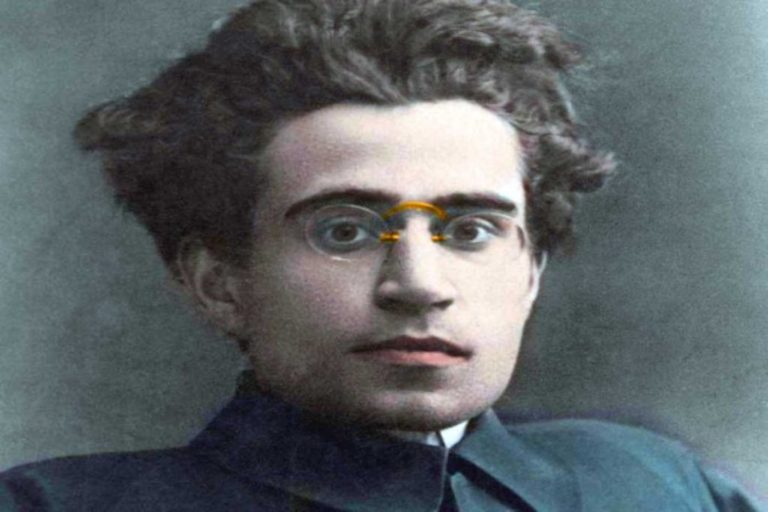
It is strange to reflect that someone who died in 1937 at the age of forty-six with no obvious legacy has exerted more cultural influence than most of his successors, but Antonio Gramsci’s “long struggle” of the intellectuals continues to shape our political, educational, and artistic landscape in regrettable ways.
The persistent cultural trend away from family life and childbirth is deeply troubling, not just because of its demographic implications, but because it means denying core characteristics of what it means to be human: our need for connection and our desire for meaning.
In their rigorous sociological account of Christianity in America today, George Yancey and Ashlee Quosigk provide many important insights, particularly in relation to progressive Christians, though overall the book simply confirms the enduring truth that Christians have always disagreed among themselves about faith and politics.
Josh Craddock’s vision for a post-Roe legislative agenda imaginatively builds on and renews decades of pro-life thinking, but it risks generating resistance within the conservative legal movement. There may be an alternative, more disarming path that conveys to the public the need for Congress to act to protect human life in the womb.
As a counterweight to the transience and loneliness that pervade our society today, Dante’s medieval theological vision reminds us that friendship is central to human flourishing because it is central to the human person. Friendships—no matter how fleeting—prepare us for union with God.
The prospect of a post-Roe America calls not only for celebration, but also for a realistic appraisal of the road ahead, which will require the pro-life movement to rebuild itself as a movement that goes beyond partisan divisions and that also helps create a social, political, and economic order in which life is encouraged and supported.