



















Matthew Levering’s book offers an intellectual history of a complex question in Catholic moral theology, one that recovers a biblical and Thomistic view of conscience as a limited concept within Christian moral life as a whole.
Social conservatives used to have a much more nuanced understanding of the development of modern liberalism out of the medieval Christian world. Our insistence on individual immortality, an idea hammered home by the almost preposterous teaching of the resurrection of the body, ought to make Christians dyed-in-the-wool individualists.
In the event that Roe v. Wade is overturned this summer, pro-life legislators must act to protect human life in the womb. They should introduce legislation to recognize the personhood of the unborn, strip the ability of federal courts to hear challenges to this recognition, create a private right of action to help enforce anti-abortion policy, and use the taxing power to cripple the abortion industry.
As Ukraine is being crucified by the enemy, millions of its people go through the same experience of darkness and a sense of the absence of God as Jesus did on the cross. Let us not doubt that God is with the suffering and that his truth, peace, and love will prevail.
The Hollywood “religious epic” movie genre of the postwar period was all about uplift, toleration, and offending exactly no one. Though entertaining at its best and an important part of the story of America’s rising pluralism, this genre proved finally to be too anodyne and unable to do justice to Scripture or the life of the early Church.
In a highly accessible and timely new book, Matthew Rose reflects on the criticisms of liberalism of five key thinkers on the “radical right.” He argues carefully and convincingly that, while often morally objectionable and politically utopian, their insights into the failures of liberalism need to be reckoned with by those who wish to preserve the global liberal order.
During the Covid-19 pandemic, some judicial conservatives have eschewed the virtue of constraint in favor of an ahistorical and excessively libertarian notion of the free exercise of religion. To achieve the correct balance between liberty and order, and to prevent activist judges granting religious exemptions in areas outside of their expertise, conservatives should return to a more realistic view of the limited role of the courts in the regulation of religious practices.
Are Big Tech and social media entirely to blame for the triumphs of the erotic, the therapeutic, and the transgender? Of course not. But there is no question the dominant social media companies have seriously contributed to these trends.
Racial disparity is really only a derivative result of the larger social abandonment of a set of norms which manifests itself most immediately and most severely in the African American population, but which really is a larger question for all Americans.
In her recent book The Genetic Lottery, Kathryn Paige Harden makes flawed assumptions about the nature of moral agency and generalizes about how people value social status.
These days, major debates on the floor of the Senate and House of Representatives are exceedingly rare. For members of Congress to behave as proper legislators, the institution as a whole should be reformed. Members must strike a new bargain with leadership in both chambers that gives them the space to debate and legislate. We should expect more of Congress, and members of Congress should expect more of each other.
Powerful unions such have represented teachers’ interests for decades. The COVID-19 pandemic has made clearer than ever the total dissonance between what teachers’ unions want and what’s best for students. During the pandemic, unions forced many schools to stay closed, ignored students’ needs, and severely disrupted learning.
In 2020, China became the world’s number one box-office market. For years, the Chinese Communist Party has been using this economic leverage to shape the content of American movies.
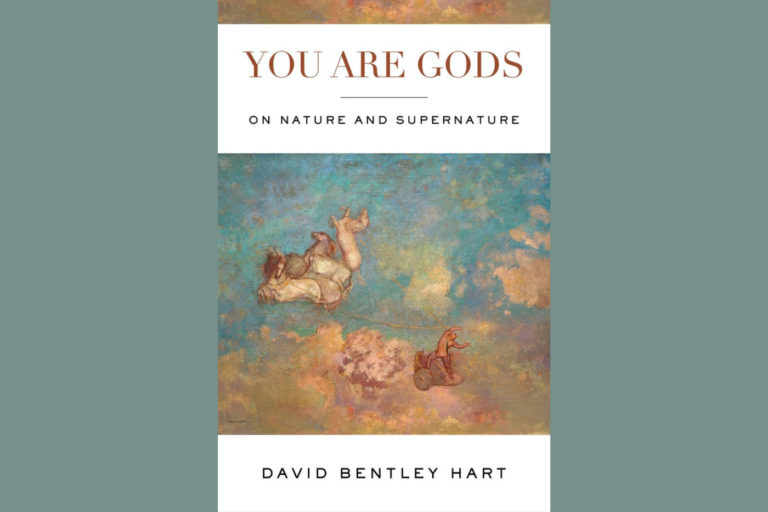
The debate over whether it is grace or nature that directs human beings towards the beatific vision was one of the most contentious intra-Catholic theological disputes of the twentieth century. David Bentley Hart’s 2022 You Are Gods: On Nature and Supernature shows that the debate is alive and by no means merely academic and inconsequential—pantheism, tradition, orthodoxy, and heterodoxy are all very much at stake in the argument.
Based on Russia’s advantages in soldiers, tanks, and aircraft, Putin’s forces should have taken Kyiv, decapitated the Ukrainian government, and installed a pro-Russian regime in just a few days. But numbers aren’t everything. If they had paid closer attention to Russia’s greatest novel, War and Peace, Putin’s strategists might have been less surprised.
Given the ongoing evolution of abortion law in the United States, it makes sense to engage and evaluate the constitutions and laws of other jurisdictions. Although these sources and materials do not determine the meaning of our Constitution, they can illuminate our scientific, medical, and ethical debates. A particularly valuable resource, which explores abortion jurisprudence across a variety of legal contexts, is Unborn Human Life and Fundamental Rights: Leading Constitutional Cases under Scrutiny, edited by William L. Saunders and Pilar Zambrano.
The recent debates surrounding Florida’s anti-grooming bill raise questions not just about education, but about who has the right to direct the moral formation of children. Activist educators believe they should hold this power, regardless of parental concerns. But their agenda is based on the false idea that children can be intrinsically LGBT, and it is therefore necessary to stop educators proselytizing on behalf of such identities.
Andrew Doyle offers a splendid contribution to the ongoing debate over free speech, with a constructive approach that might surprise those familiar only with his Twitter alter ego. Though brief in length and focused on free speech in the West, the book is replete with thoughtful insights and relevant stories that provide the basis for his powerful advocacy of free expression.
America’s education professionals—meaning government bureaucrats, administrators, and teachers—have been trained in an education philosophy driven by progressive politics. Whether in Mississippi or in California, much of America’s school staff attended colleges of education that teach similar, politically infused educational philosophies. The question is, can parents really retake control of public education?
In Part I of this essay, I outlined the key tenets of critical race theory and showed how popularized versions of this controversial theory have made their way into many public schools across the nation. Today, in Part II, I explain why the teaching of CRT-inspired ideas in public schools is contrary to parental rights; I propose school choice measures as a crucial part of the solution.
Today, in Part I of this essay, I explain critical race theory and show how many of its ideas have made their way into public schools across the country, prompting a backlash that has led to the introduction of anti-CRT education regulations in many states. CRT views values like “objectivity” as tools of oppression. It’s clear that many public schools are indeed incorporating plenty of CRT-inspired ideas like these in their curricula.
Righteous anger is often good and necessary. But not all parents are comfortable with confrontation, and even fewer enjoy the option of placing their children in saner institutions or schooling at home. I’m convinced that parents can be very effective in less noisy, more behind-the-scenes ways.
While still on the fringe, organizations like The Center for the Advancement of the Steady State Economy (CASSE) seek to push anti-growth ideas into the political mainstream. The vision is economically illiterate, politically implausible, and incompatible with America’s constitutional freedoms.
Human flourishing requires both public health and individual liberty and an appropriate balance between these goods when they conflict. We know that human beings flourish in community; we are social by nature. As such, we should not be surprised that government Covid-19 regulations mandating school closures, lockdowns, masking, and vaccination have isolated us from our fellow citizens and imposed significant attendant harms. It is time to declare this emergency over and once again let people take responsibility for themselves.