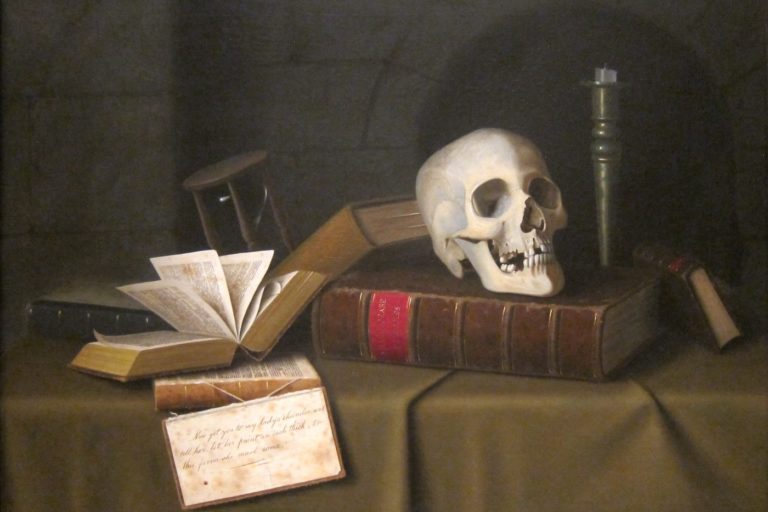
Perhaps the end of the pandemic is not a matter of eliminating COVID-19 but rather coming to terms with our own mortality. We need to learn how to survive and thrive in the pandemic, even as we try to mitigate the effects of the virus. For guidance, we can turn to Tolstoy’s Ivan Ilyich, who was delivered from his anxious, tormented bondage by conquering his fear of death and adopting selfless concern for others.
Anyone who has spent his life in the academy, as I have, has reason to keep his mind open and his interests broad—namely, friends who write. My professional association over the last dozen years with the Witherspoon Institute and Princeton’s James Madison Program has introduced me to a dazzling array of brilliant and productive minds. No, I don’t want my writing friends to stop. They have given me much to ponder, and I look forward to what they will all write next.
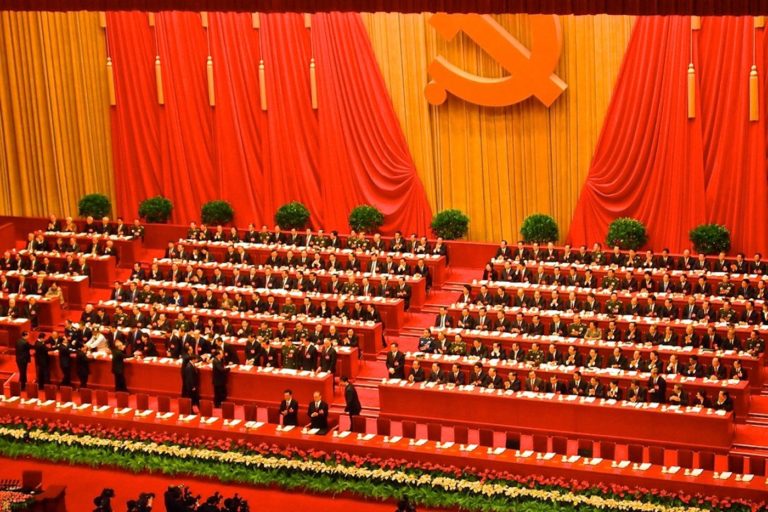
In the first part of this essay, I showed how the CCP persecutes individuals, and discussed the CCP’s structural control of the government and the nation. In this second part, I will compare the U.S. democratic system with the CCP regime to more clearly demonstrate how one-party rule results in authoritarianism.
The CCP regularly employs violent tactics to persecute and silence its opponents and operates with impunity as a shadow power. China’s political structures enable it to maintain monolithic control of the nation. By discussing my own experience under the CCP and shedding light on its opaque structures, I hope to show that comparing the CCP’s authoritarian regime with democratic governance is like comparing barbarism with civilization: there is no comparison.
Democracy Rules (2021) is Jan-Werner Müller’s attempt to explain populist authoritarianism, while at the same time setting out what he believes are the true pillars of liberal democracy. But he does so, understanding that democracy always operates under the handicap of uncertainty.
Freedom is certainly a value conservatives cherish, but its application has limits. It is not conservative to assert an individual right to act without considering the welfare of his community. Conservatives should choose to get vaccinated and boosted because doing poses almost no risks to their health and is in their community’s interest.
The continuity between administration and teaching for me has always had to do with the question of the moral, intellectual, and spiritual development of young people. Finding creative ways to meet students where they are and draw them into the most important questions is a source of endless fascination for me. When it comes to education, it may be the case that, as Alasdair MacIntyre argues, the only way to carry on sustained debate is from within and between rival traditions, assuming, that is, that members of a particular tradition are genuinely interested in engaging perspectives quite different from their own.
Today’s progressive nationalism is secular, yet it also relies on popular adherence to the civil religion of the left. There are two prominent manifestations of this civil religion—critical race theory’s (CRT) philosophy of history and the LGBTQ movement’s anthropology. We see evidence of this secularized-yet-religious nationalism in many places—media, bureaucracy, Hollywood—but perhaps it is most readily apparent in education.
Precisely because our demographic future is uncertain, we should be even more careful and consider all scenarios. Many children grow up surrounded by a high number of adults, but with very few children in their family environment. Many regions, especially rural ones, will begin to run into problems in providing basic public goods, such as universities or hospitals, which require certain minimum sizes to operate with reasonable efficiency. The housing market, higher education, and electoral distribution will all be dramatically impacted by these demographic changes.
If the novel is by definition tightly bound to the human subject, then contemporary novels will suffer from the same decay and corrosion from which the contemporary soul suffers. Yet, despite the uneasy conditions facing both the novel and the world, the human soul remains remarkably resilient and fascinating. Sally Rooney’s latest novel, Beautiful World, Where Are You? ponders the profound disenchantment that haunts today’s souls and novels alike.
Two bioethicists, Greg F. Burke, MD, and Emanuela Midolo, PhD, debate whether or not healthcare providers should require COVID-19 vaccines for organ transplant recipients.
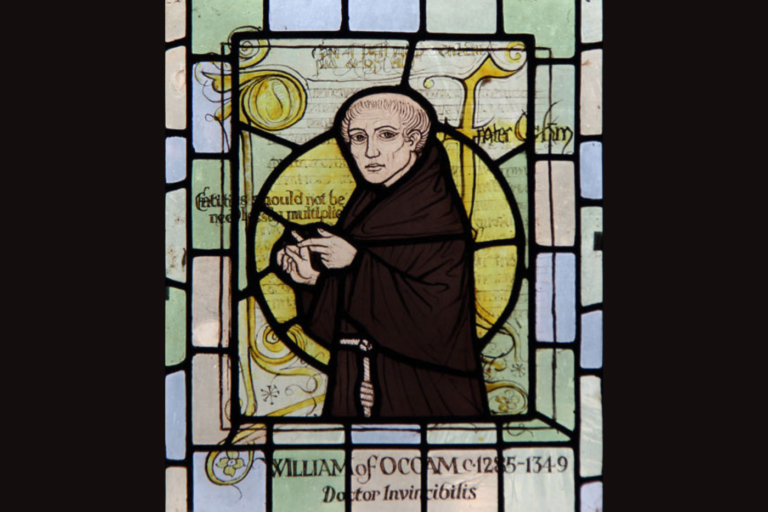
For the conservative theorists of the poison pill, everything becomes about ideas. According to them, Ockham, Scotus, Bacon, Descartes, Locke—they are the important bad guys who determined the decadence of our time and the problems we should be talking about. But ideas don’t work this way; reality does not proceed with perfect logic like it so conveniently does in the textbooks.
The only way to avoid a posthuman future is by affirming the goodness of being human in both our personal choices and social and legal institutions. Most importantly, we should recommit to the virtue of religion: giving God His due. Religion teaches us to value the ontological goodness of our creatureliness, exhorts us to take steps to preserve it, and gives us the confidence to do so. When we’re steeped in a religious mode of being, we’re content just to be human; we have no need or desire to grasp for more.
Part I addresses the threat that technology poses to human dignity because of the threat it poses to humanity itself—both elites and non-elites. Transgenderism is the first step on the road to a miserable posthuman future. Part II argues that we must recommit to the virtue of religion if we’re to resist this technologized, posthuman threat.
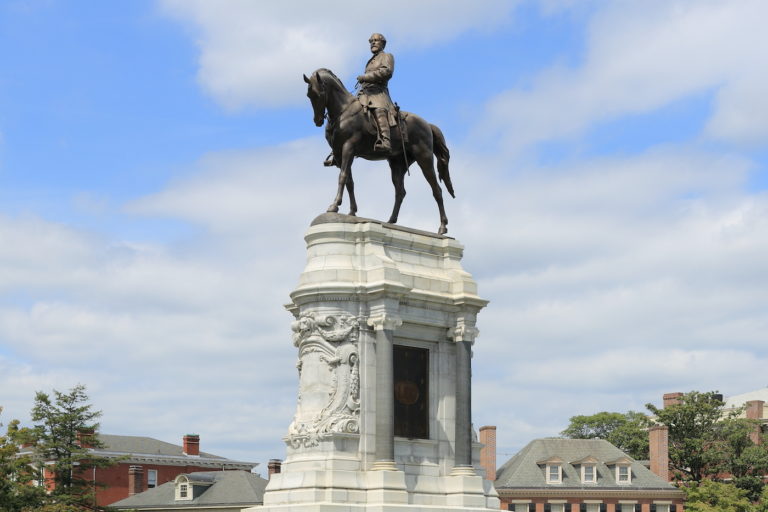
Allen C. Guelzo has written a perceptive character study (and military evaluation) of Robert E. Lee that is alert to the many contradictions that seem to pepper his life. What emerges is a portrait not unlike the one peering off the dust jacket: thoughtful and appealing, yet facing two directions at once.
In the face of the uproar with which Pope Francis’s recent message was received, I’d like to offer a brief defense of his address and some words of encouragement to my fellow twenty-somethings who are discerning marriage and parenthood, unpopular though they may be. We are all called to fatherhood or motherhood (adoptive, biological, or spiritual), and suppressing that call diminishes what it means to be fully human.
When Christianity enters a society, it provides an understanding of inherent and equal human dignity that lifts up those whom that society has considered unworthy. But what happens when Christianity recedes? Christian human dignity is not founded on maximizing fairness or autonomy, but on the fact that all human beings are made free and in the image of God. If it becomes detached from that principle, then human dignity no longer makes sense.
Norman Rockwell’s famed realism and attention to detail take that which is commonplace, and make it once again both startling and delightful. He aims to make us see the world that is really here, but that we so often take no notice of, precisely because it’s so familiar to us that we don’t bother to see it.
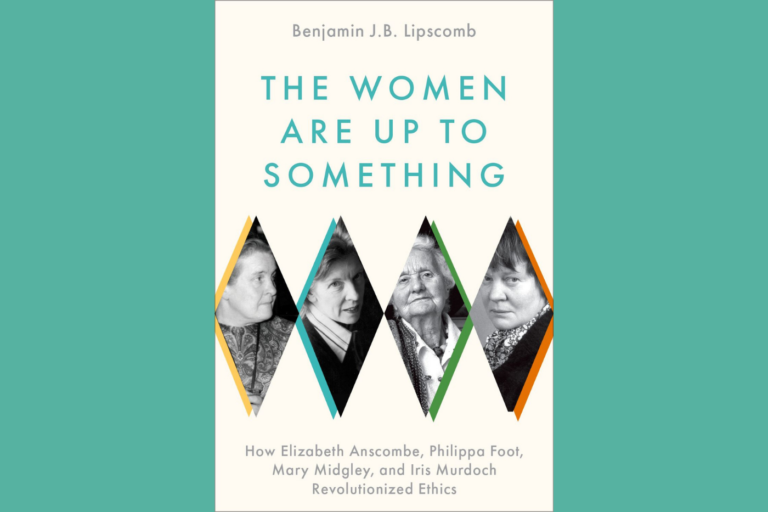
Mary Midgley, the lesser-known friend of Elizabeth Anscombe, Philippa Foot, and Iris Murdoch, was a deliberately multidisciplinary thinker. She was convinced that moral philosophers must relate various bodies of knowledge to one another if they are to achieve an adequate understanding of human life, human motivation, and human success or failure. Midgley, writing from the margins of the discipline, was the first to present a positive proposal for the kind of moral philosophy recommended but never developed by Anscombe, Foot, and Murdoch: a naturalistic moral philosophy, grounded in the character and needs of the human animal.

About a decade and a half ago, a groundbreaking study reinvigorated Protestant moral thought. It is time for an appreciation and renewed application of these eternal truths.
My generation feels obligated to constrain our footprint in the name of social justice. I reject this. I cannot promise my children perfect comfort or safety in the world. But I can make their world—our home, our lives, our family—a mooring when everything else is guaranteed to be perpetually confused.
My ignorance of many important things gnaws at me, as does the consciousness that the rest of my life is not time enough to learn what I want to know. Lately my thoughts have turned to authors with whom I have some acquaintance but want to know better—specifically those philosophers and theologians who have shaped and transmitted the Catholic faith through the ages.
The greatest challenge to my teaching is the relativist, anecdote-dominated view of knowledge many of my students have absorbed by the time they enter my classroom. Too many of their teachers embrace the view that relativist, subjectivist, and ultimately personal experiential knowledge is the only kind available to us—or at least that it trumps other kinds of knowledge.
Conservatives may hope that liberalism’s better angels prevail. But the ravages of ideological liberalism, especially the damage done by the sexual revolution to family and community, require active redress. Conservatives, drawing on the wisdom and traditions we have sustained (and which have sustained us), must help our culture relearn essential parts of being human.