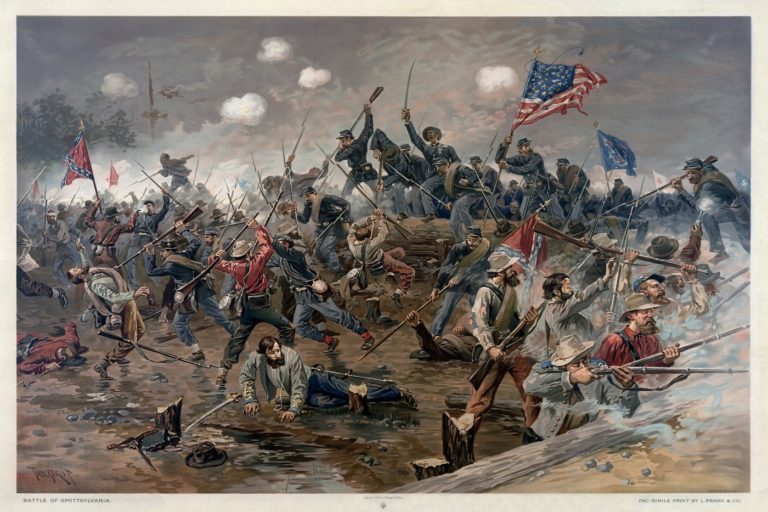





















Did Lincoln regard the Constitution as “broken” and therefore in need of replacement? Or did he believe that the Declaration of Independence represented America’s aspiration to end slavery, and infused the Constitution with this same aspiration?
The canon wars are over, and the canon lost. But the canon’s defeat might not be a bad thing for readers and teachers who care about great books, because it allows us to offer franker, more interesting, and more compelling reasons to read them.
“I want to give people hope, people living with mental illness as well as family members of people living with mental illness, that not only can they survive their illness, but they can also reach their greatest potential. Sometimes, in fact, they reach their greatest potential not despite the illness, but because of the illness.”
We are increasingly becoming afflicted by the who/whom logic of Lenin. For Lenin, when it comes to political aggression, what matters is who performs the action and upon whom it is performed. But, in reality, the whom you attack is a who in reality. Just as you are a self, so too are they a self.
For the last three centuries, humanity has been participating in a race in which, on the one hand, it is increasingly difficult to come up with new ideas, but on the other hand, there are more and more of us engaged in research. So far, these two forces have counteracted each other, leading to economic growth. With a falling population, however, we will start to lose the race.
Just imagine if all the male professors and teachers who read and write for this blessed journal, who deeply care about the plight of the fatherless, actively sought to mentor their students in the most important subject: life. Imagine if, at the beginning of every term, you each announced, and then demonstrated, your openness and willingness to help your young, impressionable students navigate this next chapter in their lives.
For a conscience coddled by a culture of self-definition and consent, choice cloaked as grace will always look preferable. But hard, engraved truths such as fatherhood offer rescue from the hell of interminable deliberation—which, as Alasdair MacIntyre has argued, is the hallmark of modern moral theory.
Where there is a mutual commitment to truth and truth-seeking, relationships can be built between religious believers and secularists, and they can indeed reason together. The minimum condition is this: interlocutors, however wide and deep their substantive philosophical or other differences, need to share the conviction that business between them is to be conducted in the proper currency of intellectual discourse—namely, reasons, evidence, and arguments.
“Much American (and British) media depiction of faith—sadly, but perhaps inevitably – tends to be primary colored, inadequately nuanced, and at odds with what I have found to be the case from my fifty years’ engagement with the United States.” An interview with the British historian of America, Richard Carwardine.
The question that divides us is how we ought to respond to reproductive asymmetry: the reality that women carry disproportionate burdens due to our special role in human reproduction. What makes one a feminist is the view that this basic inequality at the heart of reproduction is one that deserves, in justice, an affirmative cultural response. We wish not only for maternity to be celebrated for the true privilege it most certainly is, but also for women to be encouraged and supported in other contributions they make. This requires that the burdens of childbearing ought to be shared not only within the family, but also across the wider society too.
If we think there’s too much government regulation, then the authentically conservative solution is not to say, “Well, let’s just try to operate a landscape of isolated individuals jostling in a competitively economic marketplace,” but “Let’s create institutions of countervailing power so that where exploitation is happening, the people themselves are equipped to resist it, and the government doesn’t need to intervene to fix it.” If designed correctly, a system of sectoral labor unions can actually help achieve the conservative goal of limited government.
“Post-revolutionary men and women are living in ways that are profoundly unnatural for the ineradicably social creatures that we are; and many are suffering as a result, at times without even knowing the name of what ails them. This preoccupation, and the desire to do something about it, continues to shape my work.”
Reading recommendations from The Witherspoon Institute’s staff.
The human soul is marvelously complex. Anyone who thinks he can definitively disentangle another author’s motivations—let alone his own—is fooling himself. He is engaging less in scholarly inquiry than self-projection. Only by listening attentively to others can we instruct our minds and enlarge our souls.
Christ’s advent is an astonishing story of God’s power and light breaking into our darkness, doubt, and suffering.
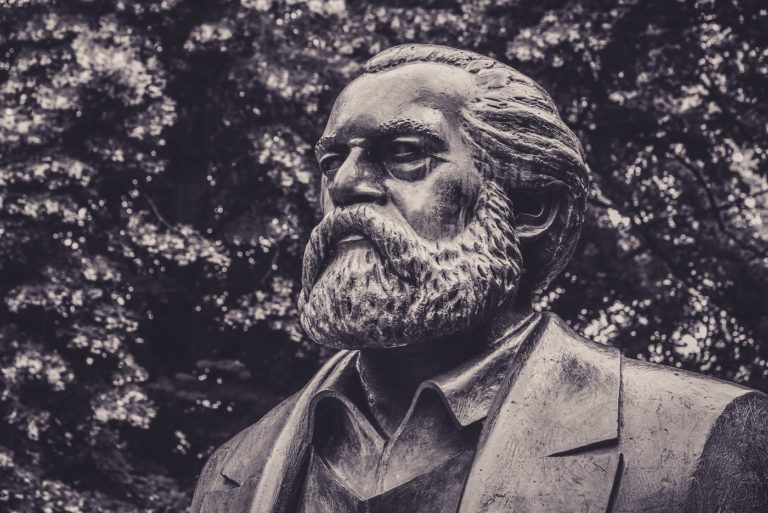
Sunday marks exactly three full decades after the fall of the Soviet Union. This anniversary arrives at a portentous time when Marxist critiques of capitalism is becoming relevant again. Marx’s legacy is hard to pin down because his influence is paradoxical. The measures Marx influenced “tamed” the excesses of laissez-faire capitalism and removed the need for revolution; yet his influence has led to the fulfillment of considerable portion of his programme.
I think PD is doing important work in addressing modern spiritual challenges: even just acknowledging such problems from an explicitly religious perspective can hopefully get us closer to mitigating them. Both Judaism and Christianity also engender a kind of humility, as we look to the past for wisdom and acknowledge our indebtedness to those who came before us.
As recent debates about critical race theory in education demonstrate, trying to solve social problems while neglecting universally recognized virtues acquired through self-mastery—virtues like hope and love—not only fails to build democracy, it also makes us angry, anxious, depressed, and divided. Educators should not ignore historical complexities and conflicts, but they also need to teach students about the universal principles that unite us and sustain the hope needed for social harmony.
The texts I reflect on illuminate core themes of Public Discourse’s work: cultivating a proper understanding of reason, appreciating the indispensability of moral formation, and framing law around eternal moral truths. I was deeply honored and delighted when R. J. Snell and the current editorial team invited me to join them as a contributing editor, and I look forward to more conversations to come.
Plaintiffs have filed lawsuits arguing that mandates without religious exemptions violate their free exercise of religion. Given the thorny legal questions involved, and the possibility of inflaming the polarized situation further, the Supreme Court will likely allow the issue to percolate in the lower courts and resist the invitation to rule on whether the First Amendment requires religious exemptions to COVID-19 vaccines.
Rory Groves argues in his 2020 book, Durable Trades, that we should secure careers that will see us through from entry to retirement while supporting—rather than opposing—the relational and economic development of our families and communities. In my family’s case, farming was a way to enjoy the benefits of a durable trade while making up the gap between a single income and a double income.
Chief Judge Jeffrey Sutton’s new book, Who Decides?, provides a powerful argument for ordinary people who feel powerless in their ability to affect the course of national politics. State constitutions provide an alternative venue for meaningful political change and are an important way to exercise constitutional self-government.
American “family values” before the baby boomers and Roe v. Wade and second-wave feminism were shaped more by modern notions of industrial progress than by eternal truths about the human person. The sexual revolution emerged from axioms that had already permeated the mainstream for decades. Even among social conservatives, those axioms still shape our discourse about the family today.
In his recent book, Glenn Ellmers argues that the political philosopher Harry V. Jaffa can help us meet the manifold challenges of the crisis of the West. Jaffa’s teachings on statesmanship and prudence provide a path to reverse America’s decline.