















In his recent book, Glenn Ellmers argues that the political philosopher Harry V. Jaffa can help us meet the manifold challenges of the crisis of the West. Jaffa’s teachings on statesmanship and prudence provide a path to reverse America’s decline.
The second and final volume of a biography of Benedict XVI focuses on his place in addressing the crises shaking both the post–Vatican II Catholic Church and the West more generally.
When it comes to climate change, liberals are correct. Yet they fail to see how the same arguments they use for climate action—acting in the face of uncertainty, limiting individual choice for the common good—can also be used to justify a bit of soft social conservatism.
Augusto Del Noce is the most important thinker we don’t know. Del Noce viewed The Problem of Atheism, his essay collection that will be made available in English early next year, as the cornerstone of his scholarship.
When the hits keep on coming, it’s difficult for series writers to resist the market demand. Success builds the writer’s treadmill, and it can lack an “Off” switch. Perhaps “keep them coming back for more” should be replaced as the series writer’s motto by “make them wish there had been more.”
Houses of mourning allow us to see hyperreality for what it is: fake. Suffering leads us to ask questions that go beneath life’s surfaces and pushes us to become seekers, not just consumers.
Let Casey stand, and its abortion license fall.
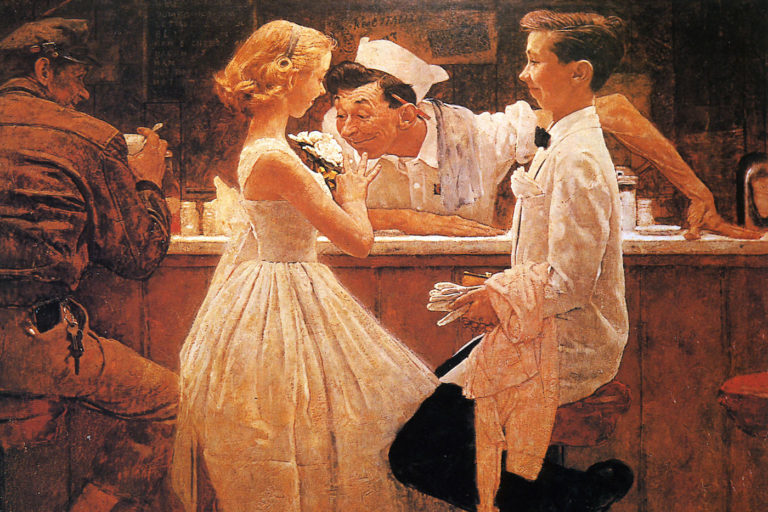
Rockwell’s work may be pop culture rather than high culture, but his work is capable of real and “straightforward” sentiment. Rockwell’s work is humorous, and its humor comes from the joy in the mundaneness of things.
Jim Breuer and Dave Chappelle are current darlings of the Right, because they refuse to bow to the orthodoxy of sexual identitarianism. Yet their own emphasis on autonomy and free speech shares in the same inadequate conception of modern humanity, which, in its never-ending quest for self-realization, inevitably descends into the very coercive behaviors it claims to eschew.
The jealousy among fellow academics is often so strong that a good teacher or fair researcher is despised by colleagues. Many small liberal arts colleges will close. And, despite its reputation as a bastion of progressive thought, the academy usually rewards safe, uncreative thinking. If the academy still sounds good despite all this, then you should apply to graduate school.
The day you pass pro-life legislation, if you’re trying to win people over, should also be the day that you are passing new spending bills to support adoption, to support pregnant mothers—to support, not just crisis pregnancy centers, but crisis first-two-years-of-life centers! And that doesn’t have to mean bureaucratic welfare-state spending. But it means some kind of spending, in a way that I think many people active in the pro-life movement are comfortable with. Many people in the Republican Party institutionally are obviously not.
In Part I of this article, we established that many of the reasons some Jewish Americans passionately oppose overturning of Roe v. Wade are either overblown or baseless. Today, we highlight one of the ways in which overturning Roe will help to foster a political culture of federalism and subsidiarity that benefits religious minorities.
This two-part article addresses how American Jews should think about looming changes in the Supreme Court’s abortion jurisprudence. Today, the authors discuss why many fears commonly expressed by Jews regarding a post-Roe world are overblown or outright false. Tomorrow, they will explain some of the under-appreciated ways that overturning Roe will benefit vulnerable religious minorities.
Safetyism and Wokeism are fellow travelers, joined at the hip in many more contexts than not. Both elevate people’s subjective and emotional experiences, so long as they point in a progressive direction, over what is biologically or scientifically true. It is time for both conservatives and traditional liberals to wake up to this reality, which requires more consistently translating our convictions into action.
Roe is indefensible as a matter of honest constitutional interpretation. It short-circuited the political process and poisoned the Court. Its systematic flaws, widely acknowledged by a variety of progressive and pro-choice legal scholars, caused the judiciary to become the branch most, not “least[,] dangerous to the political rights of the Constitution.”
There will always be some limits on academic freedom, and it is better to be honest about what they are and who sets them than to try to wish them away. We need to formulate real-world standards, rather than retreating into the impossible fantasy of absolute academic freedom.
Borrowing a family policy prescription from Helsinki or Budapest is bound to disappoint. A distinctly American family policy platform must be seen as expanding choice, not constraining it, and working with our national character, not trying to reshape it, all while understanding family as the essential institution in society, one that stakes an unavoidable claim on our public resources.
Conservatives sometimes overstate how bad things are. Too often we generalize about the dire condition of higher education based on a relatively small handful of elite schools on the coasts. Little good will come from young conservative scholars abandoning the academy out of fear. We have as much right and responsibility to shepherd these institutions as anyone else.
I hope students will throw themselves into these divisive conversations robustly. Call nonsense what it is when you hear it. Offend everyone around you with the truth. Do not fear to pursue the intellectual life with vigor. I am certain the world is hungry for more courageous and selfless women and men to learn, to know, and to speak truth.
Why do we so closely associate having degrees with the scholarly life? Most jobs, including the highest-prestige white-collar jobs, do not involve sitting around thinking lofty thoughts and reading deeply fascinating books all day. Instead, you could go to college to learn how to read Plato and Dante and Locke, and then go off to find a job which presents genuine intellectual puzzles that interest you, regardless of whether that job requires a college degree or not.
A functioning constitutionalism that protects the people’s rights and fosters good governance requires a sound political theory behind it. Times have changed since the American Founding, but Thomas is right that the natural law teaching in the Founders’ political theory remains as sound and useful as ever.
The ideas that the truth about the human condition is radically contingent on history (historicism) and that we can speak rationally only about facts and not at all about “values” or moral principles (positivism) lead inexorably to a failure of all conviction, and ultimately to nihilism. What results is fanaticism: the impulse to bend others to one’s will, despite—or precisely because of—the lack of any rational foundation for one’s preferences.
What Edgar Lee Masters intended as a clever and eerie indictment of American society has proven more prophetic than the Midwestern poet could have anticipated.
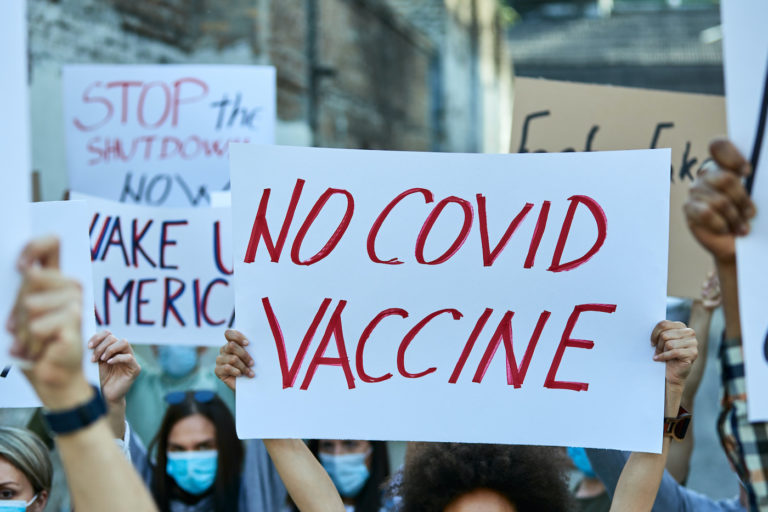
There are likely vanishingly few individuals who apply the rigorous ethical criteria they use against the COVID-19 vaccine to the rest of their medical and personal decisions. Such inconsistent application of religious freedom principles in the COVID-19 vaccine debate threatens to significantly weaken desperately needed protections for Catholic medical practices.