


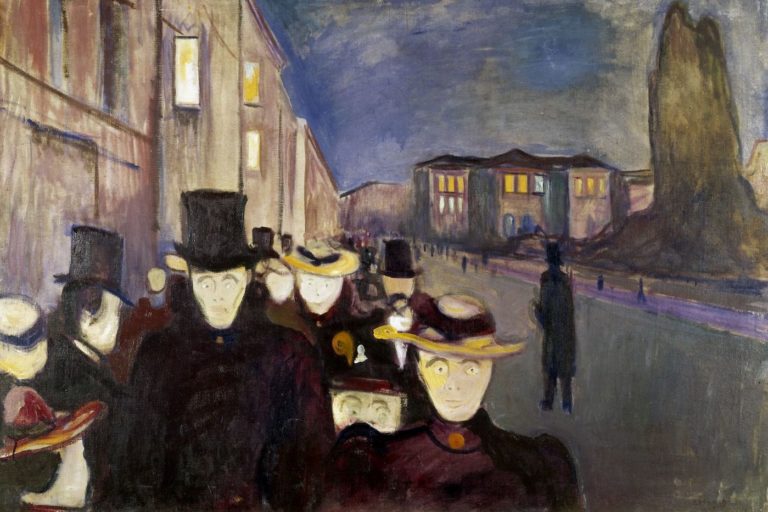





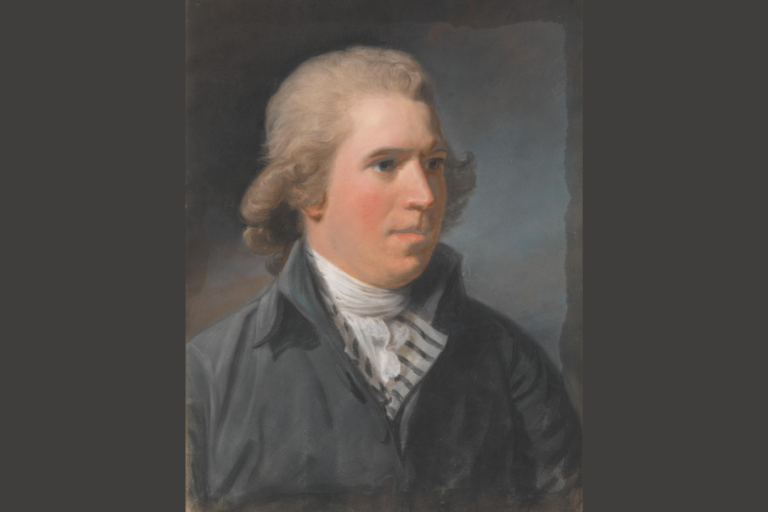






We’re not born being patriots. It’s not something that’s inscribed in our moral DNA; rather, it’s something that has to be cultivated. It is love of country. But as Edmund Burke famously wrote, “To make us love our country, our country ought to be lovely.” What does it mean to have a lovable country, and what should the honest patriot do or think?
Our culture seems to think that almost no behavior is off limits, no matter how dangerous or even deadly, if engaged in for erotic reasons. We’ve forgotten the harsh lessons about our bodily limits that HIV/AIDS taught us, and instead we embrace a sexual ethic of non-judgmentalism and autonomy. Monkeypox reminds us of our natural limits—and the consequences of ignoring them.
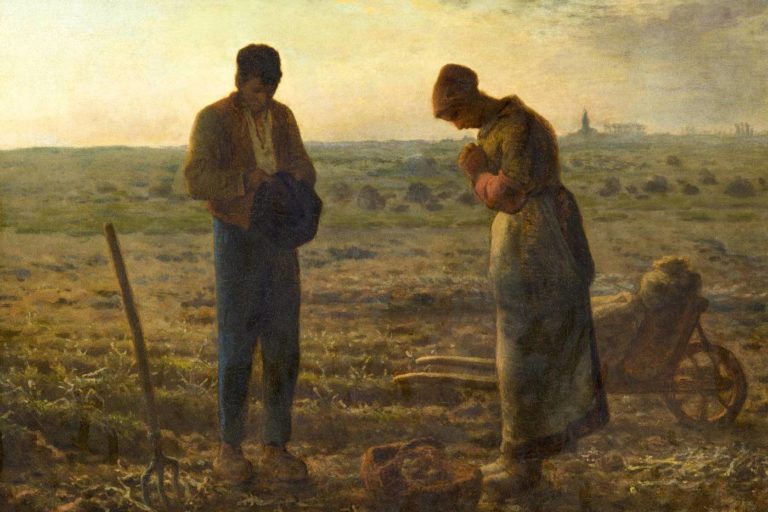
For the rationalist or fundamentalist character, hope cannot but seem inadequate, even corny. Such a character has a rage for order and cannot but suffer an anxious repulsion for disorder. Hope, on the other hand, is not blind, or merely optimistic, nor is hope something we churn up in ourselves as a kind of subjective attitude. Hope, rather, is a virtue. It is a state that perfects us, makes us well, capable of thinking, living, and acting in the freedom of excellence.
Someone who is subjected to racist treatment is negatively impacted. That child of God is treated as less than who he or she is. Those engaging in racist behavior are negatively impacted too. Why? Because they are behaving beneath the dignity of who they are. Too often people look at racism as a one-way thing when it’s an all-the-way-round thing because it’s a human family issue. Racism is a rebellion against God’s plan for the human family and for human flourishing.
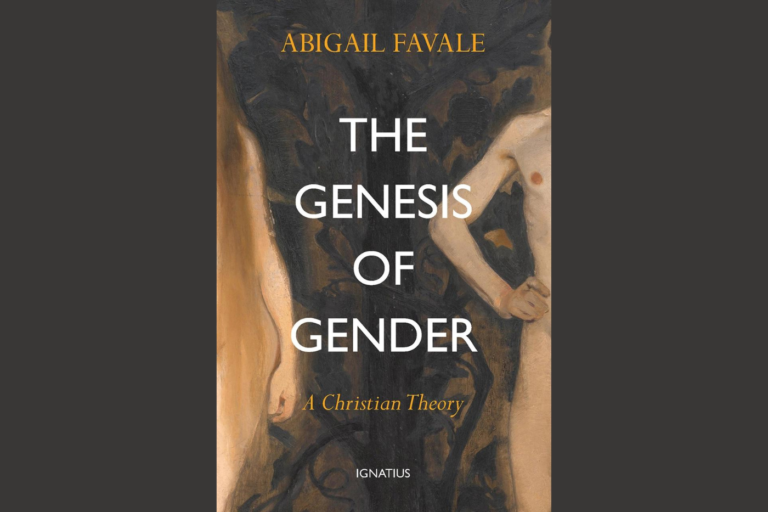
Gender dysphoria needs to be acknowledged and treated as a psychological illness. I understand the resistance to language of disorder and pathology, motivated by a fear that such language is stigmatizing. I understand, but I disagree. To reclassify disorder as order forecloses the possibility of recovery. I think of my own battles with anxiety, depression, self-harm. I don’t want someone telling me those things are normal and good. I want to be healed.
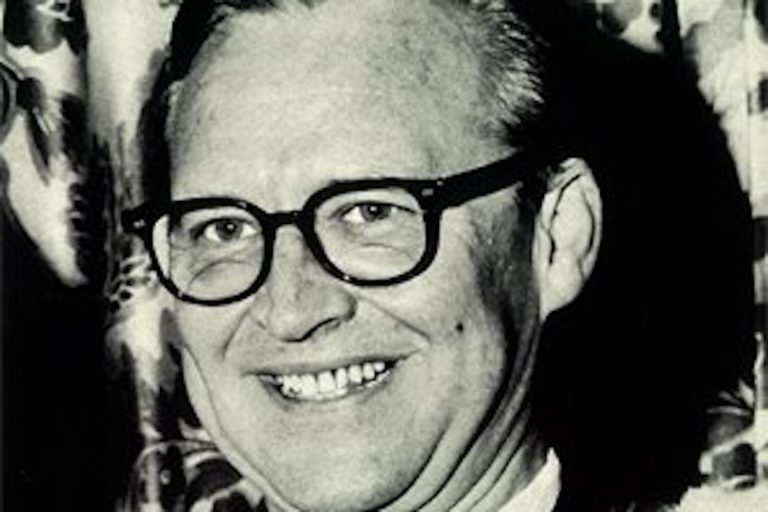
Albert Wolters’s conservatism, based on his metaphysical view of the structure of creation, encourages us to view America with neither optimism nor pessimism but with an eye toward healing and cultivation. As a counterweight to ideological extremes and rigid traditionalism, his approach promises the chance of real progress.
As young people prepare for college and early adulthood, they should reject conventional narratives that celebrate self-fulfillment and careerism. Instead, they should foster commitment to people, places, and ideas, and prepare for hardship and sacrifice. These countercultural habits and practices are difficult to establish, but they will serve one well in all stages of life.
During your time in college and for the rest of your life, you will encounter many people who have been wounded by lies and sin and are desperate for the truth, even if they don’t know it. Study well so that you can tend to them like the Good Samaritan did to the man by the side of the road.
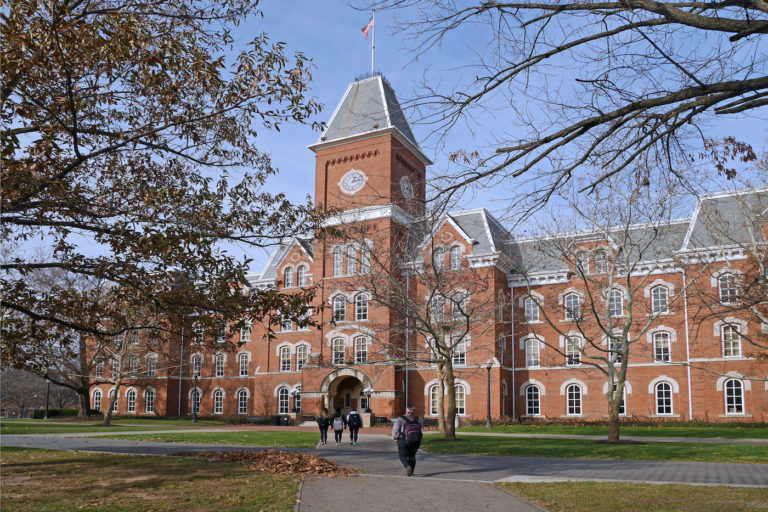
University education is only indirectly related to the moral life. We should seek moral formation, but if we expect universities to form our character directly, we will be disappointed. We will also undermine the university’s ability to fulfill its proper mission: to form the intellect and, as John Henry Newman envisioned, to prepare students for the world.
The term “humanist” is disputed because what it means to be a human is itself disputed. But much of the world has forgotten this dispute. It defaults to secular humanism, which doesn’t look beyond the self; it is a self-referential philosophy of life. The heart of Catholic humanism, by contrast, is knowing that human beings can only be understood in relation to God.
“We shall not cease from exploration,” wrote T. S. Eliot in “Little Gidding,” “And the end of all our exploring / Will be to arrive where we started / And know the place for the first time.” Such is the task of a liberal education, rightly understood. It is a liberating exploration that results not in being permanently uprooted and alienated but in being more fully at home in the world that we already inhabit—and more fully able to enhance it, beautify it, ennoble it, and sustain it.
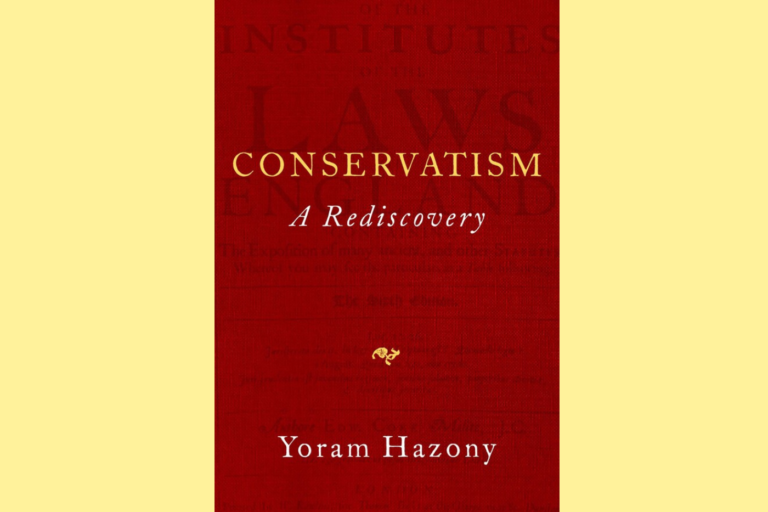
The arguments of Yoram Hazony’s Conservatism: A Rediscovery reveal both the value and the difficulty of applying a Burkean approach to human social life in a modern, non-Burkean society like our own. Part two of a two-part review.
Yoram Hazony’s Conservatism: A Rediscovery offers a valuable new take on non-Lockean political theory, grounded in the Biblical tradition and relevant to our current affairs. Part one of a two-part review.
Charles De Koninck is known for participating in an acrimonious debate about the character of the common good and Catholic personalism in the mid-1940s. This is unfortunate because that debate clarified little, and it distracted attention from De Koninck’s important perspective on modernity. We need De Koninck’s philosophy of nature because it can aid us in understanding the achievements of modern science while serving as a bulwark against reductionism.
We mere mortals may have more in common with history’s unknown shoemakers and privates. But to understand our history, it is more often necessary to look up to the heights occupied by the most visible human beings—those whose thoughts, words, and actions have had the most far-reaching effects.
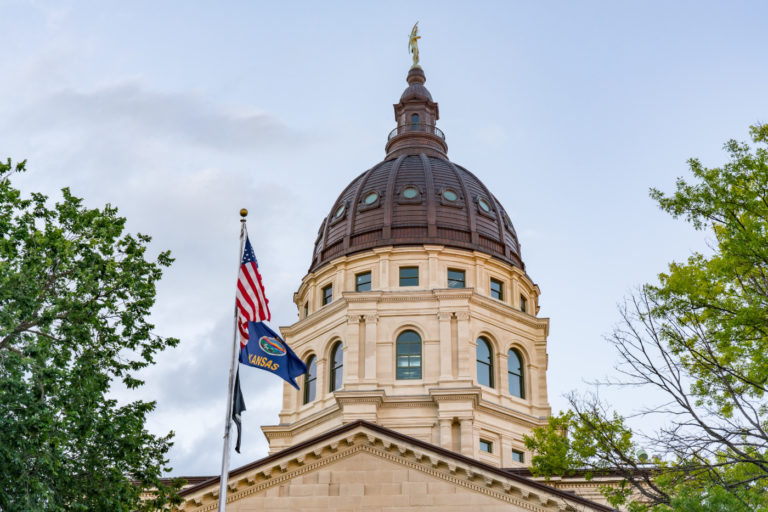
The recent defeat of a pro-life constitutional amendment in Kansas was not a consequence of strategic overreach, nor was it a rebuke of Dobbs. In fact, it followed from the difficulty of communicating complex legal and political principles, as well as navigating the fear and distortion generated by abortion advocates and their media allies. To help secure a pro-life future, we must learn the correct lessons of the Kansas loss, including the need to harness the emotional power of truthful narrative to shape political choices.
Traditional conservatives and others committed to the principles of limited government have nothing to fear from natural law-based accounts of the political common good. In fact, natural law accounts offer the strongest principled basis for defending liberty and limited government by showing how such values are themselves core aspects of the common good.
In her new book, Ilana M. Horwitz shows how public schools are both more formative and more limited than is often assumed. While they serve an important role in the academic and social formation of students, schools stand as just one institution among many in contributing to student outcomes. As we emerge from the significant educational disruptions occasioned by the COVID pandemic, Horwitz’s research suggests that we must work toward rebuilding schools and other institutions alike.
Conservatives have recently set aside their natural wariness of government intervention to propose new “pro-family” welfare programs, such as Senator Romney’s Family Security Act. In post-Roe America, the search for ways to support families is more pressing than ever. The problem is that there is very little evidence that these types of policies work.
The Fed has overestimated its power to manage the economy, and hubris is a dangerous thing in monetary policy. Starting in March 2020, the Fed increased the money supply significantly and the inevitable result was inflation. Unfortunately, the Fed continues to believe in its ability to fine-tune the economy.
The only way that we can really meaningfully grapple with the Supreme Court's legitimacy is to ask: what was it actually built to do? Roe was wrong. It had become the political equivalent of a black hole, totally devoid of substance, but with such immense gravity that it distorts everything around it. Abortion, of course, isn’t going away as a political issue. The difference now will be that instead of having debates about Roe, we’ll debate about abortion.
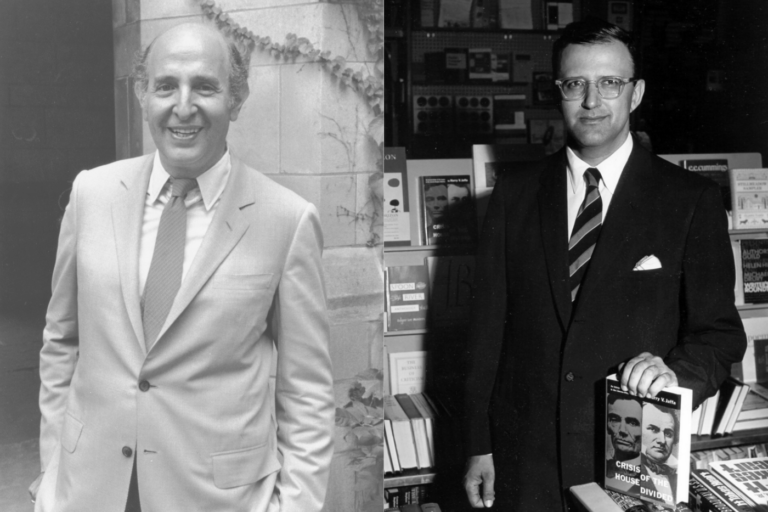
Harry Jaffa and Allan Bloom represent two ways of understanding the political philosophy of Leo Strauss, particularly in relation to the concept of classical natural right. The creative tension between Jaffa and Bloom, as well as their respective students, has produced some of the finest scholarship of the last half century or more.
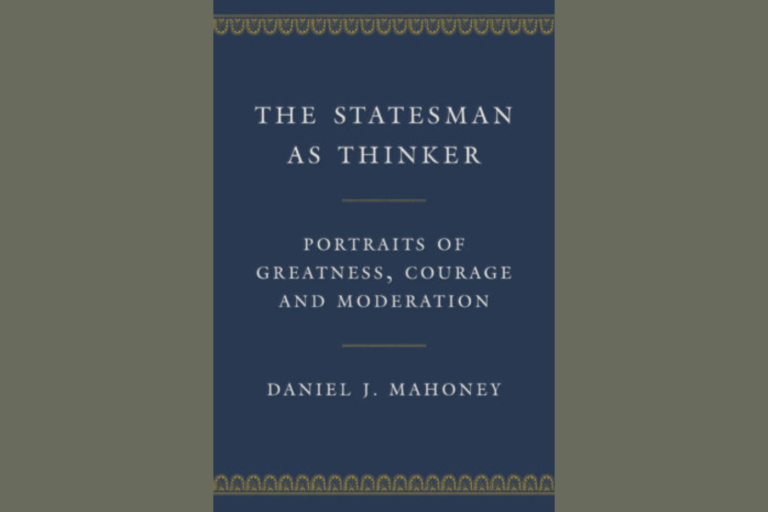
In The Statesman as Thinker, Mahoney seeks to restore principled statesmanship through portraits of six figures who combined political authority with uncommon reflection: Edmund Burke, Alexis de Tocqueville, Abraham Lincoln, Winston Churchill, Charles de Gaulle, and Václav Havel.
Augustine’s message about the two cities in City of God has important implications for Christian political engagement today. By resisting a facile sorting of the good from the bad, he reminds his Christian readers that their own transformation is far from complete and so helps them work for earthly peace in a spirit of humility.
