Witherspoon Institute
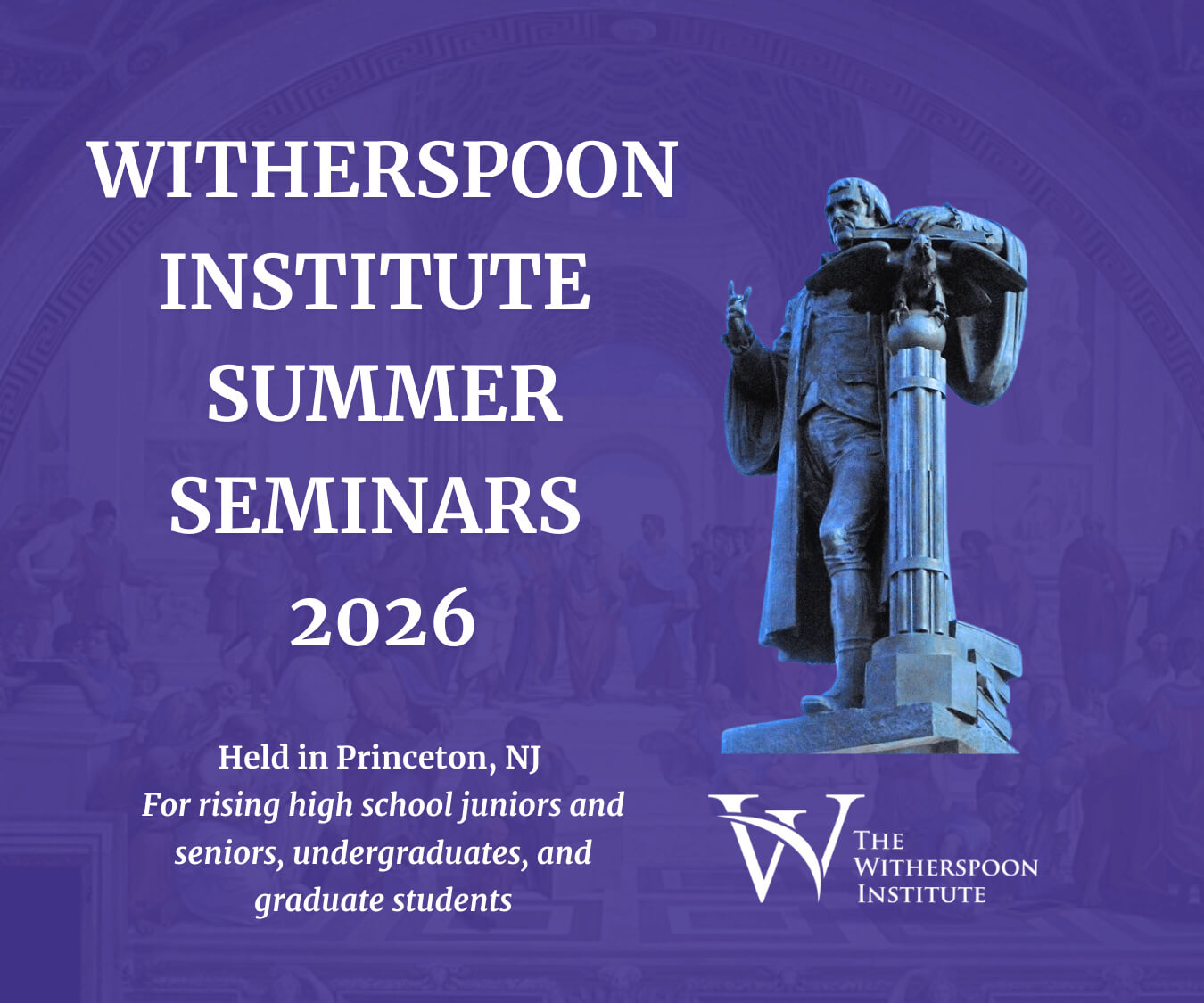
2026 Summer Seminars
Held in Princeton, NJ
For rising high school juniors and seniors, undergraduates, and graduate students.
Keep up with the conversation! Subscribe to Public Discourse today.
Book Reviews
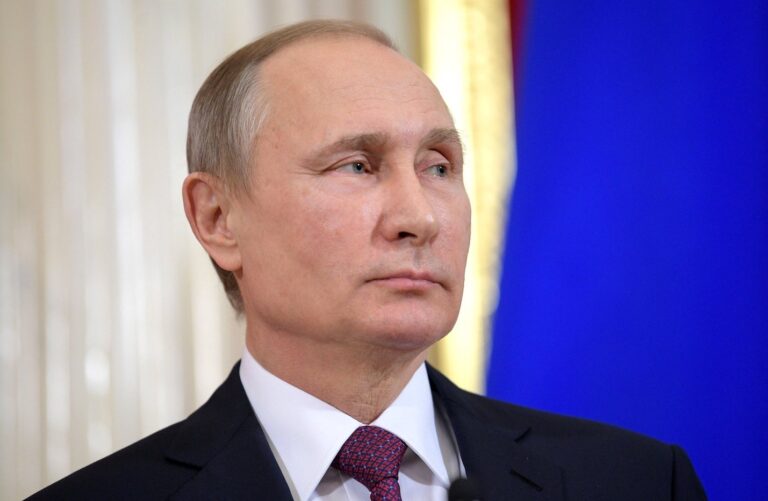
The Soviet regime is formally gone, but the legacy of its formidable security apparatus lives on. There was never a “decommunization” process in the wake of the USSR’s collapse. The vast majority of those who had participated in its structures and atrocities escaped punishment, and many of them created political careers in the post-communist era. People like Vladimir Putin were deeply marked by their socialization within that apparatus.
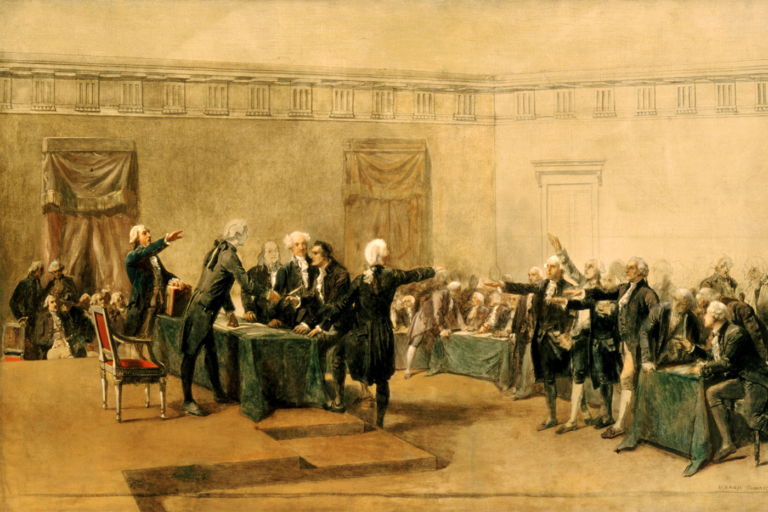
In The Classical and Christian Origins of American Politics, Kody Cooper and Justin Dyer successfully refute the still (somehow) influential interpretation of the American Founding as a secular-not-Christian project. However, they do so without successfully establishing their preferred alternative, the Christian-not-secular interpretation. There is a vast middle between these two extremes whose existence slips through the authors’ fingers again and again like a well-greased elephant.
What would happen if we dropped that charged word “liberalism” from the conversation and got down to specifics? I suspect much of Patrick Deneen’s postliberal magic would disappear.
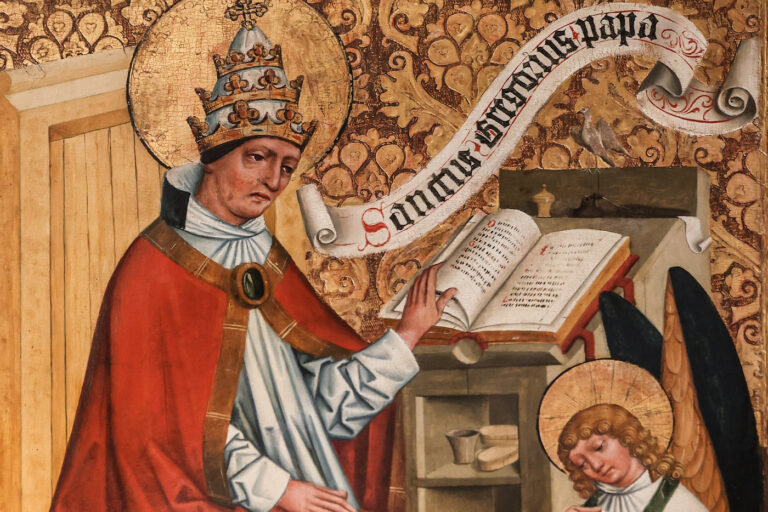
In Sacred Foundations, Anna Grzmała-Busse argues that the secular nation-state derives much of its structure from the Catholic papacy when it was at its peak in the Middle Ages.
By Andrew Busch
In The Myth of Left and Right, Hyrum and Verlan Lewis certainly succeed in proving to the reader that the pieces within each ideological bundle have shifted over time and do not inevitably go together, but they go well beyond that in concluding that each coalition’s bundle is fundamentally random. Though labels and coalitions may be quite movable, at any given time (including now) ideological identifications can tell us something intelligible about our politics.
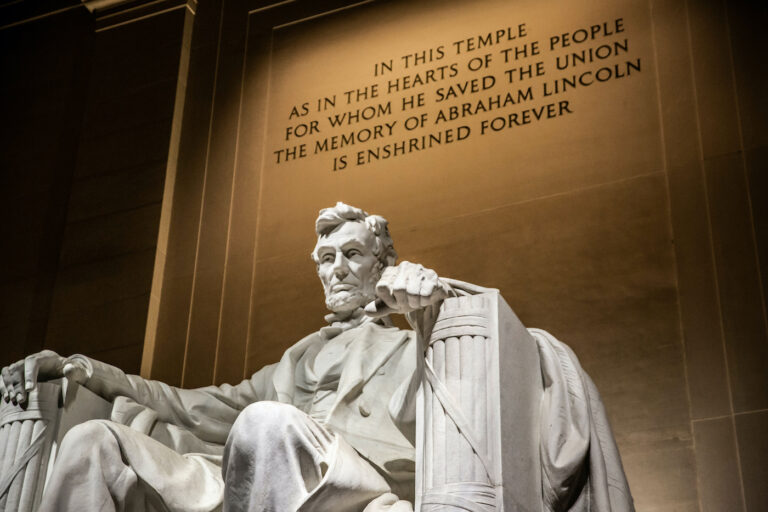
Lincoln saw the fundamental problem in democracy as one single, monstrous question: “Can the principle that liberates all and produces self-government remain disciplined and restrained enough in practice to retain self-government?”
By Samuel Gregg
As a moral framework for assessing regimes in an imperfect world, Nigel Biggar’s Colonialism: A Moral Reckoning has much to recommend it.
By Paul Krause
Fred Kaplan’s new biography of Thomas Jefferson, His Masterly Pen, gives us the Jefferson we deserve: Jefferson the writer, the listener, and the aesthete.
Farr Curlin and Christopher Tollefsen’s The Way of Medicine shows how doctors who are committed to the Way can practice medicine in a manner that restores them to this vocation of healing, even in our pluralistic age.