

















Members of Back Row America are rooted in a particular neighborhood or town that they do not want to abandon in pursuit of the American Dream. Or they are churchgoing Christians who find hope in their faith. But neither place nor faith is part of the mental geography of the Front Row.
Women have an understanding of conservatism that goes deeper than policy ideas, because we uniquely understand human relationships. The men that are the standard-bearers of conservatism need to make a greater effort to cultivate conservative women’s voices in the public square.
In many ways, demented patients present the greatest challenge to the question of what makes us human. Victims of dementia seem to lose all power of reason, recognition, speech, and memory. Their minds disintegrate, and all that seems to be left is the physical form. That, too, rapidly fades. Because of this, we tend not to see them as humans, but as something inhuman or formerly human—merely masses of flesh to be tossed aside. But this is a mistake.
Degrading our sense of nationhood by degrading national symbols will not end inequality or injustice. It will only move us closer to a state in which the government can no longer function, because the people behind it no longer perceive themselves all together to be part of a nation with a common purpose.
The eugenic search for good genes comes at the cost of human dignity and human equality, and leaves by the wayside the dogma of the sanctity of human life. Rather than warning us that eugenics can happen here, Thomas’s dissent lays out the case that it already has happened here, and the state has a compelling interest in preventing its return.
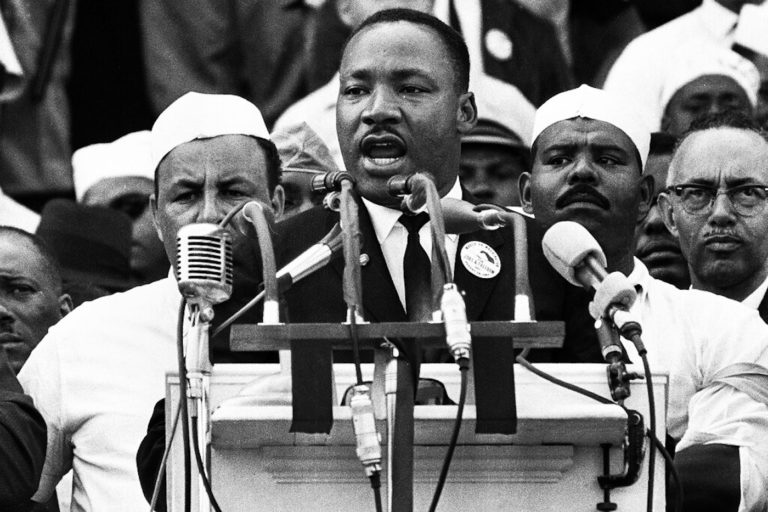
Does the sexual depravity of Martin Luther King, Jr. negate his work and witness in the cause of racial justice?
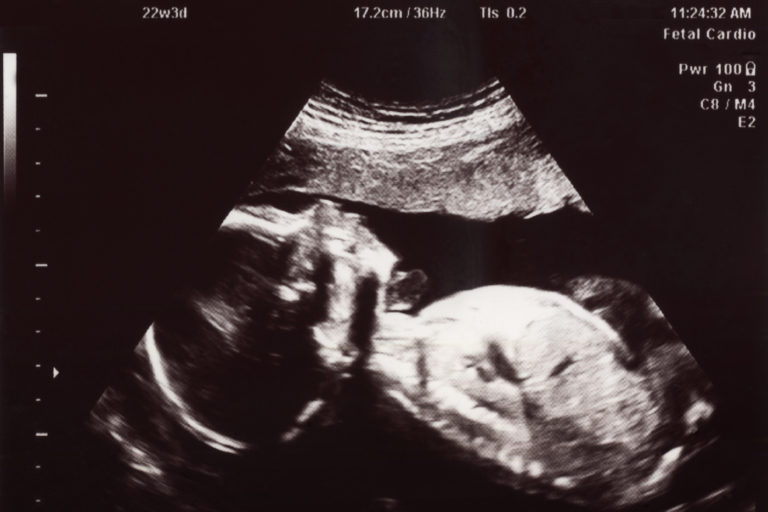
Every child’s existence is a gift not simply to the mother and father but to the entire human family. Adoption is the institutional way of upholding the gift of the child, whether his or her biological parents recognize that child as a gift or not.
We take our monetary system for granted, complacently trusting that the experts are doing their jobs well. Yet our current system strays very far from what the public would actually prefer.
We have no business building a multi-billion-dollar fertility industry at the risk of the health and well-being of women and children. A woman’s body is not designed to carry another woman’s baby. This essay is adapted from remarks delivered at the Heritage Foundation.
Helena Rosenblatt’s The Lost History of Liberalism correctly identifies liberalism’s need for moral virtue, but does not draw the further conclusion that her book suggests: liberalism is failing because it has rejected orthodox Christianity.
It makes no sense to claim that laws restricting abortion tread on the free exercise of religion because they do not allow abortions to be performed by people who have no religious objections to them. No serious interpretation of religious liberty allows people to do whatever they want simply because their religion allows or promotes it.
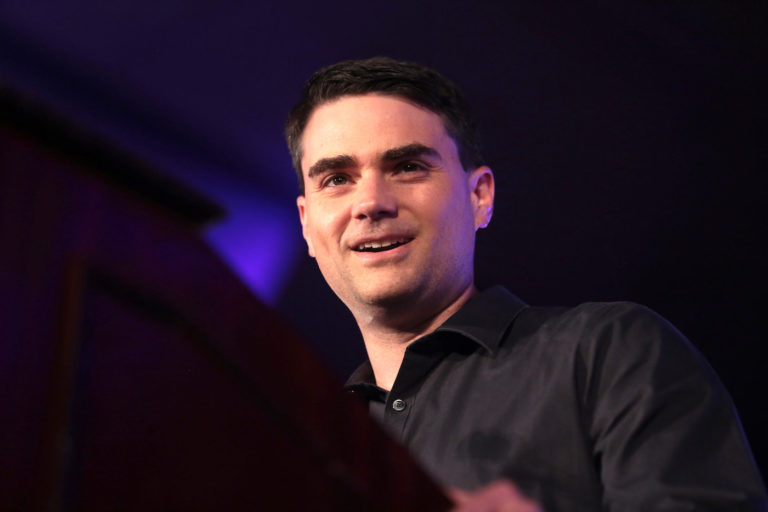
One might expect a book by Ben Shapiro to be about the task of “owning the libs” or “drinking liberal tears.” In fact, the reader comes away with a starkly different impression. In The Right Side of History, Shapiro argues that the cultural and political malaise of contemporary America is due to its being severed from its Judeo-Christian roots.
Faced with a national educational disaster that permanently cripples so many of America’s neediest children’s life chances, it is not “anti-public school” to advocate for voucher experiments. It is true to our republican aspirations to enable at least some of these kids the chance to attend a private school.
No one affords a greater understanding of American exceptionalism—what it is and what it is not—than Alexis de Tocqueville.
Wilfred McClay’s new textbook on American history outshines the competition, thanks to its balanced approach, its superb narrative style, and its reintroduction of topics and themes that have long since fallen from the pages of most classroom editions.
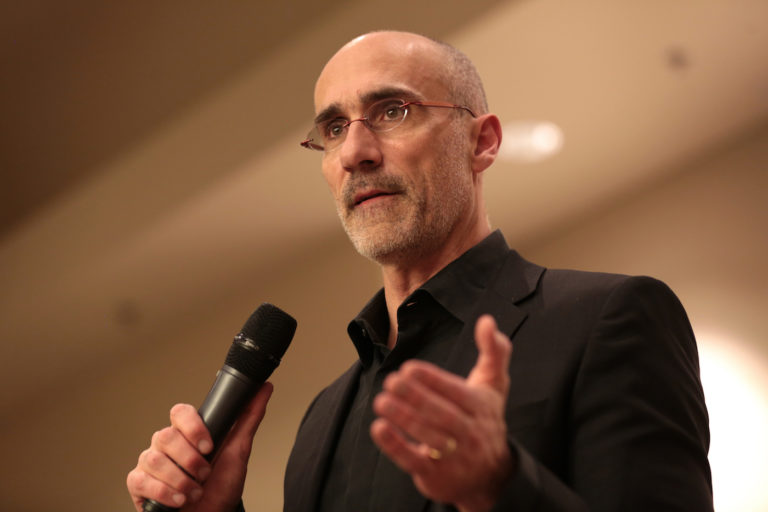
Arthur Brooks is right that we urgently need to learn to disagree better, but he’s wrong about what it will take to do that. Brooks demonstrates just how easy it is to slip from the transcendent and infinitely difficult command that we love our enemies to the comforting illusion that we have no enemies.
It’s not enough to teach our children that life is sacred from the moment of conception until natural death. We must also teach them to declare the truths of our faith in the public square. Inside the loving embrace of the family, the faithful need to raise a new generation of Christians that stands up for life and boldly proclaims their faith, understanding that no one, not even an elected official, has the right to stand in their way.
Vice President Mike Pence has been invited to deliver the 2019 commencement address for Taylor University in Upland, Indiana. However, a severe backlash against the former Indiana governor demands that his invitation be rescinded. The accusations against Pence are fallacious, slanderous, and contrary to both a biblical worldview and a liberal-arts education.
There are a number of praiseworthy provisions in the Vatican’s new rules, which are meant to root out abuse by bishops and prevent further cover-ups, but there are glaring problems and omissions as well. Troublingly, the new rules apply only to coerced sexual acts, not consensual ones. In addition, while reporting abuse is now mandatory, investigations will still be conducted by the Church hierarchy, not lay people or civil authorities.
In his new book, Letter to a Suffering Church, Bishop Robert Barron provides a necessary mixture of teaching and empathetic rage. Barron is right: we should refuse to be mollified by pathetic excuses and baseless claims that everything is fixed. Yes, we need to pray and pursue holiness, to safeguard those parts of the vineyard that are in blossom. But we also need to root out the vermin and destroy their lairs.
Social scientists who conduct research on the politically charged question of the wellbeing of children in the care of same-sex parents have emphatically asserted unqualified and universal support for the finding of “no differences.” In his meticulously researched new book, Professor Walter Schumm turns this scenario on its head. Through a detailed review of virtually all extant research, Schumm demonstrates decisively that contrary evidence not only exists, it is abundant and methodologically strong.
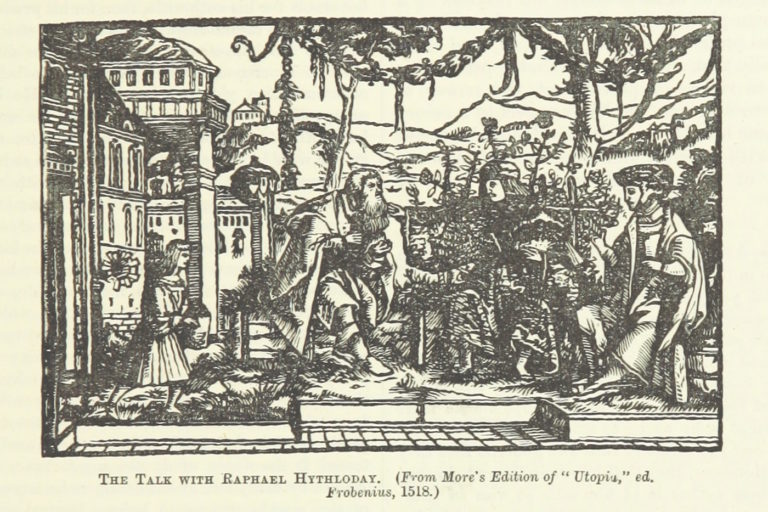
Niccolò Machiavelli’s imprudence is surprisingly similar to that of Thomas More’s fictional character Raphael Hythloday. Since prudence is the virtue that finds practical means to moral ends, imprudence may consist in rejecting either practical realities (as does Raphael) or ethical principles (as does Machiavelli). To achieve justice, political regimes must reject both idealism and utilitarianism.
In the wake of last month’s decision, the only remedy left to the people of Kansas is to pass a constitutional amendment to declare that there is no “fundamental right to abortion” in the state’s constitution and to allow the legislature to make reasonable laws about abortion.
If fertility declines because child mortality is falling, then almost any moral system would encourage most people to accept the trade-off. But if fertility is falling because Western countries promote a set of cultural narratives telling women in Africa, Asia, and Latin America that children are antithetical to a happy life, that the lifeways of their national communities are outdated and backwards, and that cultural legitimacy comes from emulating the family patterns of white Westerners, then there may be strong reasons to reject this model.