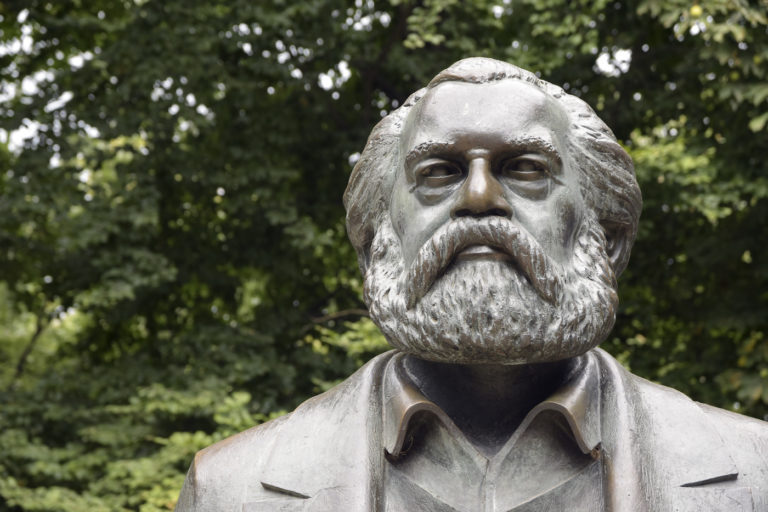






















Terry Eagleton attempts to offer us a gentle revolution, a soft “transition” from Catholicism to Marxism. This is as theoretically and theologically impossible as it is historically unprecedented. Any “radical sacrifice” on anything other than God’s terms will lead to mass bloodshed and human suffering, as it has whenever and wherever such a project has been tried before.
The adversarial system of litigation—in which attorneys with opposed interests present their respective cases to a jury—is now the best paradigm through which to understand modern-day journalism. We must assume the role of jurors, making sure to hear from all sides before reaching our verdict.
How much longer are we going to believe the lie that women need to suppress or even harm their healthy, properly functioning bodies in order to be successful women? How much longer are we going to let pharmaceutical companies and abortion providers determine what is best for women?
If influential Catholics continue to insist that their faith is incompatible with the liberal tradition, none should be surprised if that conclusion is increasingly accepted.
The studies assembled by the What We Know Project do not prove that transition is the best treatment for gender dysphoria, let alone that it should be the only permissible treatment. Rather, they show that the science is not settled.
Alexis de Tocqueville showed that socialism’s errors go far beyond bad economics. But his criticisms should remind today’s advocates of markets that they must promote stronger normative cases for capitalism.
For the first time in American history, it has become respectable to publicly oppose religious liberty and its supreme value in our polity. This unprecedented turn is ominous. It will not only diminish our constitutional law. It will remap our common life, for religious liberty has always been a linchpin of our political culture.
The divide between the “two cultures” of the sciences and the humanities is a well-known problem in education. The discipline that we need in order to unify them is natural philosophy.
By establishing a national anthropology based on an ideology of self rather than embodied sex, the Equality Act would deepen cultural divisions and chill reasoned debate on complex bioethical issues. Those who do not accept the legislation’s totalitarian twisting of language would be open targets for a modern American parallel to Orwell’s “two-minutes hate.”
The remarkable growth of Jewish Orthodoxy, evangelical Christianity, orthodox Catholicism, and devout Islam in this post-secular age demonstrates that many people are seeking to recover a sense of meaning that transcends the material.
In an era of evidence-based medicine, gender dysphoria is somehow exempt.
Christmas and Easter are beautiful seasons that reveal time to be more complex than our everyday linear experience of it. As Christians, we need to remember that YHWH not only speaks through his Word and in his Church, but also through the calendar.
Yes, be polite to us, and we will be polite to you. But we know that we are in an intense battle over the hearts and minds of our children. Mothers are very good at educating and protecting our children from harm when we believe they are in danger. This time, that danger is the harmful sexual ideology of the Left.
If the new conservative consensus emphasizes putting real Americans first, who are these real Americans? Are some Americans more equal than others?
It’s more authentic to stand before a young person and humbly say, “I’ve found something I’m eager to share with you, and I want to provoke you to go on your own journey for the truth,” than to deny that teachers, mentors, and other role models are speaking from tradition with authority.
We should not romanticize the countercultural efforts of the Poles and Hungarians. But until the broad center of the intellectual and political spectrum steps away from its flirtation with nihilism and post-political illusions, we must show more understanding for those who wish to save the remnant of Western civilization that still exists.
Robert Wilken’s new book convincingly demonstrates that the concept of religious freedom has its origins in Christianity. Unfortunately, in today’s political climate, that may actually be viewed as an argument against religious freedom.
The American Nurses Association Draft Position Statement on nursing and assisted suicide completely upends the proper role of nurses, leaving those who object without support.
Today, the fanaticism of activists, the ambitions of elite political operatives, and the passive passions of an apolitical public combine to determine our nation’s immigration policy.
Over the past few years, media stories about “transgender” kids have become increasingly common, but critical questions are seldom asked. These children’s identities are portrayed as immutable, while the ideologically-driven medical practices solidifying them are not investigated. Why won’t they report the truth: that these children and their families are victims of ruthless medical practices with no basis in science?
Rather than focusing on wealth transfers to the poor, we should seek to cultivate conditions that enable people to flourish through their own actions and relationships. When evaluating policies, we should ask: Does it give people an incentive to stay together, or does it subsidize their breaking apart? Does it encourage one particular kind of childcare, or does it enable all mothers to better care for their children in the way that they choose?
Both believing and non-believing students of Strauss will find Leo Strauss and His Catholic Readers rewarding.
Steven Harper argues that conservative politicians should be primarily concerned with protecting their own citizens. It is time for conservative politicians to distinguish themselves from those on the right and left who have taken up globalism. Republicans have to recognize, as Trump did, that the essential goal of conservative policy is to help the “Somewheres” facing the challenges created by a global and internationalist economy.
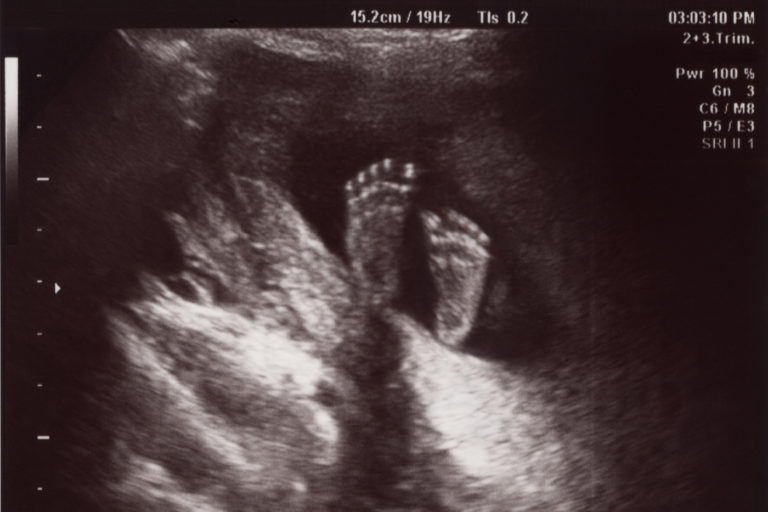
The pro-life movement is really asking for a moral revolution. If the child lives, the mother’s life will not be the same, because if we accept the principles that allow the child to live, none of our lives can be the same. There is no way to guarantee a world safe for the unborn child that is also a world of total sexual and economic autonomy. In any world in which autonomy is the highest ideal, the child—that incarnate sign of our dependence and existential poverty—must go.