







Taking all things together and balancing the good with the bad, you have not a moral horror, but a very good country indeed, which is why people from around the world still yearn to come here. If anyone tells you otherwise, he’s a lying rhetor. 
My oath, with God as witness, to uphold the rule of law must matter more than the judgment of any peer or historian.
Ideas about the political conditions for human flourishing sometimes have unforeseen consequences. But the consequences of refusing to traffic in these ideas are foreseeably very bad indeed.
This Christmas, as we enjoy our cozy families and gifts, may we marvel in Christ’s appearance in Scripture and in our world, with all of its paradoxes.
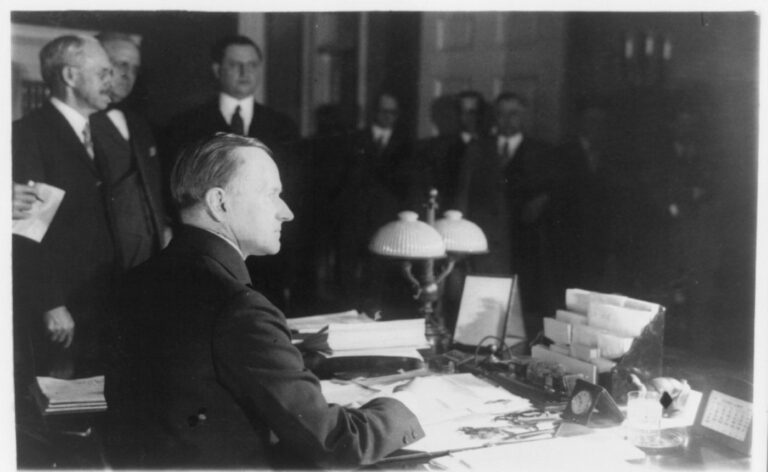
Henry Ford sought to mainstream anti-Jewish sentiment in the United States. In a 1925 address, Coolidge decisively broke with Ford’s movement. 
Kingsnorth sees the problems of technology; but he also realizes (and acknowledges) that he is embedded in the Machine. What he proposes toward the end is not a naïve and impossible utopian withdrawal but selective resistance to the Machine, resistance that can take various forms but that will always involve some level of complicity. 
A roundup of reads from PD’s editorial team and the Witherspoon Institute staff
You need people to have the tenacity, the wonder, and the willingness to say, “I can do some things better than what is currently being done in the marketplace.” And that’s the nature of entrepreneurship.
Jane Austen was an extraordinary writer of fiction, but she was also a profound teacher of human nature, the arts of life, and the way to happiness. Her novels are, as it were, about her “important nothings”: about the sport of laughter, love and friendship, and the splendid challenge of being human.    
It is plain to this grateful reader that the tradition of the university has deeply formed Professor Hankins and Professor Guelzo into the kind of people capable of bringing to fruition the Herculean labor of love and learning that is The Golden Thread
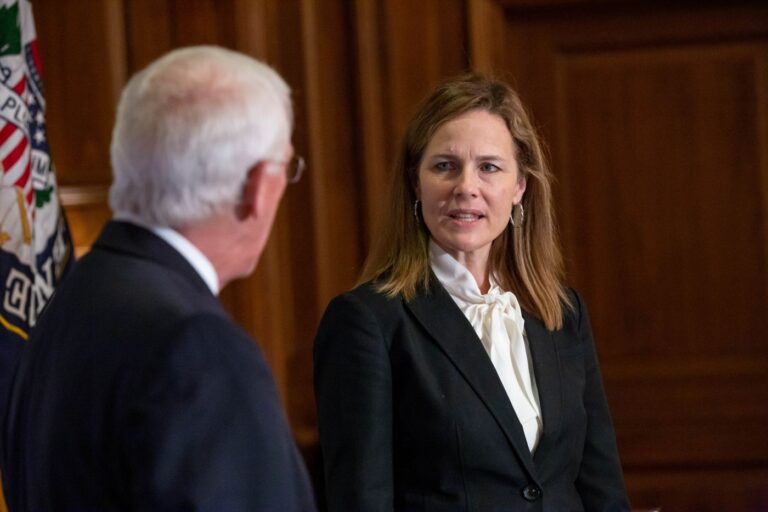
Conservatives are indebted to those who fought for the soul of the Court. 
When it comes to human beings, learning must not consist in committing a pre-packaged truth to memory, but an endless process of discovery and self-critique.
What place smartphones have in our future is uncertain, but whatever it is, all generations should be alert to the problem.
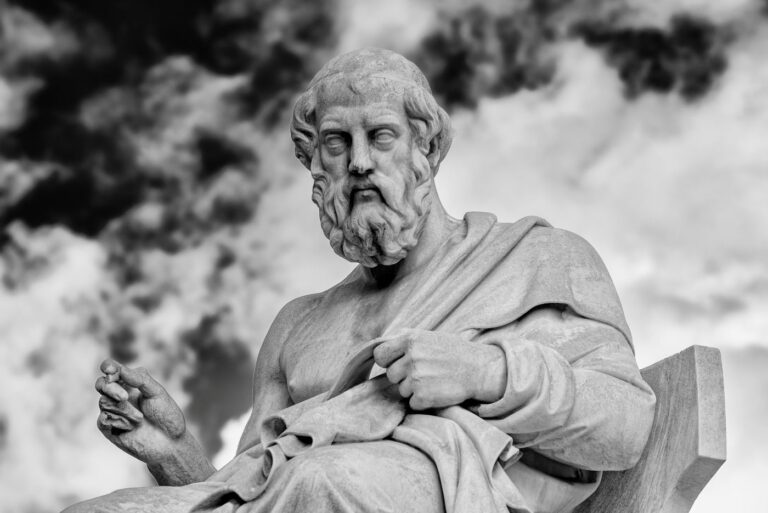
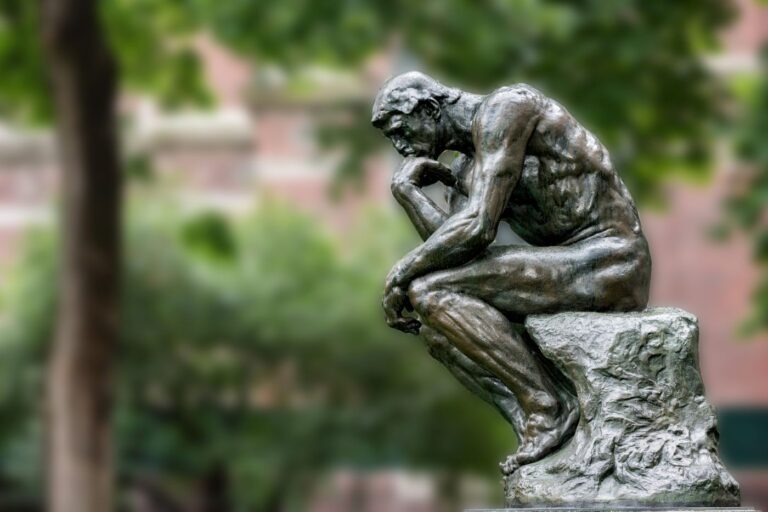
No matter how one answers the problem, wrestling with the Gorgias is inevitable for the lawyer concerned with justice. Either we answer Plato adequately, or we cannot be lawyers.  
It would be perverse to charge all fulfillment theology with antisemitism. Many reject Christian Zionism for the plausible (but unfounded) reasons described in Mattson’s piece, and many are clearly philo-Semitic. But it might not be a bad idea for some of them to ask what W. D. Davies and other theologians started asking in the 1970s: “How did Christian Europe come to hate Jews?” 
Questions about how to interpret our Constitution, the reader can conclude, ought to be approached from within the broader enterprise of understanding how to inherit it. The inheritance-based understanding of American constitutionalism that Barrett transmits through this book is itself worthy of being handed on with interest and appreciation.  
What we need is a restoration of virtue in our land, in order to tame the strong gods and ensure that their power serves the good—so that the return to reality is marked not by domination, but by integrity, not by chaos, but by character. 
“There is a time for war,” says the preacher in Ecclesiastes, “and a time for peace.” Let the present time point toward the time of perfect and ultimate peace, when the swords of nations shall be beaten into plowshares.
West shows us in Maritain what a Christian philosopher in our time should look like. 
Inconsistencies in official religious teachings are frequently only apparent. 
I’m all for refuting bad ideas. But the way you really convince people is to show them that what they want, they’re not getting from the wrongheaded idea, but they can get it from a correct understanding of what’s good and true.
When we give thanks, we do more than cultivate a human virtue. We contemplate the good we have received and, at our best, share in a glimpse of that original vision that saw in each created thing: “It was good.” 
All forms of art are acts of creation and, on a small scale, the artist is participating in an act of creation that is ultimately an act of God, the Creator of all things.  
In a world where “success” is increasingly understood as zero-sum, we might have some empathy for today’s parents who are worried they are letting their kids down if they are not setting them up to succeed, even if that comes at a collective cost.