Pillar

Politics & Law

The third pillar of a decent society is a just system of politics and law. Such a government does not bind all persons, families, institutions of civil society, and actors in the marketplace to itself as subservient features of an all-pervading authority. Instead, it honors and protects the inherent equal dignity of all persons, safeguards the family as the primary school of virtue, and seeks justice through the rule of law.

Learn more about Politics & Law: get your free eBook today!

Any defense of the West must be clear about those core commitments to reason and the reasonable God that are central to its identity.
The Saudi-Qatari feud is empowering Turkey and Iran, thereby changing the geopolitical map of the Middle East.
Any scholar or commentator who truly worries about the prospect of fascism or nationalist tyranny should favor the restoration of a more robust American federalism, with more powers exercised by the states and fewer powers assigned to the national government.
Nathan Schlueter and Nikolai Wenzel’s book-length conservative-libertarian debate is a helpful tool for understanding an important conversation and provides the basis for a robust defense of liberty in the public sphere.
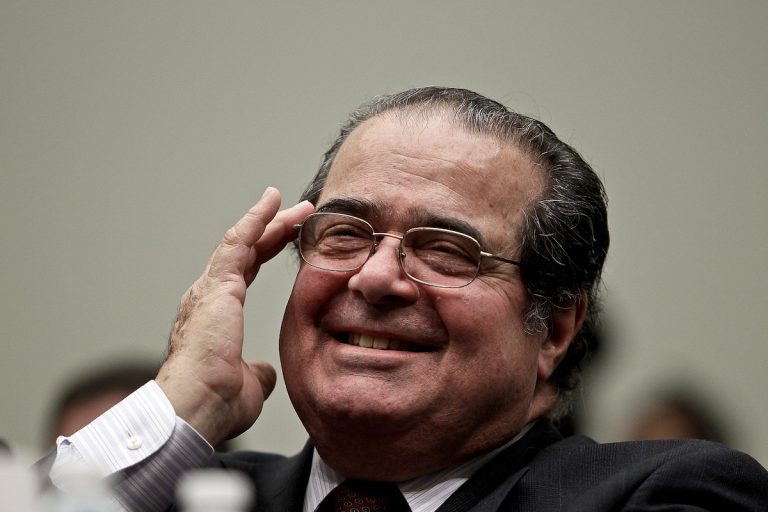
Justice Antonin Scalia, an originalist, famously held that the Constitution neither permits nor prohibits abortion. On the contrary, unborn babies are “persons” within the original public meaning of the Fourteenth Amendment, and they are consequently owed due process and equal protection on constitutional grounds.
Political scientists James W. Ceaser, Andrew E. Busch, and John J. Pitney, Jr., take a hard look at the 2016 election, adding another book to their series of insightful election analyses.
Sexually violent predator laws permit the indefinite confinement of persons who have already served a sentence for their crime. They are a perfect example of what C.S. Lewis called the humanitarian theory of punishment, replacing punishment and desert with treatment and therapy.
The antidote to hyper-partisanship is a recovery of America’s tradition of civil religion. A new book by Philip Gorski takes up this difficult and subtle project.
Defenders of capitalism need a more humane anthropology, sensitive to man’s social and communal nature, lest they forget to ask the crucial question of what economics is for.
A new book by James Poulos reveals both the greatness and the limitations of Tocqueville.
Trump did well in Poland to eschew all talk of “the wrong side of history” and instead to emphasize the real power, for good and ill, that we have over our own destiny. By doing so he defended our dignity and upheld our humanity.
Libertarian insights may be able to help communitarians close the meaning gap and build communities that matter.
Our nation was founded on biblical principles as a haven for devoutly religious dissidents. We forget our Judeo-Christian origins and the founders’ commitment to freedom of religion at our peril.
The Supreme Court recently agreed to hear the case of Jack Phillips, owner of Masterpiece Cakeshop, who declined to bake a cake for a same-sex wedding reception. There is no need to coerce artists to employ their abilities in ways contrary to their religious beliefs.
A timely book on the thought of Harry Jaffa and Walter Berns reminds us that patriotism needs to be about ideas and principles, but it cannot only be about ideas and principles. To win—and deserve to win—elections, conservatism must also inspire love of country and serve the immediate interests of the ordinary man.
A note from the editor on our need for your support.
This week’s 7-2 decision in favor of Trinity Lutheran Church goes a long way toward restoring order to the Supreme Court’s religious liberty jurisprudence.
Understanding the author of America’s Declaration of Independence is easier said than done. He may have hated big government, but big government was born of the rationalism that he loved.
John Stuart Mill foreshadows the deeply intolerant faith and agenda of contemporary liberalism.
The effort to combat climate change aspires to feats of social control, coordination, and foresight that are unprecedented in the history of politics. Our expectations for the movement ought to be tempered by our knowledge of human limitations.
Those trying to block the nomination of Russell Vought are not protecting religious pluralism but are rather demanding that all public servants be relativists.
Athletes should be judged on talent, heart, and work ethic—not politics. Our national sports teams should represent the whole country, not any one political niche.
It is often alleged that the American founders lacked a unified and coherent political theory. To the contrary, a recent book by Thomas West shows that the founders broadly agreed on a philosophy of natural rights, calling for both the protection of liberty and the promotion of virtue.
In a heated Twitter exchange with Senator Ted Cruz, Harvard professor Joyce Chaplin recently claimed that recognition by the “international community” created the United States in 1783. From an international lawyer’s standpoint, this is nonsense.

Get your free eBook for The Human Person

"*" indicates required fields

Get your free eBook for Sexuality & Family

Get your free eBook for Politics & Law

Get your free eBook for Education & Culture

Get your free eBook for Business & Economics