Pillar

Education & Culture

The fourth pillar, education and culture, is built upon the recognition of two essential realities. First, the Western intellectual tradition requires a dedication to and desire for truth. Second, education takes place not only within colleges and universities but within our broader culture, whose institutions and practices form us as whole persons.


Learn more about Education & Culture: get your free eBook today!

What can human beings endure? How can they adapt to radical changes in their environment and in themselves? How will their choices reshape their society? Science fiction at its best invites us to consider such questions at the extremes of human experience.
As we accept the new normal—for however long this might last—maybe we can look to our past and reclaim our first communities, our neighborhoods, by reaching out to those nearest our quarantine bases. Hopefully we will find that, when we can finally resume life as we knew it, we will have more community, not less, richer connection, not poorer.
While you’re stuck at home, why not elevate your viewing with some classic films from the golden age of American filmmaking?
Shutting down the questions of Christian nationalists comes from a faith tradition of its own, a faith in collective humanity, international travel, and free exchange. Time will tell whether such a faith can remain vibrant.
My prayer for all of you—for all of us—is that God would not only intervene dramatically to kill this virus, but also that, in the course of doing so, God might strengthen us in our faith and trust, and in our understanding of our ultimate dependence on Him for all of life.
Reading good history books takes us out of ourselves and places us, for a time, elsewhere and elsewhen. In our isolation, with our minds so preoccupied with the pandemic and its economic and social effects, such an escape can be just what the doctor ordered.
So much of feminist thought is concerned with the idea that women need affordable, high-quality childcare options so that they can pursue professional success. But there is so little written on the ways we could use technology so that women could be with their children the vast majority of the time while still advancing in their careers.
While medical experts’ job is to save lives from the coronavirus, it is the responsibility of citizens to ask and decide what makes a worthwhile life. There is more to life than mere living; our own self-respect as responsible agents, who govern ourselves under the law (human and moral), ought not be so easily jettisoned.
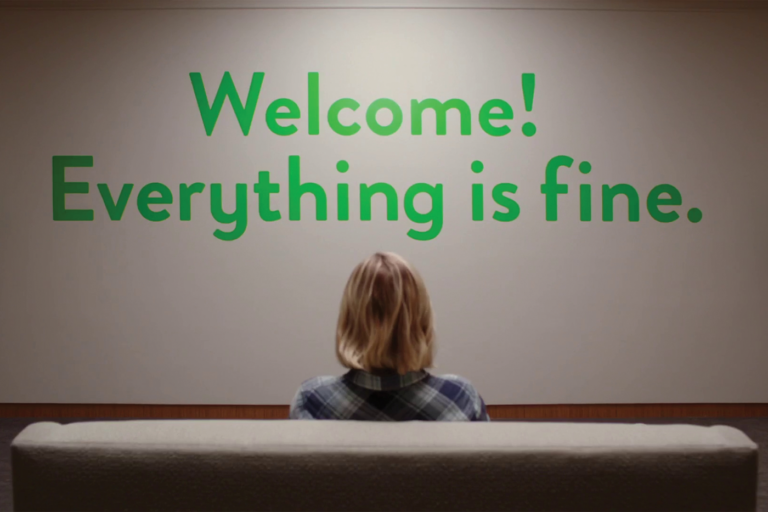
The Good Place finale was hilarious, thought provoking, and profoundly moving. However, in failing to find our highest good and identifying the means to achieve it, the show could do little more than put a happy face on our current cultural despair. This article contains spoilers.
Our confrontation with suffering and death provides an important opportunity for reflection. What is it that we value most? What relationships need forgiveness or reconciliation? How should we understand our lives and our own mortality? Both empirical data and religious traditions show that, by engaging in such interior reflection, it can be possible to grow and flourish even amidst great suffering.
The Coronavirus epidemic has provided us with a lesson in how bureaucracies function in a time of crisis. It has also reminded us that education is more than merely transferring information. Real education takes place when the student and the professor meet face-to-face and just talk.
A friend is more than a form of entertainment. The utilitarian way app designers would have us pick friends off a menu reflects quite the opposite approach. Friendships are viewed as more comfortable and more disposable than Allan Bloom, C.S. Lewis, and the Talmud suggest they ought to be.
When our conception of relationships and relationship-building is based on a vision of the human person as an atomized choice maker who forms bonds for his or her benefit, we should not wonder why institutions decay. Our institutions are in crisis because we are in an identity crisis.
A major source of political division in America is the difference between those who believe in essences and those who follow intersectionality. Those who hold theories of intersectionality believe that human identity and much of reality itself is a construct that they can revise, not an objective reality that we can all know. This limits the possibility of political discourse: we cannot reason together if one side no longer believes in the capacity of reason to discern what is true.
We are all faced with a choice. Is meaning a futile attempt to mask the banal absurdity pervading everything? Or could there be divine purpose embedded within human existence?
The leaked draft executive order “Make Federal Buildings Beautiful Again,” is not perfect, and it could easily be amended for the better. Still, a careful reading should not bring to mind visions of gulags. It has also given traditional and classical architects an unforeseen and unasked opportunity to promote their cause in a public forum.
Ross Douthat’s depiction of our society in his new book, The Decadent Society, should unsettle defenders of the status quo; his assessment of its potential resilience should give pause to those who are eagerly awaiting its fall and planning for what comes next. Decadence may be worse, and yet more permanent, than we think.
Contemporary Christians are called to infuse procedural liberalism with substantive language and concepts rooted in Christian tradition. We ought not spend our time despairing over supposed barbarians at the gate, or lurking within us—and not simply because it distracts us from our work, but also because it saps us of hope.
Through the stories we tell and the wisdom of traditions we know, professors should invite students to rethink their lives as a creative call to move outside themselves into relationships with goods, work, and people that are fulfilling and fruitful.
The phrase “achievement gap” refers to the well-documented discrepancies between the scholastic achievements of African American and Latinos on the one hand and white students on the other. What explains the gap? My meta-analysis revealed that if an African American or Latino student was a person of faith and came from a two biological parent family, the achievement gap totally disappeared, even when adjusting for socioeconomic status.
In order to alleviate our social crisis, we will need to improve the moral formation that our institutions provide their members. Yet the institutions best suited to lead in this task are those with a religious mission, which in turn are imperiled by the culture war that elite institutions are waging against them. The cause of institutionalism today therefore requires a forceful defense against the aggressions of the cultural Left. Part two of a two-part review essay.
In an important update to Aristotelian political thought, Yuval Levin’s new book shows that the health of a modern society depends on the health of its social institutions, and that our social institutions today are not healthy. Part one of a two-part review essay.
Active Christians exhibit greater current life satisfaction and are more likely to report that they are thriving. In addition, active Christians have higher levels of subjective well-being throughout the entire business cycle—not just in booms, but in the busts as well. Our results suggest that religion and religious communities will continue to play a driving role in helping people cope with change by keeping their eyes pointed towards the eternal even as storms surge around them.
The 1619 Project’s goal is not just reframing American history on ideological grounds, but reframing the philosophy of history itself. This in turn harms our ability to learn from history and understand our identity as Americans.

Get your free eBook for The Human Person

"*" indicates required fields

Get your free eBook for Sexuality & Family

Get your free eBook for Politics & Law

Get your free eBook for Education & Culture

Get your free eBook for Business & Economics