Pillar

Education & Culture

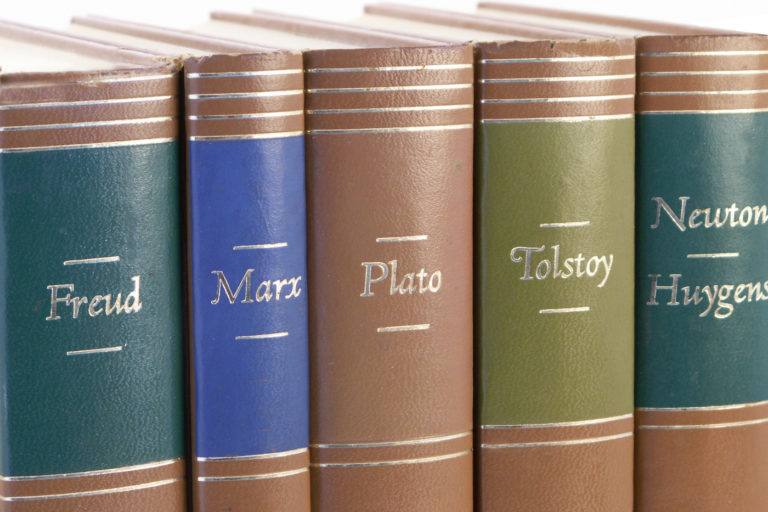
The fourth pillar, education and culture, is built upon the recognition of two essential realities. First, the Western intellectual tradition requires a dedication to and desire for truth. Second, education takes place not only within colleges and universities but within our broader culture, whose institutions and practices form us as whole persons.
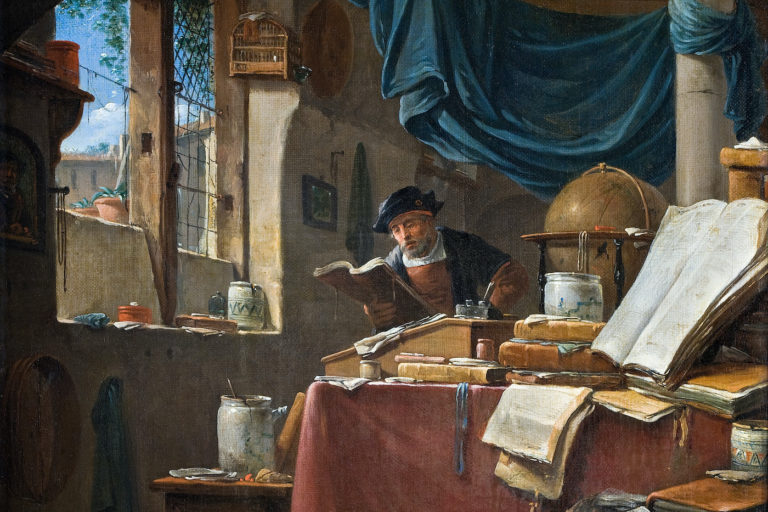
Learn more about Education & Culture: get your free eBook today!

In 2020, China became the world’s number one box-office market. For years, the Chinese Communist Party has been using this economic leverage to shape the content of American movies.
The debate over whether it is grace or nature that directs human beings towards the beatific vision was one of the most contentious intra-Catholic theological disputes of the twentieth century. David Bentley Hart’s 2022 You Are Gods: On Nature and Supernature shows that the debate is alive and by no means merely academic and inconsequential—pantheism, tradition, orthodoxy, and heterodoxy are all very much at stake in the argument.
America’s education professionals—meaning government bureaucrats, administrators, and teachers—have been trained in an education philosophy driven by progressive politics. Whether in Mississippi or in California, much of America’s school staff attended colleges of education that teach similar, politically infused educational philosophies. The question is, can parents really retake control of public education?
Today, in Part I of this essay, I explain critical race theory and show how many of its ideas have made their way into public schools across the country, prompting a backlash that has led to the introduction of anti-CRT education regulations in many states. CRT views values like “objectivity” as tools of oppression. It’s clear that many public schools are indeed incorporating plenty of CRT-inspired ideas like these in their curricula.
Righteous anger is often good and necessary. But not all parents are comfortable with confrontation, and even fewer enjoy the option of placing their children in saner institutions or schooling at home. I’m convinced that parents can be very effective in less noisy, more behind-the-scenes ways.
At used bookstores, I’ve discovered lesser-known titles from celebrated authors—Waugh, Koestler, and Cather. These works represent this most precious impulse of twentieth-century literature: that every life that comes within our reach has its claim on us, and is not to be wasted or sacrificed to any cause, program, or system on which we have the conceit to place a higher value.
Is the fearless pursuit of truth sufficient to form the basis of a new university? Is it enough to be always in pursuit of truth? Or does one hope, along the way, to find, keep, and act on some of it? Is a commitment to truth and freedom in the abstract sufficient to ground an academic community, or is something else—a larger tradition—required?
For Christians, UATX’s educational model poses a dilemma. On the one hand, guided by the truths of revelation, how could Christians endorse an institution that eschews all claims to prior knowledge? On the other hand, is there a strategic advantage to allying with non-sectarian schools when the bulk of American universities are unyielding partisans of secularism?
Among the ruins of family and faith, amid gender deconstruction, surrounded by endless intersectional identities, and with countless constructed categories being hastily erected in their place, where can a sure and stable identity be found?
Millennials and Gen Zers have been subjected to decades of social messaging that the good life is predicated on fostering unbounded dreams, reaching for ever-towering heights of achievement, and “changing the world.” Two new books push back against this narrative, urging readers to make a stand against the chaos and vapidity of our world by delineating a small corner of it that will demand our care and attention, making choices that limit yet enrich our existence.
We are not isolated individuals, free to create our own moral codes and obligations based on our preferences, desires, self-identifications. We enter a world already tied up with pre-existing relationships, duties, and obligations. These are basic principles of conservatism. Given the drastic environmental changes awaiting future generations, conservatives ought to start considering climate change a top priority.
Anyone who has spent his life in the academy, as I have, has reason to keep his mind open and his interests broad—namely, friends who write. My professional association over the last dozen years with the Witherspoon Institute and Princeton’s James Madison Program has introduced me to a dazzling array of brilliant and productive minds. No, I don’t want my writing friends to stop. They have given me much to ponder, and I look forward to what they will all write next.
The continuity between administration and teaching for me has always had to do with the question of the moral, intellectual, and spiritual development of young people. Finding creative ways to meet students where they are and draw them into the most important questions is a source of endless fascination for me. When it comes to education, it may be the case that, as Alasdair MacIntyre argues, the only way to carry on sustained debate is from within and between rival traditions, assuming, that is, that members of a particular tradition are genuinely interested in engaging perspectives quite different from their own.
If the novel is by definition tightly bound to the human subject, then contemporary novels will suffer from the same decay and corrosion from which the contemporary soul suffers. Yet, despite the uneasy conditions facing both the novel and the world, the human soul remains remarkably resilient and fascinating. Sally Rooney’s latest novel, Beautiful World, Where Are You? ponders the profound disenchantment that haunts today’s souls and novels alike.
For the conservative theorists of the poison pill, everything becomes about ideas. According to them, Ockham, Scotus, Bacon, Descartes, Locke—they are the important bad guys who determined the decadence of our time and the problems we should be talking about. But ideas don’t work this way; reality does not proceed with perfect logic like it so conveniently does in the textbooks.
Norman Rockwell’s famed realism and attention to detail take that which is commonplace, and make it once again both startling and delightful. He aims to make us see the world that is really here, but that we so often take no notice of, precisely because it’s so familiar to us that we don’t bother to see it.
Mary Midgley, the lesser-known friend of Elizabeth Anscombe, Philippa Foot, and Iris Murdoch, was a deliberately multidisciplinary thinker. She was convinced that moral philosophers must relate various bodies of knowledge to one another if they are to achieve an adequate understanding of human life, human motivation, and human success or failure. Midgley, writing from the margins of the discipline, was the first to present a positive proposal for the kind of moral philosophy recommended but never developed by Anscombe, Foot, and Murdoch: a naturalistic moral philosophy, grounded in the character and needs of the human animal.
About a decade and a half ago, a groundbreaking study reinvigorated Protestant moral thought. It is time for an appreciation and renewed application of these eternal truths.
My ignorance of many important things gnaws at me, as does the consciousness that the rest of my life is not time enough to learn what I want to know. Lately my thoughts have turned to authors with whom I have some acquaintance but want to know better—specifically those philosophers and theologians who have shaped and transmitted the Catholic faith through the ages.
The canon wars are over, and the canon lost. But the canon’s defeat might not be a bad thing for readers and teachers who care about great books, because it allows us to offer franker, more interesting, and more compelling reasons to read them.
Reading recommendations from The Witherspoon Institute’s staff.
The human soul is marvelously complex. Anyone who thinks he can definitively disentangle another author’s motivations—let alone his own—is fooling himself. He is engaging less in scholarly inquiry than self-projection. Only by listening attentively to others can we instruct our minds and enlarge our souls.
Christ’s advent is an astonishing story of God’s power and light breaking into our darkness, doubt, and suffering.
As recent debates about critical race theory in education demonstrate, trying to solve social problems while neglecting universally recognized virtues acquired through self-mastery—virtues like hope and love—not only fails to build democracy, it also makes us angry, anxious, depressed, and divided. Educators should not ignore historical complexities and conflicts, but they also need to teach students about the universal principles that unite us and sustain the hope needed for social harmony.

Get your free eBook for The Human Person

"*" indicates required fields

Get your free eBook for Sexuality & Family

Get your free eBook for Politics & Law

Get your free eBook for Education & Culture

Get your free eBook for Business & Economics