Pillar

Education & Culture

The fourth pillar, education and culture, is built upon the recognition of two essential realities. First, the Western intellectual tradition requires a dedication to and desire for truth. Second, education takes place not only within colleges and universities but within our broader culture, whose institutions and practices form us as whole persons.


Learn more about Education & Culture: get your free eBook today!

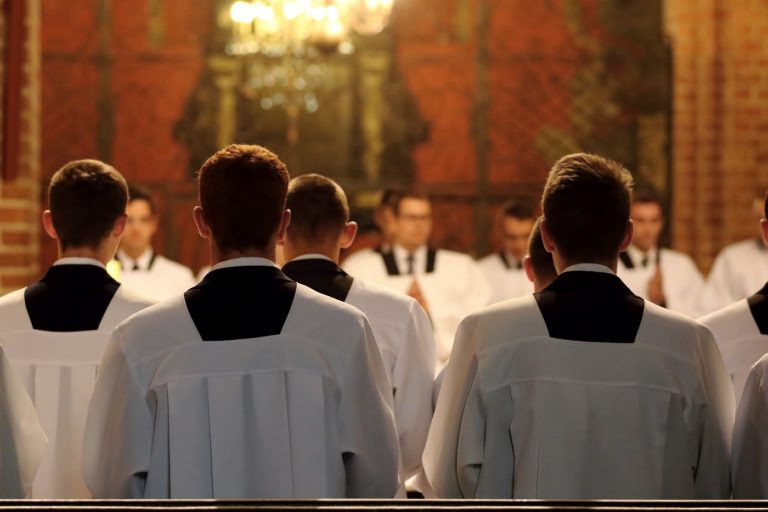
In light of the vocations issue and concerns about privacy, a policy that significantly intrudes on priests’ privacy should be a last resort. However, given the tremendous damage the earlier sex scandals did to the Church’s credibility, as evidenced by declining attendance and financial support, renewed concerns about priestly celibacy may justify such a resort.
Academia has to be a sanctuary for free speech and free thought. The Academic Freedom Alliance is calling universities back to their core mission: the pursuit of knowledge. That pursuit requires humility, openness, and the free expression of a diversity of opinions.
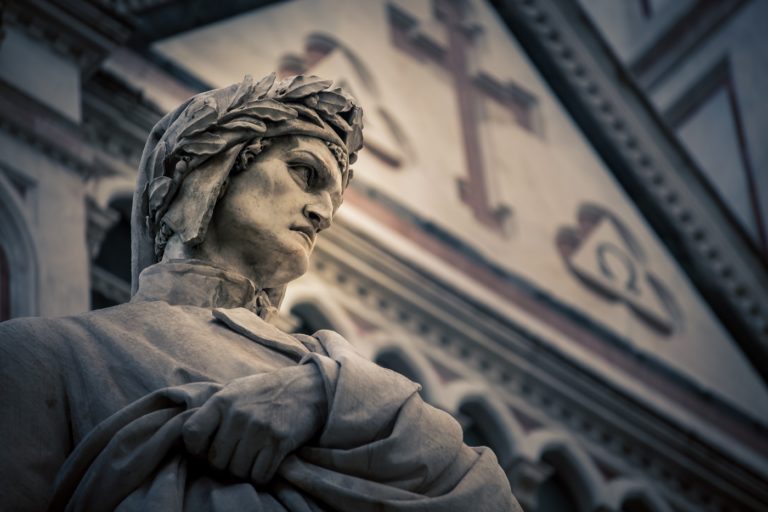
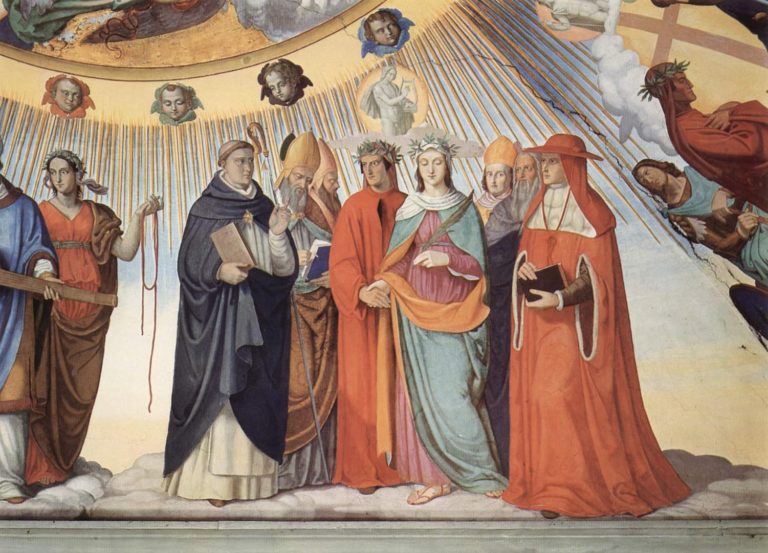
Dante reveals to students the essence not only of their relationship to their teachers, and ours to them, but also of our combined relationship to the reality (natural, human, and divine) studied during their liberal education. The end of a liberal education is an experience of the Love that created both the subjects of a liberal education and the human persons in need of that education, and Dante achieves that purpose. Through truth and virtue, he becomes wise, and his wisdom sets him free.
Every human lives out the drama of existence in his or her way, and with great risk: they gain or lose heaven, embrace or reject love, bring a child into being or not, form friendships and romances or sink into loneliness, become sages or fools. If we forget or forgo the primacy of the person, choosing instead the story of power and chaos, it seems likely we’ll lose the cosmos of our own souls.
If a shared identity is to emerge and persist, if citizen strangers are to have a shot at becoming civic friends who recognize a mutual obligation to create a just land, the foundational principles of our constitutional order must be consciously taught and reaffirmed. And, of course, teaching and affirming these principles does not itself entail a claim that America has historically lived up to them.
Many readers will find it easy to accept Helen Andrews’s claim that the boomers left the world worse than they found it. Yet the biographies Andrews has written are evidence less for the special guilt of the boomers and more for the limits of human finitude, the persistence of sin, and naïveté in the face of evil.
Given modernity’s inability to realize Augustine’s thesis of the necessity of a common love, we have two options: we must either reject a universal socio-political vision as entirely unworkable, or the world—or at least the West—must learn again that a transcendent foundation and telos are essential to political order.
Aristotle thought that contemplation was man’s highest activity, and that the virtues developed in other aspects of life prepared one for this activity. Indeed, as Plato predicted, wrestling prepared me for the contemplation of truth. Thankfully, I did not need a perfectly intact spine to do so.
Some of the best perspective-altering reading experiences I’ve had in recent years have come from books that I read well outside the bounds of my own research. Nonetheless they made their way into my thinking and writing in various ways—they “stuck.” And books that “stick” in this way we are apt to recommend whenever an opportunity arises.
The British author grappled with the Eichmann Trial in her most ambitious novel. The book is worth revisiting for its fascinating portrait of Adolf Eichmann’s rhetoric and his ability to obscure the reality of the Holocaust.
The historical parallels between fourteenth-century Europe and our own times can be useful in our current civilizational crisis. Petrarch aimed to create a new synthesis between classical and Christian civilization, to use the resources of antiquity to heal the spiritual diseases of his own time. What he and his followers created over the next century and a half is known to historians as the Renaissance, the rebirth of antiquity. It followed a formula that can still work today.
Our goal should be to ensure that all the priests ordained from our seminaries will possess the flexibility and affective maturity to live and thrive as holy shepherds and spiritual guides.
The trick of John Kennedy Toole’s novel is that it draws you into the story with its comedy without requiring you to consciously assess the disjointedness of the protagonist’s way of reading the world. Even without stepping back and intellectualizing the problem, you learn how not to read by experiencing Reilly’s inept ways of reading and living.
A seminar should lead students into exploring a great work, rather than presuming to master it. This may reawaken the intention of contemplation. In the end, happiness is species of contemplation, and—as Aristotle shockingly reveals—everyone wants to be happy.
Summer—a time of lounging in a shaded hammock between two trees, or under a beach umbrella—is a great time for bite-sized nonfiction. With Public Discourse taking a publishing hiatus for the week following Independence Day, now is a perfect time to stretch out with some small provocation of thought.
A new critical commentary on Lewis’s classic 1943 work provides a treasure trove of interpretation and supplementary material. Lewis’s warnings about the consequences of jettisoning natural law—what he referred to as the Tao—remain as trenchant today as they were when delivered during the Second World War.
Unless and until the excesses of authenticity culture are able to be moderated, we can expect the widespread relational fragmentation, loneliness, and loss that flows from it to continue unabated. Nevertheless, authenticity should not be discarded as an ideal. Instead, we must articulate a more constructive and reasonable conception of authenticity that can be passed on to the next generation.
Encouraging people to be gracious, and to recognize what others have provided them through no merit of their own, is not about “guilt tripping” them. It is to encourage a particular way of existing in the world. Gratitude acknowledges the plenitude of goodness that surrounds us every moment of every day in millions of small acts of people we do not know.
Written in an engaging and compact style, Benjamin and Jenna Storey’s new book is essential reading for all observers of the persistent, often hidden, but increasingly visible unhappiness of contemporary life.
Truth is not something “out there,” but a relationship between person and thing. Good literature arises out of that relationship, telling truths in a personal way, making the world it reflects more personal.
The Western liberal educational system preaches diversity and freedom, but it does not show students how to live them. It mass-produces people who lack the tools to appreciate the dignity of human beings in all their rich variety.
The question is not whether we will wrestle with the morality of art, but how artful our wrestling will be. Irony is not an essence or an end: irony is a means toward other aims. By nature, it appeals to our moral sensibilities, even if at its most mature it does so indirectly.
How does each and every one of us live a life that matters, that makes a difference, that has meaning, purpose, and value—and that ultimately will be a happy life in the rich sense of the term, that will be blessed? This essay is adapted from a commencement address delivered at The Mount School, a high school operated by the Bruderhof Community in New York, on June 4, 2021.
When things are falling apart, anything that stays together starts to look strange. Vows, habits of self-discipline, manners of dress and address—all the essential elements of cultural formation—can come to seem like the arcane demands of a cult. To rebuild our common life, we will have to learn to distinguish between mindless cults and mindful cultures.

Get your free eBook for The Human Person

"*" indicates required fields

Get your free eBook for Sexuality & Family

Get your free eBook for Politics & Law

Get your free eBook for Education & Culture

Get your free eBook for Business & Economics