



















In a nation whose communities have declined, and in a republic in which disagreement on first principles now includes topics that previous generations imagined could not be contested, the moral order must be rebuilt in local communities.
Christians should be wary of the substitution of the nation for the church. Instead, they should seek a vibrant localism allows people to find meaning in their local communities—especially religious communities—and impart that sense of purpose and belonging that nationalists rightly perceive is missing for many citizens.
Surrogacy is dehumanizing to both birth mother and child, because it reduces them to commodities. By design, it denies mother and child what they need to flourish as human beings.
David French, Sohrab Ahmari, and others who are debating the future of conservatism are right to think that the challenges facing our nation are grave. Still, we need not feel forced into cheering for one side or the other, into viewing this as a matter of “teams.” We conservatives need to keep the main focus on ideas, not personalities, and engage each other both robustly and charitably. We need to think prudently about practical steps we should take—here and now, given all the givens—that will promote the common good.
Unless adults are willing to make dramatic changes to their own moral and legal rules about pornography, we shall keep playing what amounts to game of Russian roulette with the formation of our children when it comes to one of the most precious parts of their lives.
In order to flourish economically, property rights must be secure and the rule of law must exist.
Among the universal, fundamental rights every person enjoys is the right to leave his nation of origin. Yet the right to leave does not entail the right to enter a specific nation.
In her new book, Mary Eberstadt argues that today’s identity politics arose from the deep anthropological wound slit open by the sexual revolution. The ascent of identity politics reveals that people are having an identity crisis, and they are having an identity crisis because the sexual revolution resulted in family—and, by extension, individual—breakdown.
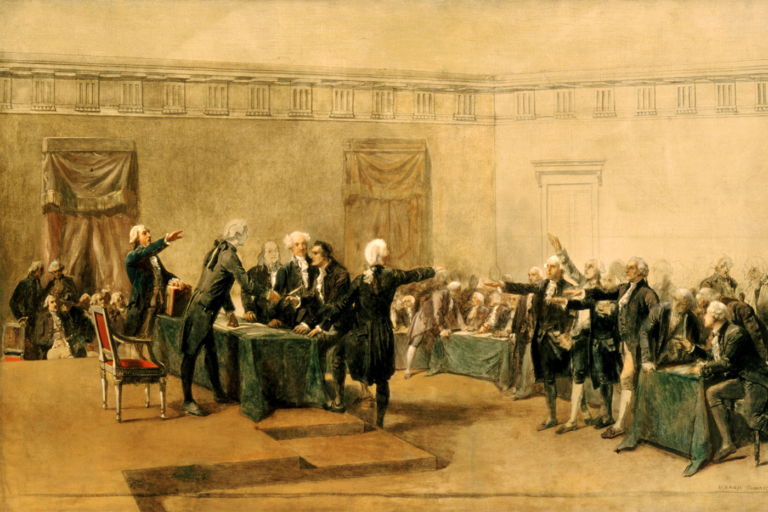
The 1619 Project points us to the need for the 3395 Project—the project of constructing a new and stronger American identity that incorporates both the experiences, perspectives, and distinctive contributions of the descendants of enslaved Africans (1619) and also the aspirations and ideals enunciated by European Americans in the Declaration of Independence (1776).
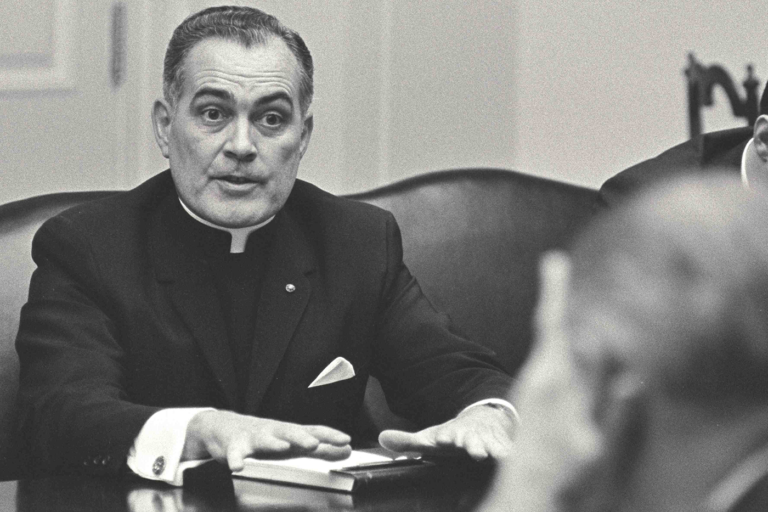
Father Theodore Hesburgh was a dedicated priest and a leader who possessed enormous ambition, charm, intelligence, and dedication. But for all his many gifts, Father Hesburgh lacked the vision and imagination necessary to realize the goal of making Notre Dame into a great Catholic university in the modern world.
Don’t delay your life. Don’t wait until you get a job, then tenure, to do the normal things that make life sweet, like marrying and having children. Remember the time-worn observation: “Life is what happens while you’re busy making other plans.” Professors who build their career around their own ego and cutthroat ambition tend to shrivel into something you don’t want to be.
As you enter into the medical profession, I encourage you to “start with the end in mind” by studying the Hippocratic Oath. The oath articulates the true aim of medicine, guiding physicians to provide treatments that align with the purpose of medicine and so are right for a doctor to do, and to refuse to provide treatments that go against this purpose and are wrong for a doctor to do.
New teachers need concrete examples from their teaching communities to help them manage their classrooms well and begin building experience and expertise. Returning teachers need opportunities for discussion within their communities to help them reflect on the experience and expertise they have already gained.
Law students shouldn’t be content with shallow conceptions of law. Instead, they should look deeper, asking questions about the nature and destiny of the human person, and the connection between our human nature and the legal enterprise.
Some prejudices are good to have, some are bad, some are indifferent. Acquiring an education is learning to discriminate the good prejudices one carries about from the bad ones—to keep the former, as confirmed by knowledge, and discard the latter, as condemned by knowledge.
G.K. Chesterton may have summed up our current situation best: men who stop believing in God do not believe in nothing, but believe in anything. It seems that we’ve moved from belief in God to belief in government, and are hurtling toward an ever-growing state.
If questions of ultimate meaning and purpose are shuttled to the side, as they are in so many of our schools and colleges, the various disciplines and domains of knowledge can never attain a unifying vision.
Like Abraham Lincoln, a growing number of our young people are “unchurched.” As a result, our “us vs. them” politics functions as a substitute for religious observance, membership, and devotion. If there were more authentic religious practice in our society, there might be less of the bitterly partisan politics that divide our country.
Permissive sexual attitudes and practices have not stimulated the religious revival many Christians believe the extremes of Sexual Revolution will inspire. There is no evidence of it in the data. On the contrary: Christians seem to grow more complicit—or at least more quiet about their misgivings—by the year.
The rise in numbers of people with no religious affiliation reflects the emergence of a new faith rather than a loss of faith altogether. As America’s religious norm changes from Christianity to therapeutic deism and spiritualized progressivism, we will find more people challenging longstanding protections of human dignity and religious liberty.
The people most harmed by this agenda are seriously ill people hearing from society and physicians that death by overdose will end their problems; other patients suffering from a reduced commitment to care; people with disabilities who are next in line to be seen as a “burden” on others; and lonely and depressed people of any age, seduced by the message that suicide is a positive solution. Adapted from a lecture delivered in June 2019 at the Vita Institute, an educational program for pro-life leaders sponsored by the University of Notre Dame's de Nicola Center for Ethics and Culture.
Johnny Tremain is a liminal secular-religious book. It challenges its secular readers to have a deep enough conception of the secular to encompass dying for the sake of freedom. It challenges its religious readers to deepen their pieties sufficiently to encompass the aspiration for freedom which is written in the human frame. It shows that the constitution of liberty is engraved in the human form itself.
If we want to rebuild our country, we must rebuild our local communities. To rebuild communities, we must rebuild a culture of reasoned discourse.
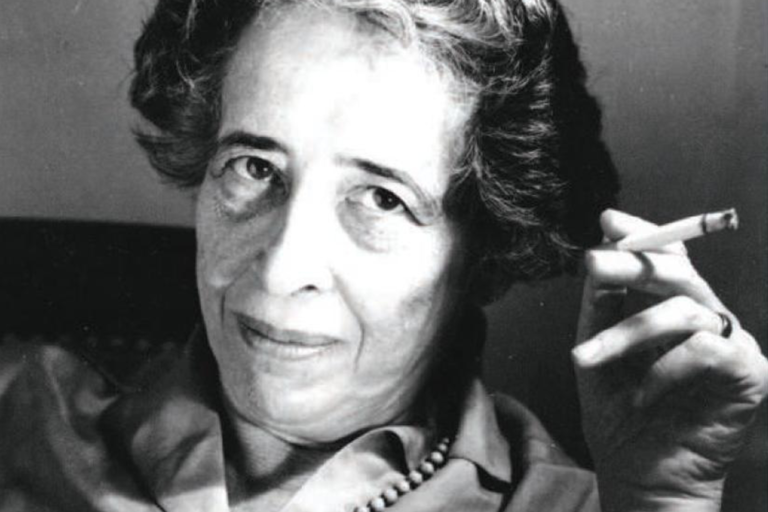
Hannah Arendt has been unjustly transformed into a political partisan for the liberal causes that are in vogue today. Letting Arendt speak for herself recovers her intellectual independence as someone who defined herself apart from and against the political traditions of her day—including progressive liberalism.