



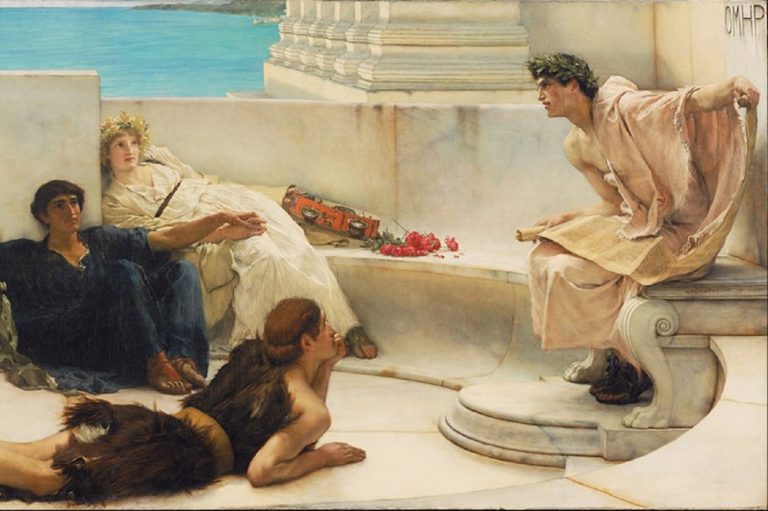



















My snapshot of freshman orientation highlights some of the failures of higher education. Too many universities today no longer teach students how to think but what to think. Instead of a marketplace of ideas, campus has become an echo chamber of ideas. But outspoken students (and faculty) can save the university by thoughtfully and deliberately making their voices heard.
A growing number of jurisdictions have taken steps to pass bans on “conversion therapy,” a term referring to efforts or interventions to change or suppress the sexual orientation or gender identity (SOGI) of persons. These bans enforce a message of expressive individualism—that the only acceptable response is to “affirm” a person’s SOGI—and rest on a faulty anthropology on sex and gender. They infringe upon aspects of individual and group autonomy, and they negatively impact public order, health, and moral considerations.
Yuval Levin is right that we need a “party of the Congress,” a group of members who are committed to exercising the constitutional powers of the House and Senate, not just competing against the opposing party. Because the House is the weaker of the institutional links, the only way the institution of Congress will have a chance to be strengthened is if a “party of the Congress” forms in that chamber. This will require opening up House rules to give rank-and-file members greater opportunities for success as entrepreneurial bipartisan legislators.
Free market dogmas are inapplicable to the managerial oligarchy. A politically coordinated cabal of opaquely owned companies is not private property in the way a local coffeeshop is. To do nothing while a managerial mob uses the wealth we have entrusted to them to seize power over us is a betrayal of ourselves, our nation, and our posterity.
Stories of encounters between strangers and princesses were common in ancient cultures. The two most famous, about Moses and Odysseus, seem to present a choice between passivity and activity, peace and violence. But the question becomes both more complicated and more interesting when we turn to the princess-and-stranger narrative to end all others.
"If you look at today’s Republican senators, there are differences among them about the role of government that are very profound, and that are deeper than anything we’ve seen in two generations on the Right. But they take those differences as reasons to be publicly disappointed with each other, rather than as reasons to actually mobilize some bloc of voters (and politicians, and activists, and intellectuals) and try to negotiate about what the party should offer the country."
One of the vital experiences of which the current pandemic robbed us for too long is the dinner party with friends. Reading about food, too, can be a pleasure in its own right, whether one tries out daring new recipes or not. My small kitchen library has a few notable classics that are as interesting for their authors’ voices as for their instruction in preparing dishes.
Are Pope Francis’s insights into our world’s social and economic situation perfect? No. Should we wish that his economic advisers would represent a broader range of views and include more pro-market voices? Yes. Nonetheless, Fratelli Tutti is anything but an unmitigated attack on markets and individualism, as some have been eager to depict it. It holds valuable advice for those who favor capitalism.
In Andrew Walker’s new book, religious liberty is presented less as a political doctrine than as a description of reality itself. In this view, religious liberty is the logical consequence of an orthodox view of God as the transcendent horizon of all human effort and a view of human beings as agents with consciences not subject to direct political coercion.
LGBT lobby groups do not want to “live and let live.” They want their interests to live and the interests of religious conservatives to die. They are playing to win. Religious conservatives must do the same.
Neither Michael Pakaluk’s criticisms of a statement by pro-life scholars on COVID-19 vaccines nor his positive arguments against those vaccines hit their mark. The purchase and use of HEK293 and similar cell-lines are not intrinsically impermissible. Well-formed people of good faith may be moved by the very strong reasons that exist to take the vaccine to do so.
Even as a woman shapes the child growing within her, the joys and trials of pregnancy are shaping her, sanctifying her, and teaching her how to depend on others during this season of peculiar service.
The Civics Secures Democracy Act will give the federal bureaucracy tremendous leverage to influence state and local decisions about civics education content and administration, thus making them less responsive to the people. This is an anti-civics civics bill that will stoke the fires of discord and alienation.
Civilize your children long before you allow them to inhabit the decivilizing island of social media. Make sure that they can govern their own souls. But remember that virtue isn’t only about restraining impulses. It is also, and especially, about loving the good. Don’t just take things away. Give your children something better.
Social media companies don’t fit into the framework of Section 230. Pushing the false dichotomy of “platform” versus “content creator” gives these companies more power. They can hide behind their status as platforms, claiming their filtering is perfectly neutral, undermining free speech all the while.
Should social conservatives embrace large-scale economic programs aimed at subsidizing family formation and childbearing? Is it more effective to focus on long-term economic growth? Are our declining birth rates really cause for concern, anyway? If they are, to what extent can the problem be solved by governmental family subsidies?
Gladden Pappin, like many other social conservatives, has been too swayed by the experiences of one country: Hungary. His credulity with regards to the Orban government’s family policy claims has led him, and many other conservatives, to a consequential misunderstanding of what has actually happened in Hungary—and what it implies for conservative policy in the United States.
Conservatives need to start thinking of children as an investment in our economic future. Families, too, need to start thinking of children as an investment and not a cost—as they did in the past, when children were employed in farm work. The only way to do this in the modern economy—an economy that has severed the age-old link between children and additional labor—is by ensuring that economic resources are directed toward families by the state.
Resist the temptation to outsource your thinking to a team or a party. Rooting for a team is appropriate in sports, and partisan politics may be a necessity of a political system like ours, but both are detrimental to the intellectual process. Catholics should not think of discussions about the Church’s relationship to American liberalism as a Battle Royal between competing camps—but as a conversation among friends seeking the truth in community. Adapted from the introductory remarks delivered on April 15, 2021 at the University of Dallas’s conference on America, Liberalism, and Catholicism.
Beverly Cleary did not make Ramona a specimen of moral improvement, or a Christian evangelist. She made her a Christian child. Unlike Christian families today, however, Ramona’s family lives a world in which traditional morality is the cultural default. Going to church makes you normal, and practicing Christianity garners social rewards. Christian life simply means living.
Scholars who advocate receiving the vaccinations for COVID-19 should not minimize or brush aside concerns that those vaccines were produced with the help of abortion. Facing the problem more fully should not rule out vaccination, but it will help us better understand the depths of our entanglement in this late-modern culture of death.
No magic pill or incantation solves the mystery of death, but a new handbook shows mortals how to use medical resources and cultural practices to die better. It emphasizes our interdependence, cautioning readers to avoid therapeutic obstinacy, to recognize the moral dimensions of dying, to grieve, and—in so doing—to grow.
The Arkansas legislature knows something the governor apparently does not: hormonal treatment of adolescent gender dysphoria yields little across samples and studies. Transgender youth medicine involves numerous known and serious risks that are already identifiable, while the long-term effects and possible harms of off-label drug uses are completely unknown.
The inadequacy of online education reminds us of our embodied nature as human beings. We yearn to experience reality as the integrated persons we are.