




















Critical Race Theory rightly calls us to recognize that the effects of sin can be magnified throughout the institutions and social structures erected by individuals, leading to social systems that embody unjust racial prejudices. However, by focusing on sin as embodied with or without intent in social systems, proponents of CRT lose sight of what makes sin so wrong in the first place: that individuals who bear a moral accountability before God break his moral law.
Every “no” to the state in the name of religious conscience is predicated on a greater “yes” to a power higher than the state.
Today, sociology is overwhelmingly dominated by the radically individualistic and gender–feminist ethic that drives contemporary American culture. Yet it was not always so. Émile Durkheim, the Frenchman whom many call the founder of sociology, offered a rigorous scientific and philosophical account of sexuality, marriage, and the family that affirms the traditional view.
Even if abortion had nothing whatsoever to do with the development of COVID-19 vaccines, many pro-lifers would be just as vaccine-hesitant. Often, convincing our neighbor to take a vaccine requires rebutting objections that have nothing to do with abortion.
Scientific evidence is vital to public policy, but science does not offer a repository of neutral evidence that arrives ready-made onto the political scene. Using science to make policy decisions is complex, requiring not only expert judgment but also the judgment of those nonexperts whose experience, knowledge, and know-how is needed to deliberate well about the best course of action.
A new book pushing back against fundamentalism and advocating open conversation should make readers rethink their positions. What is the proper relationship between abstract reason and personal knowledge in the academic arena? Perhaps it is a sign of admirable intellectual resilience rather than feebleness to have traits of both the hedgehog and the fox.
In his new book, Kenneth Kemp shows that the relationship between science and theology is not one of warfare. Here and in his other writings, Kemp is at the forefront of contemporary interpreters of evolution and Christian faith.
It is wrong to force religious individuals who are highly skilled medical and mental health professionals to violate their core religious convictions by compelling them to support and participate in terminating life, or in elective therapies that seek fundamentally to alter the human person, whether to achieve transgender ends or transhumanist ones.
To fix the social contract, we need more market capitalism, not less.
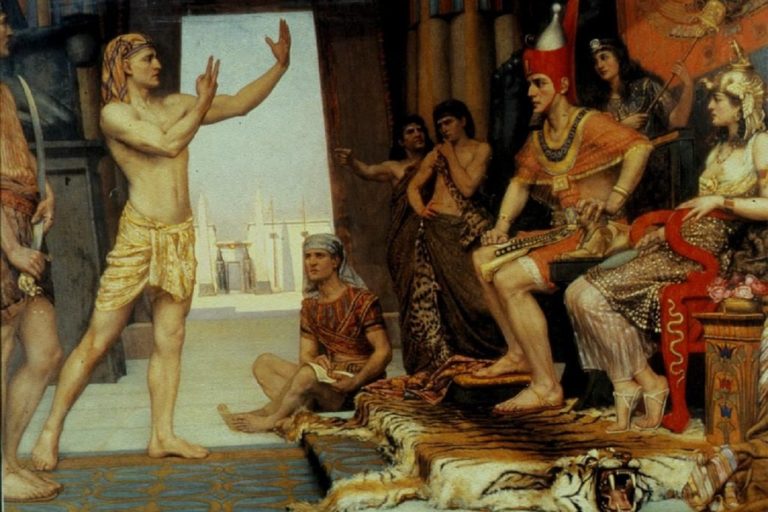
Joseph’s service to Pharaoh provides important lessons to Jews and Christians considering roles in government in an increasingly pagan America. Today, we neither reign from the throne in Jerusalem nor cower in the catacombs of Rome. Is there a place for us in the palace of Egypt?
We often fail to see that business is a morally formative mode of solidarity even as it also serves as a means to prosperity. Aristotle might describe it as a “friendship of utility.” Respecting the communal form of the business firm, which is essential to its productivity, demands a deeper vision of the proper goals and just governance of businesses.
Nations have cultural and moral foundations, and religion is historically at their core. The secular multiculturalist fails to see why a Christian and a Muslim cannot agree to disagree and fall into peaceable line in a republic. This is because he imagines Christians and Muslims who do not take their respective faiths seriously. Only if neither adheres to basic principled claims of their faiths is it plausible to imagine all potential religious and cultural conflict between the two disappearing.
“Medicine is a humanistic discipline that uses science to accomplish what all human beings would like to see for themselves, in their capacity to sustain themselves. Ultimately it is to aim for a person who could be what God intended him to be.”
To believe that we cannot both enjoy the work of a disreputable artist and condemn the artist is to underestimate our own capacity for ethical discernment and to deprive ourselves needlessly of sources of wisdom.
If we have a calling in life, it is because someone has called us. God calls each of us by name to a specific path of holiness and service to others. Important as professional success may be, the only success of ultimate importance is holiness. The only real tragedy in life is not to have been a saint.
Lightning strikes only a single time from the dawn of life until the last line of the Five Books of Moses. Perhaps it does so to teach us all that God’s gift is not an escape from crises but the means to overcome them.
Policy can tax vice and remunerate virtue. But policy cannot do what churches, fathers, mothers, friends, and coworkers can do, which is to invite individuals into fruitful, sacrificial communities.
Openness to love is the only satisfying defense against the supposed conflict between private happiness and the common good, the only thing that can convert the common good from an abstraction to a lived reality. The most important element of the common good, therefore, is that all of the members of the community regard themselves, somehow, as friends.
The contemporary academy betrays its vocation precisely insofar as it seeks to usurp the wonder of the world and to transpose that wonder onto its own ingenuity. “Look,” says the contemporary scholar, “let me show you how this-or-that is really just an exercise of power. I alone have had the vision to see it.”
Sohrab Ahmari’s new book enlightens in many respects, while falling short before the tribunal of moral and political prudence. Still, it succeeds admirably in making the case for “the wisdom of tradition” as the one thing most needful today.
If stopping gestation no longer inevitably entails the death of a fetus, then the entire landscape of abortion rights and jurisprudence has fundamentally changed.
The greatest enemy of our freedom, which we all must confront, whether we live under a totalitarian regime or in a free society, is our deep-seated tendency to create and cling to a simplistic, false notion of our identity.
I’m not only trying to show younger people the futility of a life based on achievement, but to show that there are ways of thinking about achievement that are better for your soul. One of them is to see your desire to achieve as being inspired by a vision of the good. Ultimately, in the highest things, you end up not thinking about yourself. Once you become excellent at something, whether that’s teaching or writing or being a tax attorney or being a doctor, you’re actually looking for the good of other people. It’s about how you make the lives of others better and encourage them in their pursuits.
My snapshot of freshman orientation highlights some of the failures of higher education. Too many universities today no longer teach students how to think but what to think. Instead of a marketplace of ideas, campus has become an echo chamber of ideas. But outspoken students (and faculty) can save the university by thoughtfully and deliberately making their voices heard.