Pillar

Politics & Law

The third pillar of a decent society is a just system of politics and law. Such a government does not bind all persons, families, institutions of civil society, and actors in the marketplace to itself as subservient features of an all-pervading authority. Instead, it honors and protects the inherent equal dignity of all persons, safeguards the family as the primary school of virtue, and seeks justice through the rule of law.


Learn more about Politics & Law: get your free eBook today!

If we want a different politics, ultimately we must offer a different moral imagination for ourselves, our children, and theirs.
We are not Hobbesian atoms of self-will, not until liberalism makes us so. Human beings have ever been human by virtue of their relations with others, and by virtue of the bonds of duty and memory that these relations imply.
Patrick Deneen poses good questions but begs others. The second installment in the Public Discourse symposium on Why Liberalism Failed.
Patrick Deneen’s Why Liberalism Failed is a provocative attempt to explain what’s wrong with our culture, how this came to be, and what might be done about it. Although his historical account of liberalism is unpersuasive, he offers a prescient analysis of the current moment and insightful prescriptions for constructive action.
It’s time for Christians to partner with conservative Muslims and others who share traditional views on key social issues. And American Muslims should leave behind their lockstep alliance with the social justice left.
According to previous papal teaching, a Catholic confessional state is the ideal, even if in most modern situations it’s not a practical possibility, and prudence would steer us away from it. That teaching continues to be normative for Catholics.
If social conservatives don’t radically alter what we are doing—if we don’t buck the current conventional wisdom and do something different—we will lose.
Social conservatives are right to oppose proposed legislation that would ban therapy to help those experiencing unwanted same-sex attraction or gender identity confusion. But they’re wrong to say that the bill would ban books.
It was Christianity, not modernity, that separated church and state. It was modernity, not Christianity, that sought to bind them back together. And, at day’s end, the American order has more in keeping with the Christian apostasy than with either antiquity’s sacral political orders or modernity’s rejection of the claim that there exists any domain outside the jurisdiction of the modern state.
Because liberal Western democracies are ostensibly rooted in the theory of popular sovereignty, elite disdain for the people creates another legitimation crisis—one that many fail to recognize. It is not simply that the people have lost confidence in the elites and their governance, or that the elites struggle to speak for (and even to) the people. Disdain for the people also unmoors elite authority.
Same-sex parenting advocates are calling on states’ rights to define the legal relationship between parent and child. What they seek is the power to write the record of a child’s origins and to determine a fundamental aspect of a child’s identity.
Aside from the importance of fighting ideological neocolonialism, building up the pro-life movement in Africa is essential given how politically and economically influential Africa is likely to become over the next century. Obianuju Ekeocha is doing this admirably and effectively on a shoestring budget.
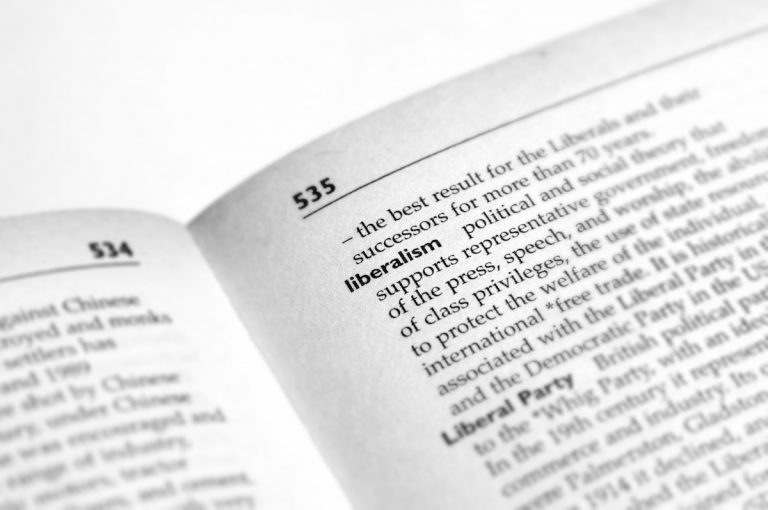
A recent conference on Christianity and liberalism brought together high-profile Catholic scholars who strongly disagree about whether Catholicism is compatible with liberalism in general and the American version of it in particular.
When it comes to the Catholic Church, there’s a quiet sense that the Vatican thinks in centuries, that a thirty-year crisis will hardly matter in time. Perhaps this time is different. But we don’t know, and Ross Douthat is honest enough to leave us hanging, waiting for the next installment of the Church’s story to be told.
In his biblical interpretation, Jordan Peterson re-presents in powerful and fresh ways the stories that have animated Western culture. Christians have much to learn from him, even as his own engagement with the Bible could be enriched by the Christian tradition.
Originalism is the commonsense, traditional American approach to constitutional interpretation, not a contemporary conservative invention.
Religious freedom in America is caught between opponents on the left and the right. The second in a two-part series.
Westerners should neither exaggerate our problems and forget how good we have it nor exaggerate our blessings and neglect the defense of religious freedom. We’re not inherently better or more deserving of religious freedom than anyone else in the world, and we should not take our good fortune for granted. The first in a two-part series.
Religious belief and activity—particularly prayer—matter in important ways. They make a deeply practical difference in how husband and wife interact with each other in daily life.
The Christian quest for the common good is not reducible either to the simple aggregate of individual goods or to the promotion of the needs of the collective at the expense of the one.
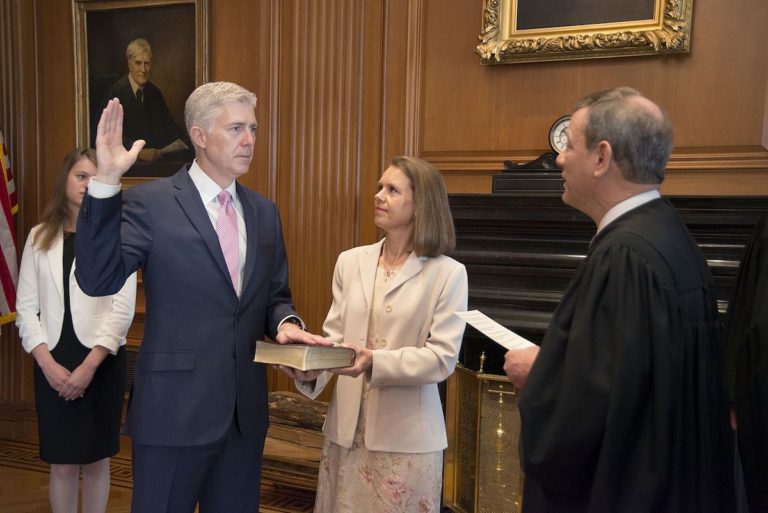
Should we determine whether a person is fit to be a judge based on his or her religious beliefs or opinions on contemporary policy debates? Or should the Senate approve judges based on their reputation for fairness, their ability to follow and apply law, and their record of judicial wisdom?
While the economic arguments for free trade remain compelling, the political rationale requires a long-overdue overhaul.
Pregnancy care centers are being targeted by the state of California for respecting the intrinsic worth and dignity of women and children, even when it is unprofitable to do so.
Today’s religious colleges and universities face a choice between two opposing worldviews: the traditional, spiritually embedded worldview upon which they were founded, or the secular, hedonistic, materialistic worldview that dominates them today.

Get your free eBook for The Human Person

"*" indicates required fields

Get your free eBook for Sexuality & Family

Get your free eBook for Politics & Law

Get your free eBook for Education & Culture

Get your free eBook for Business & Economics