Witherspoon Institute
2026 Summer Seminars
Held in Princeton, NJ
For rising high school juniors and seniors, undergraduates, and graduate students.
Keep up with the conversation! Subscribe to Public Discourse today.
Book Reviews
In her new book A Philosopher Looks at the Religious Life, Zena Hitz situates her philosophical ponderings within the context of her own life, here spotlighting a crisis precipitated by her conversion to the Catholic faith. Like Abraham about to sacrifice his son Isaac at the Lord’s behest, Hitz realizes that unconditional love of God, “wholehearted commitment without compromise,” might demand the renunciation even of what she has held most dear.
John Guillory’s Professing Criticism is a thorough and complex work of scholarship. It’s also a bracing call for literary scholars to significantly reform how they think about their profession, and its relationship to their students and reading public in general. At its core is a challenge that is simultaneously reasonable and radical: professors of literary study must be more modest in their aims and promises to suit the realities of their field in the twenty-first century.
Such a substantial proportion of this book is devoted to textualism, originalism, and traditionalism that it is hard to escape the sense that Sunstein protests too much by repeatedly claiming that his moral-philosophizing “reflective equilibrium” is “the only game in town.” And in truth, he leaves his own preferred approach woefully underdeveloped.
In his new book, William Inboden clearly regards Reagan as indispensable to something coming close to a miraculous chain of events surrounding the peaceful end of the Cold War. He rejects the popular notions of Reagan as clueless, all form and no substance, gullible, or hopelessly and sentimentally patriotic. This is a sympathetic biography, but one that is copiously researched and laden with fresh and insightful nuances that treat Reagan as a complex figure, a man with limitations, paradoxes, and weaknesses.
By Shilo Brooks
A Web of Our Own Making overflows with disquieting observations about the ways digital technology is reshaping human nature. Antón Barba-Kay puts into haunting words the anxiety, exhaustion, and emptiness that most of us feel but cannot put into words because we are too busy scrolling and ogling.
Mark David Hall’s Proclaim Liberty Throughout All the Land represents a landmark contribution to the debate over the impact of Christian faith on American law and culture. It is high time for Christians to reframe this debate, asking not “How much do we have to apologize for?” but “How much can we take credit for?”
If we take seriously Thomas Kelly’s ideas about bias blind spots, then we should seek public universities composed of a high degree of biased parts. Such universities would intentionally hire faculty members and administrators who harbor contrary views on divisive cultural issues. This would probably create campuses that can boast of having teaching and scholarship that have much less pejorative bias than their peer institutions.
In Christendom: The Triumph of a Religion, Peter Heather wishes to dismantle some of the conventions that have governed how the story of Christian history is told.
By Jesse Smith
Trump—and more broadly, the style of politics he represents—did not rise to power on the shoulders of the religious right, but rather the post-religious right. Indeed, his presidency was made possible by the very process of secularization that the religious right has long sought to combat.
Long Reads
The early Church saw challenges to truths about God, the Reformation-era Church saw challenges to truths about the Church herself, and today’s Church is confronted by challenges to truths about man—the being made in the image and likeness of God whom the Church is tasked with protecting. This essay is based on Ryan T. Anderson’s inaugural lecture as the St. John Paul II Teaching Fellow at The University of Dallas.
By Lawrence King and Robert T. Miller
How should Catholics understand the contradiction between the nineteenth-century papal teachings on integralism and the twentieth-century teaching of the Second Vatican Council? We follow the solution of John Paul II and Benedict XVI: we take both sets of teachings at face value, admit that they contradict each other, and explain that the earlier teachings were merely doctrina catholica, which are not absolutely binding and are thus subject to future change.
Fr. Richard John Neuhaus got to the central question facing us: Is it true that postmodern liberal societies are incapable of sustaining the religious values without which they could not have been born, and without which they cannot long function? Neuhaus was unwilling to surrender to that proposition. Neither should we be.
By John Finnis
Public Discourse is launching two new features: short book notes and long form essays. They'll run occasionally, on Saturdays and Sundays. Today is our first longform essay. Enjoy.
Permission to own slaves and suppress false religions was taught by the Old Testament, never denounced by the New Testament, and accepted in word and deed for very long periods by popes, bishops, and saints. And yet the Church eventually repudiated such permission. So, too, with intentional killing in capital punishment. The fact that death is deserved and proportionate does not license the state or any human being to intend to impose it.

Newsletters
By The Editors
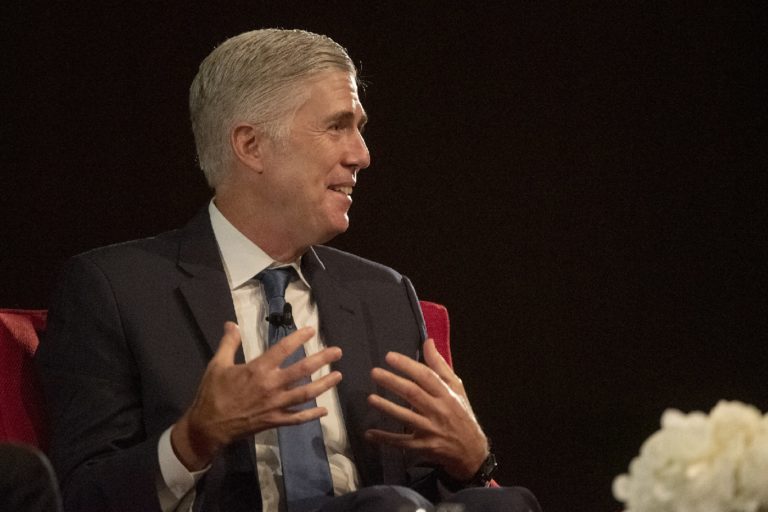
The confirmation of a new Supreme Court nominee is highly contentious. In light of Judge Neil Gorsuch's arrival to the court, Public Discourse authors offer advice for navigating the challenges of the process and voice their concerns about the judicial environment into which he embarks.

By The Editors
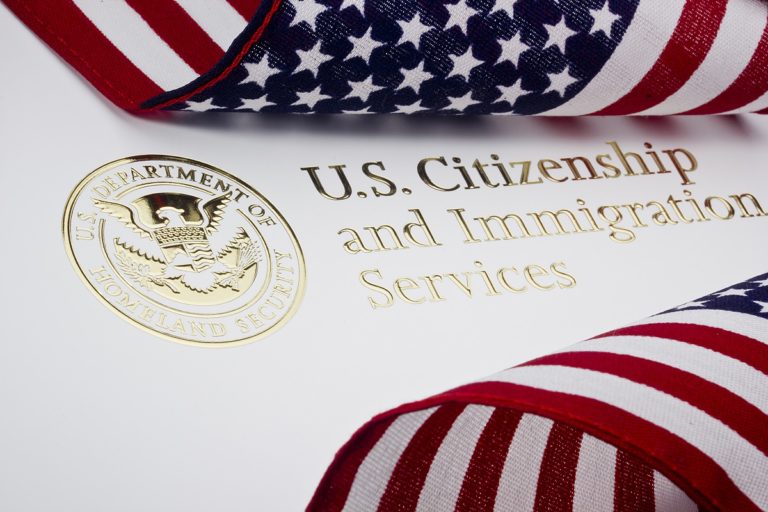
Agree or disagree with Donald Trump's approach to Islamic immigration, the United States must come to terms with such immigration's cultural and demographic implications.
By The Editors
True liberal education should teach us that we do not only give ourselves away: we become ourselves by the gift.
By The Editors
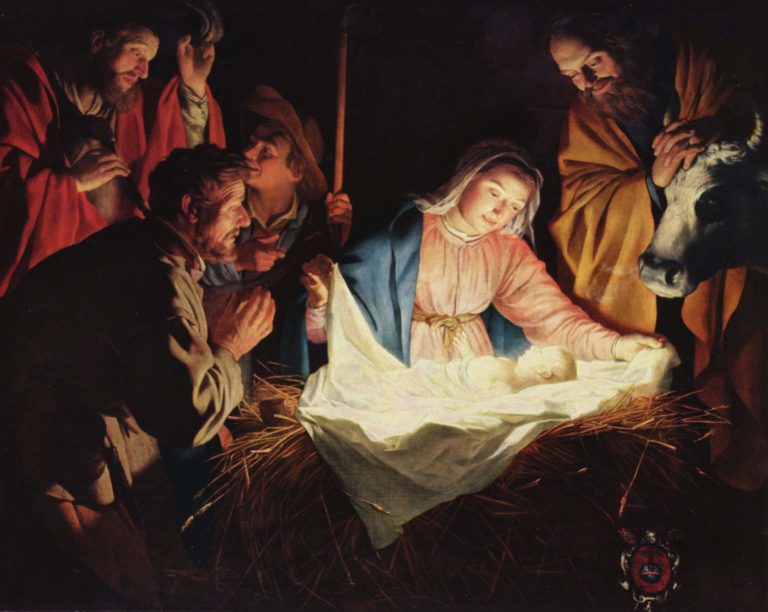
What, if anything, has Christmas contributed to Western Civilization that could earn the respect even of the secularist?
By The Editors
October is National Down Syndrome Awareness Month. Although estimates vary, somewhere between 67 and 90 percent of unborn children diagnosed with Down Syndrome are aborted.
By The Editors
If Donald Trump becomes our president, can he become a truly conservative leader? If so, how?