


















Melting Pot or Civil War? is a policy book. It’s a good one, to be sure. But our immigration crisis needs more than just policy. When making policy changes that relate to immigration, we need to consider the human cost.
It’s a mistake to think the Church cannot accommodate a multiplicity of different philosophers and theologies. The Church is united doctrinally, sacramentally, and by its moral ethos. That real unity can accommodate diverse visions of theology within itself without any rupture, so long as they are each receptive of the complete doctrinal teaching of the Church. Not everybody has to be a Thomist, but it is vital to the Church that there is a Thomistic tradition and culture, which is not only a culture of intellect but also a way of life.
Eighty-five years ago, staunchly self-reliant American farmers encountered a crisis-the Dust Bowl-they simply could not overcome on their own. The story of the Dust Bowl is a story about American grit and perseverance, but also about the limits of libertarianism.
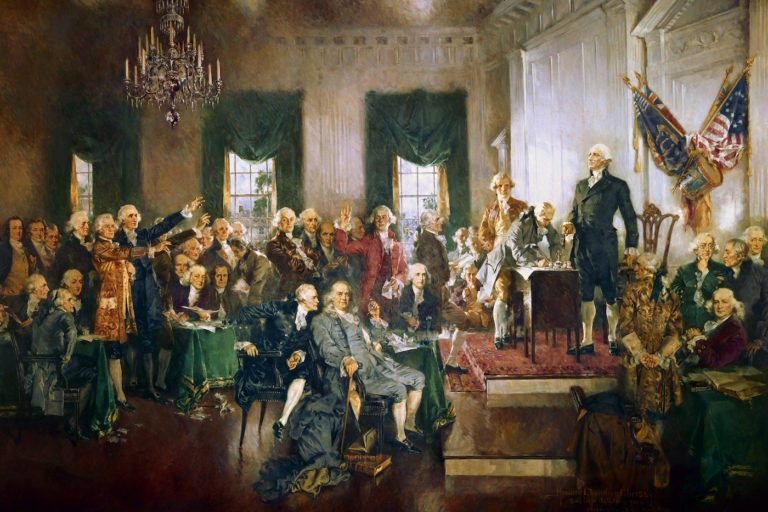
There was an opportunity in 1787 to have torn up slavery by its roots, and that opportunity was missed. But the missing came as much through overconfidence that the march of opinion would wipe out slavery on its own, and as much through the miscalculations of political compromise, as through any conscious policy to foster or promote slavery.
Thoughtful Catholics should integrate the discoveries and insights of economics and science with the principles of Catholic social teaching, and ultimately, with the natural moral law and revealed theology.
Given our splintered, irresolute wills, Alan Jacobs’s concept of thinking that “we can do better,” even if “we ought to,” is not enough. It’s going to take more than hope and a checklist.
The empirical evidence suggests that coitus is associated with significant psychological and physical benefits and that noncoital sexual activity is associated with significant psychological and physical harms.
American Muslims must seek to preserve the American constitutional settlement against encroachments by totalitarian secularism because doing so means preserving what remains of a civilizational order that proceeds from belief in God.
Tolkien not only imagined heroes, glory, and splendor for us, but depicted hope after ruin and tragedy.
We have a moral right to own guns.
Justice Ginsburg’s claim in Masterpiece Cakeshop is deeply troublesome and problematic. Mistakenly asserted, it adds to the aggravated polarization within the United States.
The structure of the surrogacy market does not enhance individual freedom. Surrogate mothers are willing to abide by the rules imposed by the clinic and the intended parents in their desperation to bring their families out of poverty.
California’s AB2119 should not be law. Signing the bill is a triumph of ideology posing as science. Human beings should be affirmed, not false identities and sexual confusion.
Reasonable people can claim that the government of the richest country in human history should provide certain things to its poorer citizens. But reasonable people cannot claim those things come without a price.
Instrumentum Laboris points to a church that seems to be losing sight of sin, redemption, grace, faith, the sacraments, and eternal destiny. The Catholic Church could well be exchanging her theological birthright for a Mass of sociological potage.
Aristotle described three types of friendship. In a season of increased polarization and even calls for incivility from national political leaders, perhaps we need a fourth.
Americans today are anxious—not just financially, but socially. We despair even though we are materially better off than at any other time in human history. What happened? How did we get here?
If there is one thing that the prophets of egalitarian ideology cannot abide, it is the true and sincere believer in normativity—the person who judges that we are, each and every one of us, beholden to exercise our freedom in keeping with a higher law.
For ten years, Public Discourse has drawn on the insights of academics and scholars, political and legal advocates, and men and women of letters to offer the reading public thought-provoking reflections on the timeliest issues and the most timeless dilemmas of our public life.
We find ourselves in a liminal spot, one between long-taken-for-granted traditional relationships anchored in marriage and the future relationship system characterized more consistently by “confluent love.” There will not be two dominant systems.
As our public debate coarsens and weakens, Public Discourse will continue to publish respectful, rigorous arguments. We will continue to stand up for the rights and dignity of the most vulnerable members of society.
For the past ten years, Public Discourse has been a different kind of website—thoughtful, calm, and civil, even while defending unpopular truths. In our next decade, we want to keep improving, reaching more people, and addressing a broader array of topics.
Those who value freedom of conscience and faith need to realize that the Orwellian Chinese system is not cartoonish hype: it’s a real system coming soon to a country near you.
Choose an institution that has adopted the Chicago Principles, and then learn how to shed light on the dark corners of inquiry, and of your own mind.