Pillar

The Human Person

The first pillar of a decent society is respect for the human person, which recognizes that all individual human beings have dignity simply because of the kind of being they are: animals whose rational faculties allow them to know, love, reason, and communicate. It also recognizes that human beings are persons, members of the human family who flourish in a community that respects their fundamental rights and who long to discover transcendent truths about the nature of reality.


Learn more about the Human Person: get your free eBook today!

Abigail Shrier’s new book is an outstanding investigative report on the diagnostic craze of rapid onset gender dysphoria that has swept over adolescent girls in the past decade. It is an invaluable resource for parents, educators, church and community leaders, and anyone else who cares about the well-being of young women.
COVID-19 underscores our need for practical wisdom, which allows us to pursue the human good even when we lack technical mastery of a situation and when we must make difficult decisions between competing goods.
True encounters with demonic activity ought to make today’s neopagans reconsider whether they should do more than cultivate eclectic spiritual identities.
The just war ethic cannot justify the intentional killing of some innocents for the sake of defending the lives of other innocents because the lives of the innocent are the actual point of war. We go to war on behalf of the innocent men and women wronged by some act against their nation. We fight that war by the morality able to name that wrong as a wrong, and able to express that wrong by the means employed in its vindication.
All knowledge comes from sensory experience, including knowledge of the first principles of morality on which the natural law and moral reasoning build.
Even according to Protestant traditions with the gravest views of sin, fallen human beings do not get everything wrong when thinking about morality. Since Scripture itself affirms that the created order reveals God’s moral law, Christians should not turn their backs on natural law for the sake of promoting biblical teaching.
Roe v. Wade is no secondary issue. It is not something to be pushed to the side of the nomination process. Roe is central. Roe is a window into the constitutional worldview of a would-be justice. It is a measure of their sense of what a justice should be. That is why I say today that I will vote only for Supreme Court nominees who have explicitly acknowledged that Roe v. Wade was wrongly decided. Adapted from a speech given on the floor of the Senate by Senator Hawley on June 30, 2020.
Thirty years after its publication, The 7 Habits of Highly Effective People has shaped our culture in significant, lasting ways. Yet many of the upper-middle-class, successful Americans who cultivate Stephen Covey’s habits fail to apply his most essential, all-encompassing principle—the one that guided his entire vision of the good life.
On Calypso’s island, we encounter both the allure and the dangers of the beach. There, Homer brings us right up against a mysterious fact: the fantasy of an undying beach body—even that of a love goddess whose collagen never loses its tensile strength—will not really make us happy. The best kind of lover will have skin in the game: skin that can age, that has aged, that is actively aging before our eyes. To escape the history that is written into our bodies is to escape the meaning, the meaningful struggle, of our lives.
The book of Acts shows that the Catholic Church has the form of a city in which a specific work is conducted. That work of sanctification has its source in the sacrifice of the Mass, which the state must allow the Church to continue celebrating as much as possible. This essay originally appeared in French and is translated here for the first time.
“Post-revolutionary men and women are living in ways that are profoundly unnatural for the ineradicably social creatures that we are; and many are suffering as a result, at times without even knowing the name of what ails them. This preoccupation, and the desire to do something about it, continues to shape my work.”
The religious liberty triumphs of the past several days are important, but they’re not enough. Not nearly so. We need to contend about the truth of the matter. Through legislation and litigation, we need to make it clear that it’s lawful to act on the convictions that we are created male and female and that male and female are created for each other. Privacy and safety at a shelter, equality on an athletic field, and good medicine are at stake for everyone—religious or not.
A new book exposes judicial activism and the manipulation of legislative processes to illegitimately create abortion rights in eleven Western democracies.
Many on both the left and the right tend to speak of systemic racism simply as a 0/1 state: either the system is fundamentally and inextricably racist or it is not racist at all. But recognizing distinct mechanisms at play in a racialized system should help us see systemic racial bias as a matter of degrees—as something that can improve or worsen over time. Indeed, research suggests that racial disparities have been declining over time, though there is no guarantee of inevitable progress, and our present situation makes it clear that we still have a long way to go.
Eric Jacobsen’s new book, Three Pieces of Glass, explores how the car, television, and smartphone undermine belonging in America today.
Sin corrupts every institution and every system because, one way or another, sinful human beings are involved. This means that laws, policies, habits, and customs are also corrupted by sin. We are called to do everything within our power to expunge sin from the structures of our society. Christians know that the justice of God demands that we do so. At the same time, we cannot accept that the structural manifestations of sin are the heart of the problem. No, the heart of the problem is found in the sinfulness of the individual human heart.
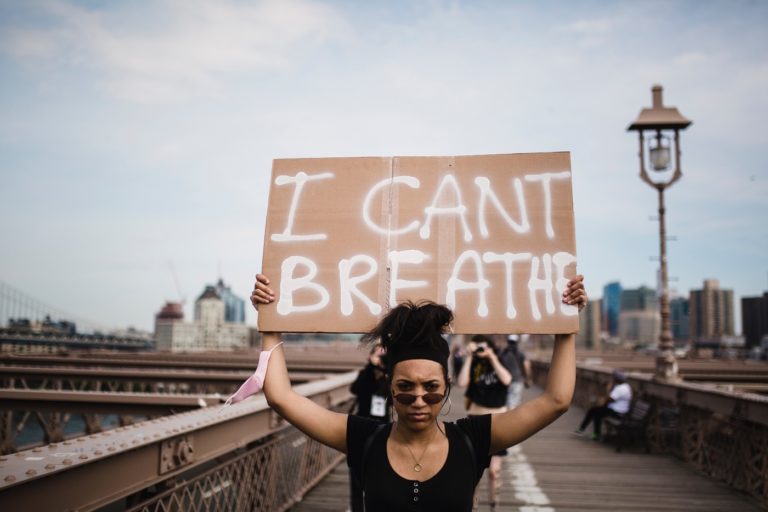
“Black lives matter,” taken as a sentence, is profoundly true. God made every human being in his image, which means every life on the planet, at every stage, matters. Yet that sentence is understood, nearly universally, as expressing approval of a movement rooted in critical race theory, which is grounded in destructive Marxist ideology.
The common good is the flourishing of a community qua community. Every community is built around a common end, which is simply that it excel, in justice, as whatever kind of emergently real community it is. The common good is primarily a practical idea, but if our starting point is too practical we are apt to miss the challenge that the common good poses to the modern political imaginary. On the other hand, a starting point that is too metaphysical will fail to engage the real questions of common life.
Mark Galli’s new book When Did We Start Forgetting God? is a call not to look outward or inward, but upward: to worship God simply for the sake of worshiping God.
Fifty years from now, no one will care about May’s job numbers or the rocket launch. But they will remember whether—in the face of 400 years of pain and oppression—the president of the United States took decisive and bold action to heal this nation of its racist past and present through a particular and sustained national effort.
As a nation, all citizens, regardless of color, need to respond to the persistent threat of institutional racism and persistent police brutality as if their own person was at stake. We must act to preserve life and the common good as quickly as if we were trying to preserve our own property from looting.
It seems particularly disturbing to imagine legalizing euthanasia in this moment, let alone expanding access to euthanasia if it is already legal. Even so, this is precisely what is underway in Canada.
For the considerable body of people in the western world who still believe in self-government, and in the preservation of their nations’ traditional moral identities, the overreaching of the contemporary human rights project will perhaps lead them to reconsider natural law, presented in a prudently modest formulation. This is a crucial undertaking to which Pierre Manent’s new book is a worthy contribution.
It is a cliché to say that religious faith helps people to cope with stress. As with many clichés, this one is both true and false. How one uses religion to cope with stress is key.

Get your free eBook for The Human Person

"*" indicates required fields

Get your free eBook for Sexuality & Family

Get your free eBook for Politics & Law

Get your free eBook for Education & Culture

Get your free eBook for Business & Economics