Pillar

Politics & Law

The third pillar of a decent society is a just system of politics and law. Such a government does not bind all persons, families, institutions of civil society, and actors in the marketplace to itself as subservient features of an all-pervading authority. Instead, it honors and protects the inherent equal dignity of all persons, safeguards the family as the primary school of virtue, and seeks justice through the rule of law.

Learn more about Politics & Law: get your free eBook today!

Women have an understanding of conservatism that goes deeper than policy ideas, because we uniquely understand human relationships. The men that are the standard-bearers of conservatism need to make a greater effort to cultivate conservative women’s voices in the public square.
Helena Rosenblatt’s The Lost History of Liberalism correctly identifies liberalism’s need for moral virtue, but does not draw the further conclusion that her book suggests: liberalism is failing because it has rejected orthodox Christianity.
No one affords a greater understanding of American exceptionalism—what it is and what it is not—than Alexis de Tocqueville.
Arthur Brooks is right that we urgently need to learn to disagree better, but he’s wrong about what it will take to do that. Brooks demonstrates just how easy it is to slip from the transcendent and infinitely difficult command that we love our enemies to the comforting illusion that we have no enemies.
It’s not enough to teach our children that life is sacred from the moment of conception until natural death. We must also teach them to declare the truths of our faith in the public square. Inside the loving embrace of the family, the faithful need to raise a new generation of Christians that stands up for life and boldly proclaims their faith, understanding that no one, not even an elected official, has the right to stand in their way.
Vice President Mike Pence has been invited to deliver the 2019 commencement address for Taylor University in Upland, Indiana. However, a severe backlash against the former Indiana governor demands that his invitation be rescinded. The accusations against Pence are fallacious, slanderous, and contrary to both a biblical worldview and a liberal-arts education.
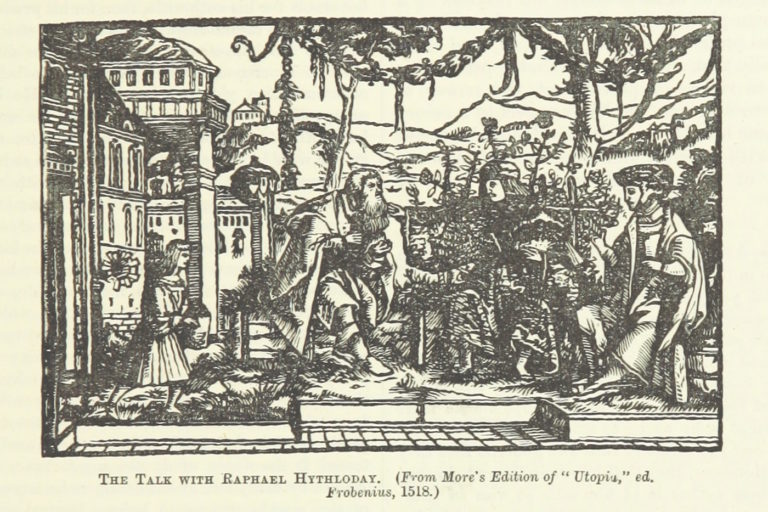
Niccolò Machiavelli’s imprudence is surprisingly similar to that of Thomas More’s fictional character Raphael Hythloday. Since prudence is the virtue that finds practical means to moral ends, imprudence may consist in rejecting either practical realities (as does Raphael) or ethical principles (as does Machiavelli). To achieve justice, political regimes must reject both idealism and utilitarianism.
In the wake of last month’s decision, the only remedy left to the people of Kansas is to pass a constitutional amendment to declare that there is no “fundamental right to abortion” in the state’s constitution and to allow the legislature to make reasonable laws about abortion.
Terry Eagleton attempts to offer us a gentle revolution, a soft “transition” from Catholicism to Marxism. This is as theoretically and theologically impossible as it is historically unprecedented. Any “radical sacrifice” on anything other than God’s terms will lead to mass bloodshed and human suffering, as it has whenever and wherever such a project has been tried before.
The adversarial system of litigation—in which attorneys with opposed interests present their respective cases to a jury—is now the best paradigm through which to understand modern-day journalism. We must assume the role of jurors, making sure to hear from all sides before reaching our verdict.
If influential Catholics continue to insist that their faith is incompatible with the liberal tradition, none should be surprised if that conclusion is increasingly accepted.
For the first time in American history, it has become respectable to publicly oppose religious liberty and its supreme value in our polity. This unprecedented turn is ominous. It will not only diminish our constitutional law. It will remap our common life, for religious liberty has always been a linchpin of our political culture.
By establishing a national anthropology based on an ideology of self rather than embodied sex, the Equality Act would deepen cultural divisions and chill reasoned debate on complex bioethical issues. Those who do not accept the legislation’s totalitarian twisting of language would be open targets for a modern American parallel to Orwell’s “two-minutes hate.”
Yes, be polite to us, and we will be polite to you. But we know that we are in an intense battle over the hearts and minds of our children. Mothers are very good at educating and protecting our children from harm when we believe they are in danger. This time, that danger is the harmful sexual ideology of the Left.
If the new conservative consensus emphasizes putting real Americans first, who are these real Americans? Are some Americans more equal than others?
We should not romanticize the countercultural efforts of the Poles and Hungarians. But until the broad center of the intellectual and political spectrum steps away from its flirtation with nihilism and post-political illusions, we must show more understanding for those who wish to save the remnant of Western civilization that still exists.
Today, the fanaticism of activists, the ambitions of elite political operatives, and the passive passions of an apolitical public combine to determine our nation’s immigration policy.
Rather than focusing on wealth transfers to the poor, we should seek to cultivate conditions that enable people to flourish through their own actions and relationships. When evaluating policies, we should ask: Does it give people an incentive to stay together, or does it subsidize their breaking apart? Does it encourage one particular kind of childcare, or does it enable all mothers to better care for their children in the way that they choose?
Both believing and non-believing students of Strauss will find Leo Strauss and His Catholic Readers rewarding.
Steven Harper argues that conservative politicians should be primarily concerned with protecting their own citizens. It is time for conservative politicians to distinguish themselves from those on the right and left who have taken up globalism. Republicans have to recognize, as Trump did, that the essential goal of conservative policy is to help the “Somewheres” facing the challenges created by a global and internationalist economy.
Although exemptions are often billed as a compromise, the evidence suggests that they will never be enough to satisfy those who think religious believers are discriminating and getting away with it. The “compromise” soon becomes a zero-sum game with only one winner.
As a Venezuelan and an economist, I believe we economists sometimes need to go beyond economic indicators. We need to speak from our hearts about our experiences. Only by doing this can we truly communicate the social implications of an economic collapse of this magnitude. No economic indicator could ever do justice to the depth of the human suffering taking place in Venezuela today. Venezuelans are suffering in ways most people in developed nations could not even imagine.
American politics is suffering from a failure of empathy. In particular, the country’s elites have failed to empathize with the working class. Over the last few generations, America’s elites have stood in the way of the working class’s pursuit of the American dream by devising, and then by tenaciously defending, policies that impede upward economic mobility.
In his new book, Daniel T. Rodgers argues that the myth inspired by John Winthrop’s famous seventeenth-century “city upon a hill” metaphor was actually a product of the conflict between the Soviet Union and the United States in the Cold War. Winthrop’s sermon was largely forgotten until it was put to use for nationalistic purposes to inspire the nation against global Communism.

Get your free eBook for The Human Person

"*" indicates required fields

Get your free eBook for Sexuality & Family

Get your free eBook for Politics & Law

Get your free eBook for Education & Culture

Get your free eBook for Business & Economics