Witherspoon Institute
2026 Summer Seminars
Held in Princeton, NJ
For rising high school juniors and seniors, undergraduates, and graduate students.
Keep up with the conversation! Subscribe to Public Discourse today.
Book Reviews
By Robert Carle
In 2020, China became the world’s number one box-office market. For years, the Chinese Communist Party has been using this economic leverage to shape the content of American movies.
By Edward Feser
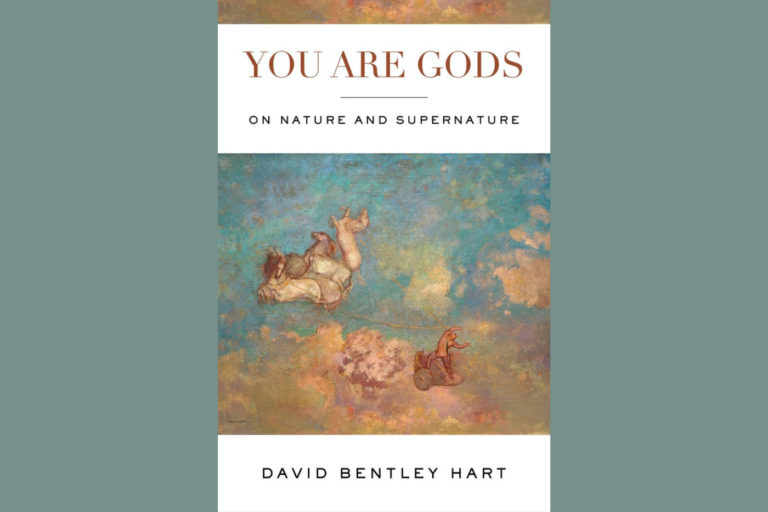
The debate over whether it is grace or nature that directs human beings towards the beatific vision was one of the most contentious intra-Catholic theological disputes of the twentieth century. David Bentley Hart’s 2022 You Are Gods: On Nature and Supernature shows that the debate is alive and by no means merely academic and inconsequential—pantheism, tradition, orthodoxy, and heterodoxy are all very much at stake in the argument.
We are not isolated individuals, free to create our own moral codes and obligations based on our preferences, desires, self-identifications. We enter a world already tied up with pre-existing relationships, duties, and obligations. These are basic principles of conservatism. Given the drastic environmental changes awaiting future generations, conservatives ought to start considering climate change a top priority.
Veronica Roberts Ogle’s 2020 book, Politics and the Earthly City in Augustine’s City of God, shows that Augustine’s critique of the earthly takes place within a broader sacramental vision. He aims at purging amor sui and orienting it toward amor Dei, cleansing our souls of the lust for securitas. Politics can only be improved by personal responses to grace—which no political institution can hope to generate. Improvement of political spaces must occur beyond politics.
By Elayne Allen
If the novel is by definition tightly bound to the human subject, then contemporary novels will suffer from the same decay and corrosion from which the contemporary soul suffers. Yet, despite the uneasy conditions facing both the novel and the world, the human soul remains remarkably resilient and fascinating. Sally Rooney’s latest novel, Beautiful World, Where Are You? ponders the profound disenchantment that haunts today’s souls and novels alike.
By Damian Bell
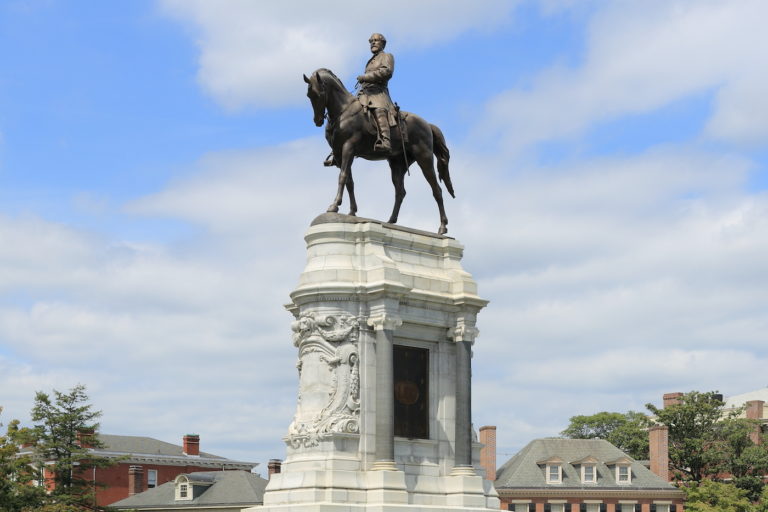
Allen C. Guelzo has written a perceptive character study (and military evaluation) of Robert E. Lee that is alert to the many contradictions that seem to pepper his life. What emerges is a portrait not unlike the one peering off the dust jacket: thoughtful and appealing, yet facing two directions at once.
By Jacob Wood
Rory Groves argues in his 2020 book, Durable Trades, that we should secure careers that will see us through from entry to retirement while supporting—rather than opposing—the relational and economic development of our families and communities. In my family’s case, farming was a way to enjoy the benefits of a durable trade while making up the gap between a single income and a double income.
Chief Judge Jeffrey Sutton’s new book, Who Decides?, provides a powerful argument for ordinary people who feel powerless in their ability to affect the course of national politics. State constitutions provide an alternative venue for meaningful political change and are an important way to exercise constitutional self-government.
By Samuel Gregg
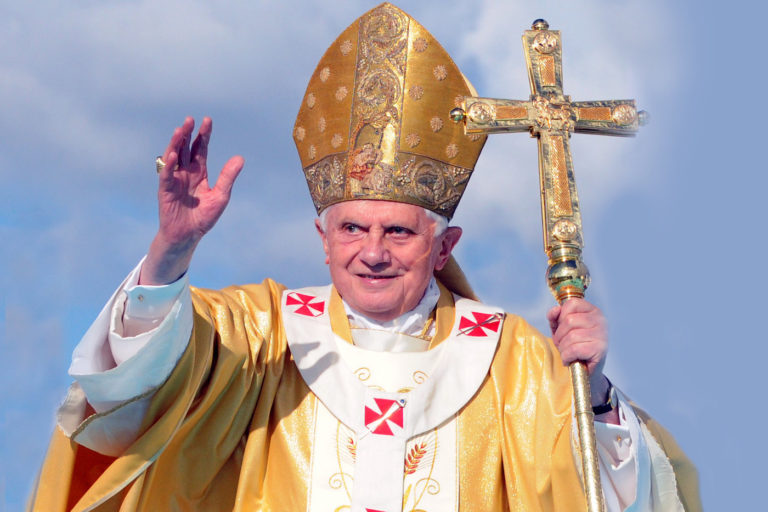
The second and final volume of a biography of Benedict XVI focuses on his place in addressing the crises shaking both the post–Vatican II Catholic Church and the West more generally.