













Abigail Shrier’s new book is an outstanding investigative report on the diagnostic craze of rapid onset gender dysphoria that has swept over adolescent girls in the past decade. It is an invaluable resource for parents, educators, church and community leaders, and anyone else who cares about the well-being of young women.
COVID-19 underscores our need for practical wisdom, which allows us to pursue the human good even when we lack technical mastery of a situation and when we must make difficult decisions between competing goods.
In many ways, Abraham Lincoln has almost loomed entirely too largely in our national consciousness, since it has now become difficult to get around the acknowledgment of his greatness to discover just what it was that made him great. Jon Schaff’s new book is an attempt to do just that.
True encounters with demonic activity ought to make today’s neopagans reconsider whether they should do more than cultivate eclectic spiritual identities.
The just war ethic cannot justify the intentional killing of some innocents for the sake of defending the lives of other innocents because the lives of the innocent are the actual point of war. We go to war on behalf of the innocent men and women wronged by some act against their nation. We fight that war by the morality able to name that wrong as a wrong, and able to express that wrong by the means employed in its vindication.
All knowledge comes from sensory experience, including knowledge of the first principles of morality on which the natural law and moral reasoning build.
There are good reasons to believe that industrial policy significantly undermines rather than bolsters the common good.
Even according to Protestant traditions with the gravest views of sin, fallen human beings do not get everything wrong when thinking about morality. Since Scripture itself affirms that the created order reveals God’s moral law, Christians should not turn their backs on natural law for the sake of promoting biblical teaching.
For reasons that pass all understanding, modern academic disciplines are where English prose goes to die. Fortunately, profound and compelling historical writing has a history of its own that predates the modern research university by two and a half millennia, stretching back to Herodotus in the fifth century BC. Such a tradition is resistant to the chloroform of the modern academy, so long as gifted storytellers find publishers and readers.
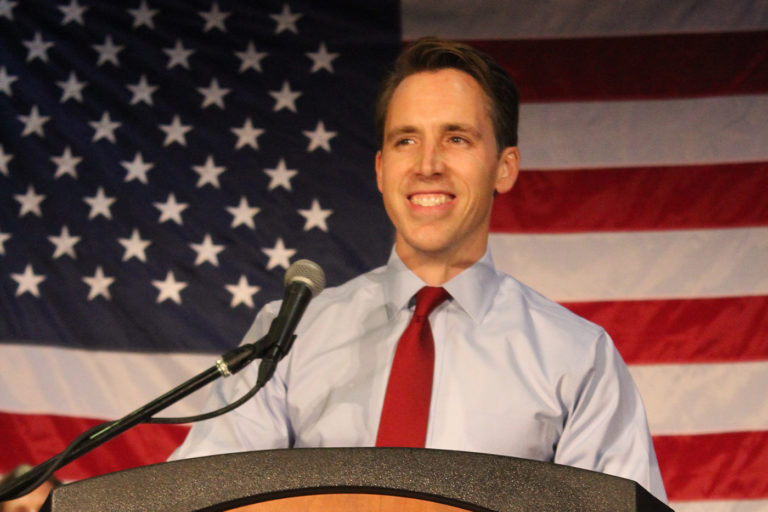
Roe v. Wade is no secondary issue. It is not something to be pushed to the side of the nomination process. Roe is central. Roe is a window into the constitutional worldview of a would-be justice. It is a measure of their sense of what a justice should be. That is why I say today that I will vote only for Supreme Court nominees who have explicitly acknowledged that Roe v. Wade was wrongly decided. Adapted from a speech given on the floor of the Senate by Senator Hawley on June 30, 2020.
Thirty years after its publication, The 7 Habits of Highly Effective People has shaped our culture in significant, lasting ways. Yet many of the upper-middle-class, successful Americans who cultivate Stephen Covey’s habits fail to apply his most essential, all-encompassing principle—the one that guided his entire vision of the good life.
Bad writing by philosophers and theologians about economics is a moral issue. If their views about economics are taken seriously—as they often are in churches and in policy advocacy—they threaten the life-changing effects of free markets for the poor across the world.
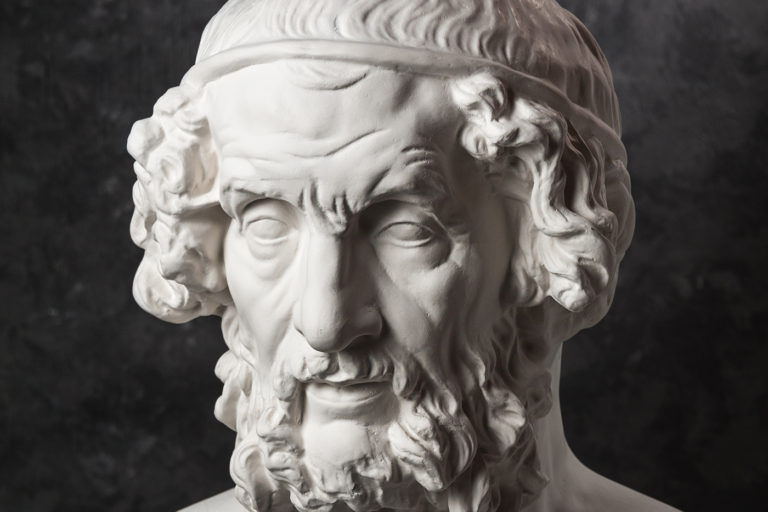
On Calypso’s island, we encounter both the allure and the dangers of the beach. There, Homer brings us right up against a mysterious fact: the fantasy of an undying beach body—even that of a love goddess whose collagen never loses its tensile strength—will not really make us happy. The best kind of lover will have skin in the game: skin that can age, that has aged, that is actively aging before our eyes. To escape the history that is written into our bodies is to escape the meaning, the meaningful struggle, of our lives.
The book of Acts shows that the Catholic Church has the form of a city in which a specific work is conducted. That work of sanctification has its source in the sacrifice of the Mass, which the state must allow the Church to continue celebrating as much as possible. This essay originally appeared in French and is translated here for the first time.
We should stay away from the news lest we fall prey to its mania, foolishness, and stupidity. We should read books—difficult books—and be challenged to improve ourselves rather than settle for easy answers.
Apple has been entangled in several recent controversies over its decision to adopt unbreakable encryption for its iPhone. The company has inscribed an absolute right to privacy in its code and, in so doing, has failed to take into account the proper moral and legal limits on that right. Other technological solutions should be considered that could balance the rights of physical security and privacy.
Inwardness, intellectual or otherwise, is the source and the safeguard of individual human flourishing, without which no community is judged to do well. Individuals must experience their learning as a mode of freedom and spontaneity, not a complex navigation of yet another structure of authority and achievement.
The intellectual life and political life are distinct elements of the human good, but they mutually support one another.
The humanities matter because human life matters. Rightly lived, the intellectual life is an ascetic one that calls for renunciation and sacrifice. Most of all, seriousness demands that we continue to pursue the truths of human existence and align our lives with them.
Like the spirit of liberty itself, the spirit of liberal education is “not too sure that it is right.” As colleges and universities are beset by the twin challenges of the pandemic and of ideological activism, will we able to keep that spirit of inquiry alive?
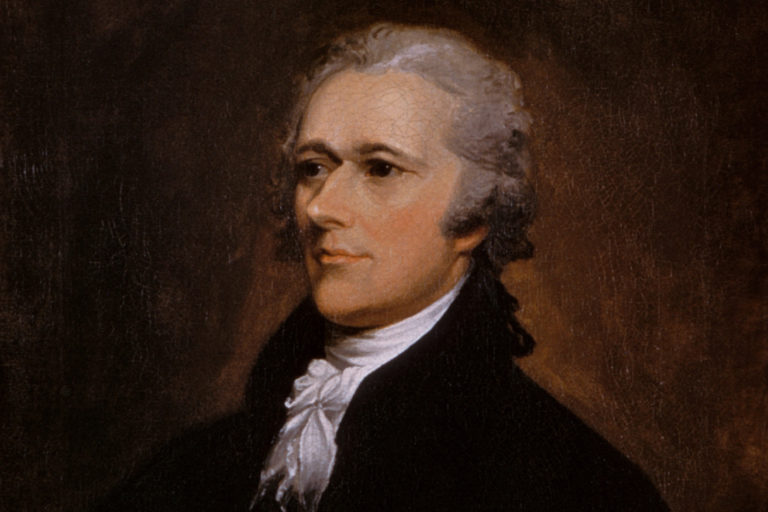
Carson Holloway and Bradford P. Wilson’s critique of my interpretation of Alexander Hamilton’s place vis-à-vis contemporary American nationalism makes legitimate points but also misreads important features of Hamilton’s thought and the new nationalism.
Samuel Gregg admonishes us that Hamilton was really “a different kind of nationalist from those that claim this mantle in our time.” While we yield to no one in our respect for Gregg, we think he has gone astray here: partly by overlooking some relevant aspects of Hamilton’s thought, and partly by mischaracterizing today’s American nationalism.
“Post-revolutionary men and women are living in ways that are profoundly unnatural for the ineradicably social creatures that we are; and many are suffering as a result, at times without even knowing the name of what ails them. This preoccupation, and the desire to do something about it, continues to shape my work.”
Public Discourse offers social conservatives precisely the type of forum that the particular challenges of our time demand. In the face of countless challenges to our familiar assumptions about politics, law, and economics, we need an honest and robust conversation among people who share the same basic moral commitments but defend widely different policies on the basis of those commitments.