








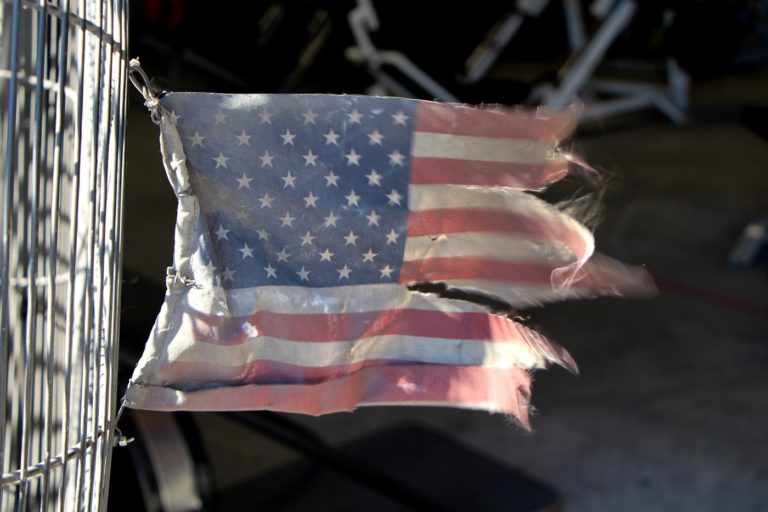
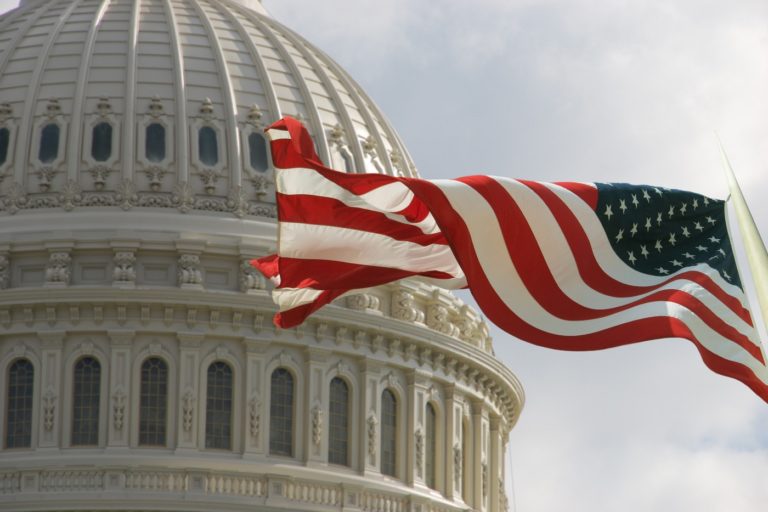



The sermons, political speeches, and protests about America’s origin rely on harmful myths. This is true not only of the 1619 Project’s, but also the traditional view of the Pilgrims. The task of history, however, ought to replace myth with the far more compelling chronicles of human complexity.
Marilynne Robinson’s “Jack” dives deep into the protagonist’s mind in order, paradoxically, to show how our lives mean things that are only apparent to other people. She depicts Jack’s redemption as something that occurs partly outside his conscious awareness. By giving us Jack’s consciousness illuminated but not wholly transformed by his wife Della’s love, Robinson achieves an artistic analogue to forgiveness.
The New York Times’ Nicholas Kristof addresses the debate over abortion from an external point of view, for he has not attempted to understand or imagine the pro-life position from the standpoint of someone who holds that view. If he’d like to try seeing it from within, Mr. Kristof is most welcome to join us for dinner and conversation at the Witherspoon Institute.
The question that divides us is how we ought to respond to reproductive asymmetry: the reality that women carry disproportionate burdens due to our special role in human reproduction. What makes one a feminist is the view that this basic inequality at the heart of reproduction is one that deserves, in justice, an affirmative cultural response. We wish not only for maternity to be celebrated for the true privilege it most certainly is, but also for women to be encouraged and supported in other contributions they make. This requires that the burdens of childbearing ought to be shared not only within the family, but also across the wider society too.
Now that Roe v. Wade is on the brink of being overturned, we need to have conversations across the partisan divide and heal our nation’s wounds.
If the president and his administration are to be credibly accused of inconsistency with respect to their stance on using fetal cell lines from abortions, it would not be because the president personally received a dose of Regeneron’s drug, but rather because of a very different ethical failure: his administration’s channeling of hundreds of millions of dollars of taxpayer funds directly into the development of COVID-19 vaccines that utilize abortion-derived cells for their production.
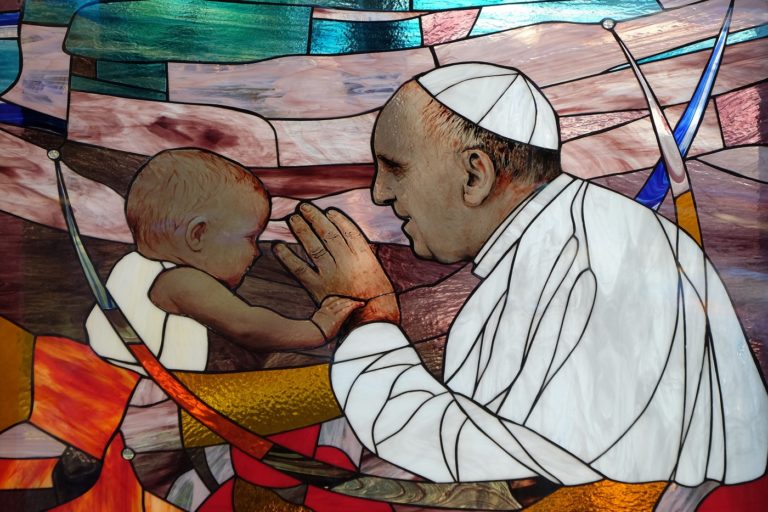
More deeply understanding the truth about marriage and human sexuality will help all of us flourish. And that is what a pastor like Pope Francis desires. We can understand—indeed we share—the frustration of our fellow Catholics with the ways in which the Holy Father conducts interviews and the ways in which the media distorts them, but we must not do anything to undermine the truth that sets us free.
When we deliberate about how the Church, the state, various institutions, and all individuals should navigate the crisis of COVID-19, we are in fact deliberating about what ultimate common good we collectively belong to. Yes, we are called to protect our own bodily life and the lives of others, but we are also inclined by nature to participate in communities of friendship, extended family life, truth-seeking, meaningful work, gainful employment, liturgy, and contemplation.
If the state seeks to protect the human body, it should do so in view of a more ultimate flourishing of the whole human person, for the sake of a civic society that promotes the free pursuit of spiritual goods. In a public health crisis, the ways we pursue these goods can be altered temporarily, but if the alterations threaten to radically alter the long-term pursuit of these goods, we must question these new policies.
I have called books and authors “friends,” and that they are. Aristotle tells us the highest form of friendship is that which aims at another’s good as though it were one’s own, for in truth it is indistinguishable from one’s own. We reread our favorite books in gratitude, not only for the repeated pleasure of the experience but to know once again the good that our old friends have selflessly done us.
Adam MacLeod’s new book, “The Age of Selfies,” represents a worthy contribution to the intellectual retracing of our steps that we must pursue if we hope to restore reason and civility to our public discourse. Our freedom and social tranquility depend on a renewed seriousness about natural law and objective moral truth.
The law must protect the freedom of parents to seek, children to receive, and doctors to practice good medicine. The law must protect the ability of doctors and families to help children feel comfortable as what they actually are—namely, male and female children—not to radically and irreversibly transform their bodies.
Christians like Tim Keller are to be commended for trying to fight racism with theology and scripture. But Keller’s use of the Bible on race assigns contemporary meanings to ancient texts that their authors never intended to convey.
Thirty-five years ago, New York University professor of communications Neil Postman predicted the political and social implosion we have witnessed in 2020. We must learn to dominate digital media technology, lest it dominate us. Otherwise, we may very well amuse ourselves, and our polis, to death.
When we speak of protecting people “whatever their sexual orientation,” we must realize the term is not as simple as most assume.
If we combine the beauty of art and the power of narrative with rational argument, we can convince people of the worthiness of marriage and family life more effectively than by argument alone. Anna Karenina is an example of how to do this. It beckons the reader to choose the better path, contrasting the destructive adultery of Vronsky and Anna with Levin and Kitty’s enchanting journey into the life of married love.
The uniting of differing spheres of excellence is a hallmark of John Henry Newman’s fully fleshed out idea of a university. What young men and women most need is adults in their midst who joyfully embody integration, integration of the parts of knowledge and integration of the intellectual, moral, and spiritual dimensions of human existence.
Are pro-life stings justified to change hearts and minds? Or do they make us complicit in new wrongful choices?
We often assume that unity is the norm in human affairs, and strife the exception. But a cold-eyed view of history suggests the reverse. Unity is what needs the special cause, and today we lack the cause.
In his recent book, David VanDrunen makes a protestant case for politics based on the natural law. We need an approach to government that recognizes the built-in moral fabric of the universe, yet refrains from exercising too much ambition in telling people how they must live their lives.
There never was a golden age when low politics didn’t enter into the process of Supreme Court nominations, but the furies unleashed by Roe v. Wade have driven the politics lower and lower. Perhaps one day the end of Roe will mean the end of “Borking” too. So we may fervently pray.
Mulan is worth watching because it is a great movie with a compelling plot. And it teaches an important truth: a girl does not have to pretend to be a man in order to excel in a traditionally male domain.
Despite Andrew Koppelman’s good-faith efforts, he has not accurately stated important, fundamental convictions of religious liberty proponents concerning the character of moral reasoning and the nature of law.
Andrew Koppelman surely is correct that a same-sex couple must find it humiliating and embarrassing to be turned away from a wedding vendor. He is also right that the costs of using public law to remedy such indignities are significant, especially for the conscientious owners whose livelihoods are at stake. So, what to do? What we need is an institution that is capable of resolving these fraught disputes on a case-by-case basis. Fortunately, the common law provides such institutions.