


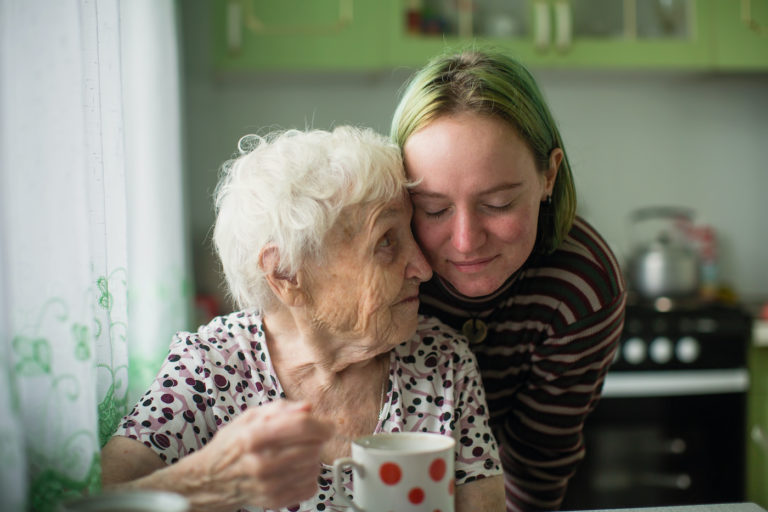












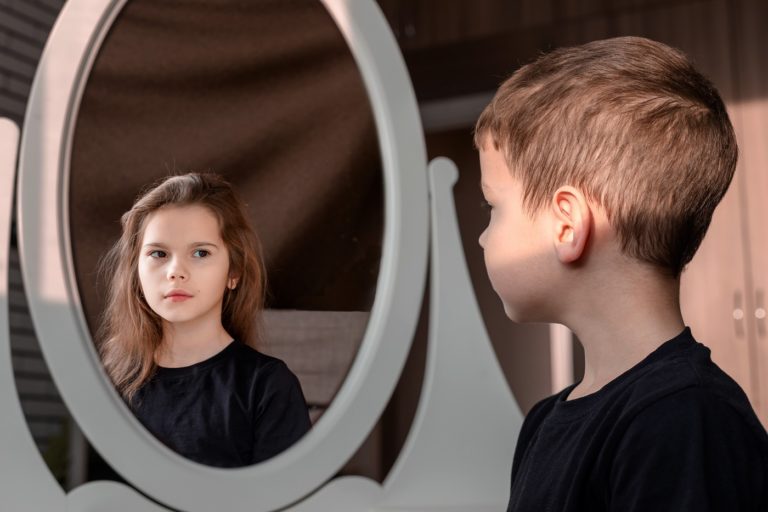





What if religious and conservative higher education ceased speaking about marriage and family life as an accomplishment and began to treat marriage and children as that which enable human flourishing and a meaningful future?
I may not live in a monastic community like St. Benedict, but I live among others in my own sort of domestic monastery, and I am fully invested in these members’ flourishing. My Rule of Life helps me flesh out what it means to thrive both personally and as a family.
The leftward drift of many American business executives is driven by both dubious economic calculations and cultural and political pressures that will corrode business’s legitimate freedoms and damage the economy’s capacity to generate wealth.
Carrie Gress and Noelle Mering’s Theology of Home project is a counteroffensive against the dominant feminism of our culture, which has greatly degraded home and homemaking. Their latest book addresses the question of what it means for women to live fruitfully.
If people are more than wage-earners, then they must see that all of life is not about the practical activity of getting ahead. If they are more than political actors, then we must have education that is not expressly political. In other words, if we want to “do justice” to the total human condition, we must explore all the things that comprise the liberal arts: religion, philosophy, art, music, and literature.
How to achieve a lasting peace in our cultural conflicts is the great difficulty remaining for us. We should not paper over important differences. But, as Andrew Koppelman and Adam MacLeod demonstrate, we can discuss them in a conciliatory spirit of friendship.
Nicholas Mathieu’s novel And Their Children After Them shows the effects of globalization and progressive idealism on a de-industrialized French town. Comparisons between Mathieu’s story and JD Vance’s Hillbilly Elegy offer insight into rural poverty and populism in France and America.
Whatever your raw intelligence, whatever your background, what you have control over, and therefore what you should focus on, is your actions. The cure for impostor syndrome is to do what intellectuals do, and you’ll become an intellectual.
The use of HEK 293 or similar cell lines in no way perpetuates the grave injustice of abortion or implies approval of abortion. To call a cell line, a vaccine, a railroad, a medication, or any other physical thing morally compromised is simply a category mistake, because good and evil are characteristics of the human will, not of physical things.
Carter Snead shows how expressive individualism fails to account for human life as it truly is—embodied, relational, dependent, and social. As an alternative to expressive individualism, Snead posits an anthropology of embodiment, marked by themes of remembering, acknowledged dependence, gratitude, openness to the unbidden, solidarity, dignity, and friendship.
The Netflix adaptation of The Queen’s Gambit and the original version are based on two radically different visions of the human person. They bring the reader or viewer to one of two endpoints: either we recognize the importance of making the best choices and inherit a position of moral responsibility, or we face the despair of living in a world without moral agency.
Excessive efforts to control the givenness of our children’s lives reveal our doubt that life is a good gift in itself. They also show a vision of human flourishing that is dependent upon material prosperity, personal achievements, and social status.
Given the Church’s unequivocal endorsement of prayer before the Eucharist, and given that Masses are underway again in most dioceses, churches should be reopened for the private prayer of the faithful.
Dipping into Shakespeare’s plays from time to time was unsatisfying; I grew ambitious to read all of his works. Yet how to proceed through it all? Some eight years ago, I resolved to make my own daily reading plan for moving through all of Shakespeare’s works in a year. Here, I present the 2021 version.
The Christmas message is one of joy, even “great joy,” but not superficial joy. Christmas confronts us with the sobering claim that humankind is in a state of sin—a state from which we cannot save ourselves. Hence the need for a savior, and hence the joyful Christian claim that God himself offers the salvation by coming to live among us.
In “The God in the Cave,” G.K, Chesterton explains that when Christians celebrate the Nativity, they are celebrating an event that changed the course of history and permanently transformed the DNA of human society.
Reading recommendations from The Witherspoon Institute staff.
The film “Klaus” is a tale of political refounding that tells of our need for a common good based in common loves. It shows how a political order can mold souls, whether for good or for ill.
According to Carl Trueman, focusing myopically on problems with sexual morality often results in misguided responses to the sexual revolution. Instead, we must grapple with “a much deeper and wider revolution in the understanding of what it means to be a self.”
The American public deserves the truth, even if it is not as favorable or definitive as we would hope. If our policy leaders and scientists cannot put their faith in us with all our faults and shortcomings, why ought we put our faith in them with all their faults and shortcomings?
The dominant discourse on the left around race, around faith, and around what the working classes believe and want is fundamentally flawed. The GOP has an opportunity to build on these shifting trends to create a culturally dominant, multi-ethnic, working-class party. Can they pull it off?
Do we really want a tax system that encourages very wealthy individuals to give money to the arts but does not encourage middle-class taxpayers to give money to local, religiously affiliated soup kitchens? That is the system we will have if the CARES Act’s above-the-line charitable tax deduction is not renewed.
To combat “toxic masculinity,” the APA suggests teaching boys to express their emotions and insecurities more openly. They say components of traditional masculinity such as stoicism, self-reliance, and competitiveness deter men from forming close relationships with other men. But if men really are born less “nice” than women, then our task is not simply to strip away negative social constructs. It is time we stop talking down to boys as if they were dim-witted girls and offer them opportunities to build character and provide meaning to their lives.
A culture of repression and fear obstructs the socially transformative goals of the antiracism movement. The tactics of wokeness hinder the pursuit of its professed aims.