Pillar

Sexuality & Family

The second pillar of a decent society is the institution of the family, which is built upon the comprehensive sexual union of man and woman. No other institution can top the family’s ability to transmit what is pivotal—character formation, values, virtues, and enduring love—to each new generation.


Learn more about Sexuality & Family: get your free eBook today!

When something as natural and ordered as erotic love is no longer being pursued, there is something deeply wrong with our society. Kate Julian’s Atlantic article “Why are Young People Having So Little Sex?” presents incontrovertible evidence that the experiment of “free love” without consequences, based solely on pleasure, has failed.
Why should a doctor perform surgery when it won’t make the patient happy, it won’t accomplish its intended goal, it won’t improve the underlying condition, it might make the underlying condition worse, and it might increase the likelihood of suicide? Sound medicine isn’t about desire, it’s about healing.
People who seek to change their sex through hormone treatment and surgery may suffer grave medical and psychological consequences, numerous medical experts have warned.
The empirical evidence suggests that coitus is associated with significant psychological and physical benefits and that noncoital sexual activity is associated with significant psychological and physical harms.
Justice Ginsburg’s claim in Masterpiece Cakeshop is deeply troublesome and problematic. Mistakenly asserted, it adds to the aggravated polarization within the United States.
The structure of the surrogacy market does not enhance individual freedom. Surrogate mothers are willing to abide by the rules imposed by the clinic and the intended parents in their desperation to bring their families out of poverty.
California’s AB2119 should not be law. Signing the bill is a triumph of ideology posing as science. Human beings should be affirmed, not false identities and sexual confusion.
We find ourselves in a liminal spot, one between long-taken-for-granted traditional relationships anchored in marriage and the future relationship system characterized more consistently by “confluent love.” There will not be two dominant systems.
Brown University researcher Lisa Littman has been attacked for publishing results that call into question the politically correct narrative about transgender youth.
Unmoored from a committed and loving marital relationship, the unchecked sex drive harms both the individual and the society in which he or she lives.
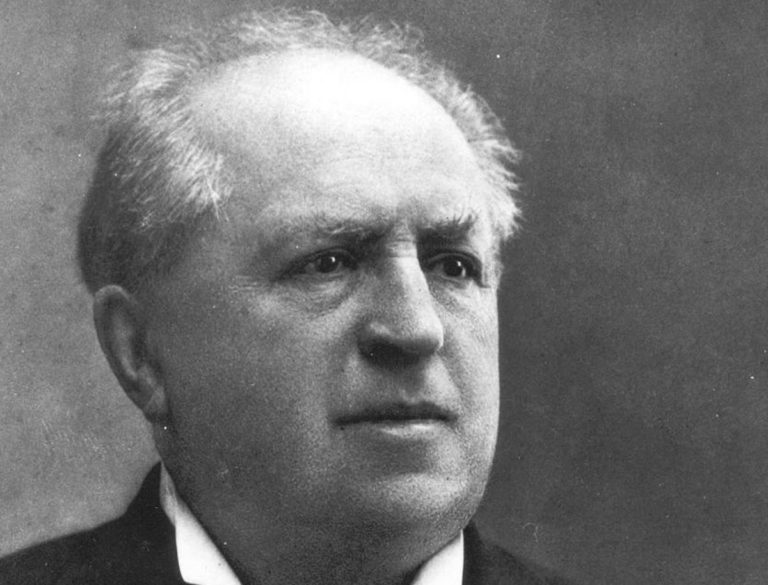
Abraham Kuyper’s teachings help us to rightly value the created order. They also help us understand the ways in which the “common grace” of God preserves the social order through the state, the family, and the dignity of individual work.
We might call Neil Gorsuch a natural law originalist: a jurist who believes that the content, motivation, form, and impact of the Constitution that he’s called upon to uphold and of the laws he must fairly interpret are—for the most part—sound expressions of the account of human good and human dignity to which he subscribes.
New research suggests that educational programs can strengthen or even save marriages. Government can and should play an important role in supporting marriage through such programs. 
In her new book, Camille Paglia continues to set herself apart from mainstream American feminism—and offers sage advice to conservatives inclined to jump on the #MeToo bandwagon.
According to sociologist Mark Regnerus, the birth control pill and the rise of internet porn decreased the cost of sexual access so substantially as to affect a fundamental shift from a world in which sex served higher goods to a world in which sex is the higher good.
For C.S. Lewis, the body and the erotic procreative relationship between men and women are not mere nature, to be manipulated and embellished. They are not mere matter, to be shaped in any way that we please. They are, rather, an indicator of a larger order, something that offers us a clue to that larger order and that has to be understood in the light of it.
Reflecting on the experiences behind #MeToo teaches us that something is deeply broken at the heart of the sexual revolution.
The Spiritual Friendship project is not primarily about sexual desire. Rather, it is an attempt to think deeply about Christian love.
The current debate about gay Christianity traces back to a centuries-old dispute between Protestants and Catholics about the doctrine of man and the doctrine of sin. Roman Catholics do not regard involuntary desire for sin (concupiscence) to be sinful. Reformed Protestants do.
Gender dysphoric children who are treated using a “watchful waiting” approach largely desist, no longer identify as transgender as adults, and accept their bodies as they are. Those who are subjected to medical intervention do not.
The process of sanctification in this life is not necessarily about eradicating fallen desires. Rather, we form Christian character when, relying on God’s grace, we refuse to consent to temptations to sin, either in thought or in deed.
A new study is being used to make the claim that allowing conscientious objection to same-sex marriage leads to increased rates of mental health problems in sexual minorities. But is that really what the data show?
It is not merely that we “reject the sin, but love the sinner,” though we do that; we reject the sin because we love the sinner—radically love him, willing his good for his own sake, affirming the teaching of the Church in all its richness because we recognize that it is liberating and life-affirming.
State officials and judges cannot comply with the Supreme Court’s ruling in Masterpiece simply by articulating facially neutral reasons for decisions that punish people for acting on the understanding that marriage is a man-woman union.

Get your free eBook for The Human Person

"*" indicates required fields

Get your free eBook for Sexuality & Family

Get your free eBook for Politics & Law

Get your free eBook for Education & Culture

Get your free eBook for Business & Economics