Pillar

Politics & Law

The third pillar of a decent society is a just system of politics and law. Such a government does not bind all persons, families, institutions of civil society, and actors in the marketplace to itself as subservient features of an all-pervading authority. Instead, it honors and protects the inherent equal dignity of all persons, safeguards the family as the primary school of virtue, and seeks justice through the rule of law.

Learn more about Politics & Law: get your free eBook today!

“Much American (and British) media depiction of faith—sadly, but perhaps inevitably – tends to be primary colored, inadequately nuanced, and at odds with what I have found to be the case from my fifty years’ engagement with the United States.” An interview with the British historian of America, Richard Carwardine.
Joshua Mitchell shows how identity politics distorts basic Protestant theological concepts of transgression and innocence while omitting forgiveness, humility, and charity.
What I learned from St. Katharine Drexel was that the first act is simply to see the truth. To really use our eyes and intellect and heart to see another as a fellow human, given dignity by God, is no simple act—but it can be done. And then to step toward those who are not being accorded this dignity and to offer it to them, to reach out the hand of charity, takes a monumental act, a decision often of serious self-sacrifice.
The problem France is facing with radical Islamism is not separatism, but conquest. To fight Islamic terror, France needs to recall the Christian roots of her culture and robustly defend them.
In the current moment, we critique and demand, but from a negation; we know—or some think they know—what they don’t want, but it is quite unclear if they know what they do want. And since they have rejected moral norms it is impossible for them to give a rational justification for their wants and dislikes. Theirs is an exercise of will, for they have exorcised the logos, and mere will—willfulness—remains.
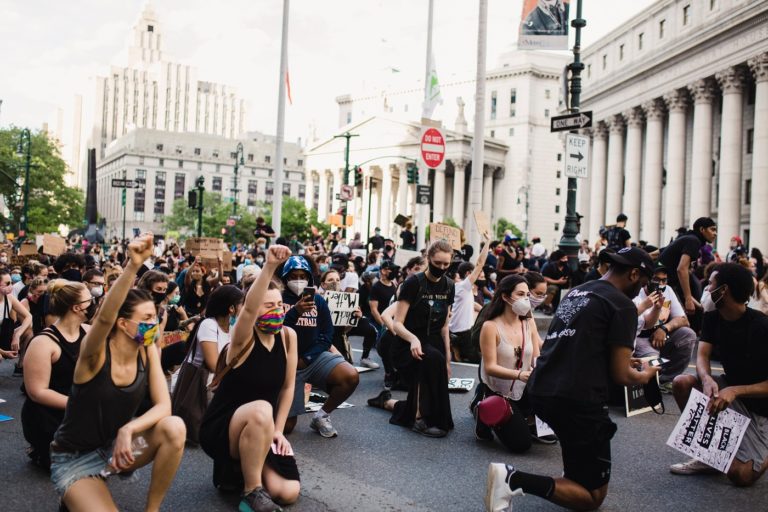
When I interviewed people at Portland’s protests, I found that they rarely hold the views they are attacked for. They are usually not filled with hate, as their opponents believe. However, they often consume one-sided media and are victims of confirmation bias. They believe they know what their adversaries support, and are ready to fight to oppose it.
Americans need not accept an interminable status quo of indifference toward the rights of the child, due either to the timidity of our political elite or to the presumption of our judiciary class. The ‘Lincoln Proposal’ offers pro-life presidents the clearest way to confront Roe v. Wade’s jurisprudence of violence and doubt and to protect the constitutional rights of preborn persons.
Love in the Ruins speaks to our present moment in the United States like few other books. Most important is what Percy has to teach us about the dangers of moral superiority, ideological idealism, and the capacity of intellectual humility and hard work for achieving genuine progress.
It is easy to come away from Dare to Speak filled with confusion about whether, or even how, to take the title’s advice. Reducing minds to group representation is, in the long run, no way to arrive at either truth or justice. Instead, it first leads to conflict, and finally to a weary agreement that the groups can only live in peace separately—and in silence.
The sermons, political speeches, and protests about America’s origin rely on harmful myths. This is true not only of the 1619 Project’s, but also the traditional view of the Pilgrims. The task of history, however, ought to replace myth with the far more compelling chronicles of human complexity.
The New York Times’ Nicholas Kristof addresses the debate over abortion from an external point of view, for he has not attempted to understand or imagine the pro-life position from the standpoint of someone who holds that view. If he’d like to try seeing it from within, Mr. Kristof is most welcome to join us for dinner and conversation at the Witherspoon Institute.
Now that Roe v. Wade is on the brink of being overturned, we need to have conversations across the partisan divide and heal our nation’s wounds.
If the president and his administration are to be credibly accused of inconsistency with respect to their stance on using fetal cell lines from abortions, it would not be because the president personally received a dose of Regeneron’s drug, but rather because of a very different ethical failure: his administration’s channeling of hundreds of millions of dollars of taxpayer funds directly into the development of COVID-19 vaccines that utilize abortion-derived cells for their production.
More deeply understanding the truth about marriage and human sexuality will help all of us flourish. And that is what a pastor like Pope Francis desires. We can understand—indeed we share—the frustration of our fellow Catholics with the ways in which the Holy Father conducts interviews and the ways in which the media distorts them, but we must not do anything to undermine the truth that sets us free.
When we deliberate about how the Church, the state, various institutions, and all individuals should navigate the crisis of COVID-19, we are in fact deliberating about what ultimate common good we collectively belong to. Yes, we are called to protect our own bodily life and the lives of others, but we are also inclined by nature to participate in communities of friendship, extended family life, truth-seeking, meaningful work, gainful employment, liturgy, and contemplation.
If the state seeks to protect the human body, it should do so in view of a more ultimate flourishing of the whole human person, for the sake of a civic society that promotes the free pursuit of spiritual goods. In a public health crisis, the ways we pursue these goods can be altered temporarily, but if the alterations threaten to radically alter the long-term pursuit of these goods, we must question these new policies.
Adam MacLeod’s new book, “The Age of Selfies,” represents a worthy contribution to the intellectual retracing of our steps that we must pursue if we hope to restore reason and civility to our public discourse. Our freedom and social tranquility depend on a renewed seriousness about natural law and objective moral truth.
Christians like Tim Keller are to be commended for trying to fight racism with theology and scripture. But Keller’s use of the Bible on race assigns contemporary meanings to ancient texts that their authors never intended to convey.
We often assume that unity is the norm in human affairs, and strife the exception. But a cold-eyed view of history suggests the reverse. Unity is what needs the special cause, and today we lack the cause.
In his recent book, David VanDrunen makes a protestant case for politics based on the natural law. We need an approach to government that recognizes the built-in moral fabric of the universe, yet refrains from exercising too much ambition in telling people how they must live their lives.
There never was a golden age when low politics didn’t enter into the process of Supreme Court nominations, but the furies unleashed by Roe v. Wade have driven the politics lower and lower. Perhaps one day the end of Roe will mean the end of “Borking” too. So we may fervently pray.
Despite Andrew Koppelman’s good-faith efforts, he has not accurately stated important, fundamental convictions of religious liberty proponents concerning the character of moral reasoning and the nature of law.
Andrew Koppelman surely is correct that a same-sex couple must find it humiliating and embarrassing to be turned away from a wedding vendor. He is also right that the costs of using public law to remedy such indignities are significant, especially for the conscientious owners whose livelihoods are at stake. So, what to do? What we need is an institution that is capable of resolving these fraught disputes on a case-by-case basis. Fortunately, the common law provides such institutions.
Individuals who are victims of abuses against their fundamental human rights can and should be defended and protected using existing human rights laws and norms, regardless of their race, nationality, gender, sexual orientation, or any other distinguishing characteristic. UN member states and human rights advocates alike should work to promote and protect fundamental, natural human rights, not redefine or eliminate rights based on their particular policy preferences.

Get your free eBook for The Human Person

"*" indicates required fields

Get your free eBook for Sexuality & Family

Get your free eBook for Politics & Law

Get your free eBook for Education & Culture

Get your free eBook for Business & Economics