Witherspoon Institute
2026 Summer Seminars
Held in Princeton, NJ
For rising high school juniors and seniors, undergraduates, and graduate students.
Keep up with the conversation! Subscribe to Public Discourse today.
Book Reviews
Both natural law thought and the Catechism agree: animals are not part of the same justice community as human beings, because they do not possess the dignity that comes from existing as a rational being.
Animals are not simply “a gift for human beings.” The needless cruelty inflicted on animals by factory farming not only violates a duty to provide them just treatment, but far outweighs the goods that humans gain by eating such meat.
Thomas Paine’s rationalistic emphasis on freedom, equality, and rights form the basis of our political discourse. Even so, Edmund Burke has something essential to teach us: the way we order our society will always be the consequence, first and foremost, of the way we love.
The differences between Edmund Burke and Thomas Paine shed light on contemporary politics, argues Yuval Levin in his new book. But they also shed light on something deeper: two fundamentally contrasting orientations toward the world.
The embrace of a materialist and mechanistic view of the world, taking its inspiration from the rise of modern science, results in a loss of the sense of transcendence. But God is not simply some finite object in a universe of other objects—he is reason, being, and order itself.
Every economic system is based upon an implicit vision of the human person. Maciej Zieba’s new book provides an introduction to Catholic social thought that examines the anthropologies of Catholicism, liberal democracy, and the free-market economy.
Because animals are not truly our equals, advocating that we should treat them as such weakens the pro-life cause. But animals are meant to be part of our households, and the way we treat them should express beauty and virtue, not decay, pride, and domination.
Charles Camosy’s new book argues that we should treat animals with the same Christian justice that underlies our treatment of other people. But human beings and other animals are not fundamentally equal in the way that all human beings are, as free and rational beings created in the image of God.
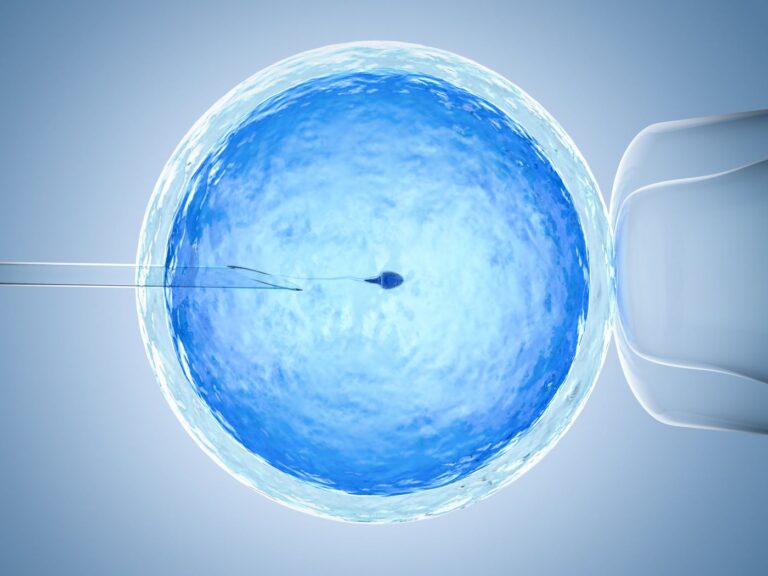
Infertile parents who desperately seek a child might see anonymous sperm donation as the solution to their fertility difficulties. But as the stories in the Anonymous Us collective reveal, the difficulties faced by donor-conceived children are just beginning.