Witherspoon Institute
2026 Summer Seminars
Held in Princeton, NJ
For rising high school juniors and seniors, undergraduates, and graduate students.
Keep up with the conversation! Subscribe to Public Discourse today.
Book Reviews
In his new book, Letter to a Suffering Church, Bishop Robert Barron provides a necessary mixture of teaching and empathetic rage. Barron is right: we should refuse to be mollified by pathetic excuses and baseless claims that everything is fixed. Yes, we need to pray and pursue holiness, to safeguard those parts of the vineyard that are in blossom. But we also need to root out the vermin and destroy their lairs.
By Paul Sullins
Social scientists who conduct research on the politically charged question of the wellbeing of children in the care of same-sex parents have emphatically asserted unqualified and universal support for the finding of “no differences.” In his meticulously researched new book, Professor Walter Schumm turns this scenario on its head. Through a detailed review of virtually all extant research, Schumm demonstrates decisively that contrary evidence not only exists, it is abundant and methodologically strong.
By Jason Morgan
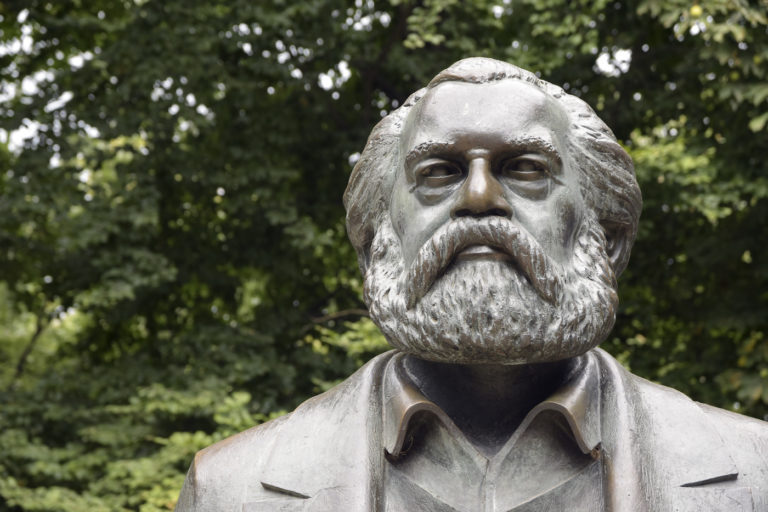
Terry Eagleton attempts to offer us a gentle revolution, a soft “transition” from Catholicism to Marxism. This is as theoretically and theologically impossible as it is historically unprecedented. Any “radical sacrifice” on anything other than God’s terms will lead to mass bloodshed and human suffering, as it has whenever and wherever such a project has been tried before.
Steven Harper argues that conservative politicians should be primarily concerned with protecting their own citizens. It is time for conservative politicians to distinguish themselves from those on the right and left who have taken up globalism. Republicans have to recognize, as Trump did, that the essential goal of conservative policy is to help the “Somewheres” facing the challenges created by a global and internationalist economy.
By Casey Chalk
Technology promises to solve our problems, but it also creates new ones. That’s because we have failed to apply human-centric approaches to technology. We think in terms of productivity instead of human flourishing; connectivity instead of community. As a result, our tech use leaves us worse off than we were before—less free, less rested, less peaceful.
Heather Mac Donald’s The Diversity Delusion is right on point, but it is also biting in tone, brimming with exasperation and anger. Mac Donald is at her finest when she offers an ode to the humanities, reminding the reader of the wonder and sublimity in Shakespeare and Bach, the truth and timelessness in Homer and Plato.
American politics is suffering from a failure of empathy. In particular, the country’s elites have failed to empathize with the working class. Over the last few generations, America’s elites have stood in the way of the working class’s pursuit of the American dream by devising, and then by tenaciously defending, policies that impede upward economic mobility.
In his new book, Daniel T. Rodgers argues that the myth inspired by John Winthrop’s famous seventeenth-century “city upon a hill” metaphor was actually a product of the conflict between the Soviet Union and the United States in the Cold War. Winthrop’s sermon was largely forgotten until it was put to use for nationalistic purposes to inspire the nation against global Communism.
By sharing the stories of real people suffering real pain and struggling with enormous regret, Walt Heyer enables us to gain the first thing a person seeking to be a true trans ally needs: compassion.