







Archives - Page 91 of 175 - Public Discourse

The problem with modernity’s conquest of nature is that it works toward obliterating the distinction between creature and creator, a distinction that is essential for maintaining a humane and non-totalitarian politics.
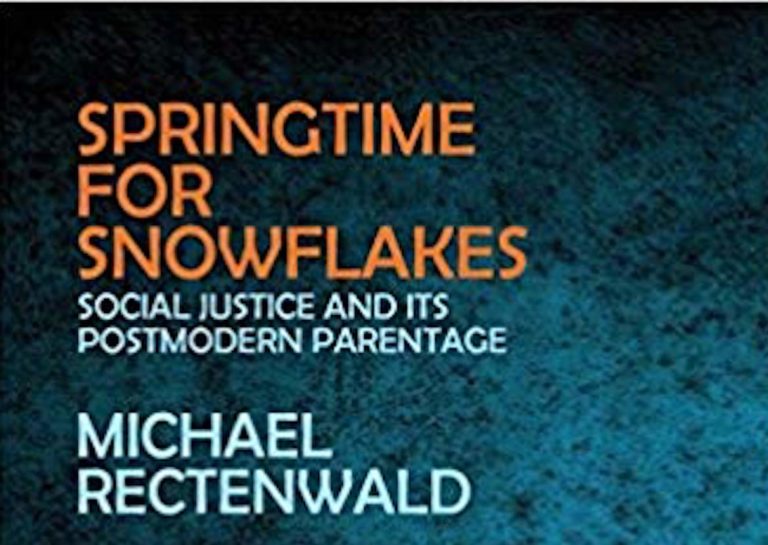
Michael Rectenwald’s new book offers up passionate intellectual debate in a climate where the discursive righteousness, sexuality, sex, skin color, and feelings of the speaker too often matter more than the thoughts espoused. It is a portrait of the contemporary scene of academic freedom, which is anything but free, and even less academic.
When we lie to ourselves about the moral status of other human beings, we not only unjustly injure other people, we also injure ourselves and our culture. We transform ourselves into a people who believe the lie. The costs of self-deception are internal and reflexive as well as external and consequential.
The Church’s own history teaches us that her theology matters more than her politics. Now as in the past, those who make robust arguments that coherently develop our understanding of Christ and his message will endure, while those whose arguments diminish the meaning of the cross and resurrection are likely to pass away.
Leslie Rubin’s portrait of Aristotelian America and American Aristotelianism is an invaluable contribution to our understanding of our situation.
Leslie Rubin’s brilliant study argues that the fault, dear America, lies not in our stars but in ourselves—our repudiation in the past century of the moderate liberal philosophy of Federalists and Anti-Federalists alike, which was steeped in Aristotelian wisdom about favoring the decent republican virtues of a middle class.
Rebecca Todd Peters’s new book is titled Trust Women: A Progressive Christian Argument for Reproductive Justice. Yet she totally dismisses the arguments and decisions of pro-life women. Perhaps a better title would have been “trust pro-choice women to make pro-choice decisions.”
The new antiliberals are not wrong to worry about the dire state of American politics and culture. But they persistently fail to adequately ask, much less clearly answer, three pressing questions that must be part of any adequate treatment of the problem, and they virtually ignore the thoughtful conservative alternatives to antiliberalism that do address these questions.
All human beings share certain universal human rights. But I am not just a human. I am also an American, a Kansan, a university instructor, and a member of a church body. Each one of these relationships generates specific goods, rights, and responsibilities that are unique to me. The same is true for nation-states, each of which have a distinct culture and unique responsibilities to its own citizens.
The beautiful, happy 2018 Gerber Baby, Lucas, is lucky to be alive. Most children diagnosed with Down syndrome in utero are now killed before birth.
Is there room in Canada for a “distinctly Christian” law school? Not unless it conforms to judicially determined “shared values,” according to the Supreme Court of Canada. But shouldn’t communities be permitted to hold different sets of values in a free and democratic society?
Reflecting on the experiences behind #MeToo teaches us that something is deeply broken at the heart of the sexual revolution.
The Spiritual Friendship project is not primarily about sexual desire. Rather, it is an attempt to think deeply about Christian love.
Though our political institutions are designed to be secular and non-sectarian, our laws rest on Christian ideas about what we owe each other as human beings made in the image and likeness of God.
Although many Jews have been misled into thinking otherwise, Judaism is not compatible with political support for abortion.
Catholics today are not required to believe in a Catholic confessional state. If anything, they are required to believe that everyone has a right under the natural law to religious freedom, that the state has no authority in religious matters, and that coercion of religious activity by the state is morally wrong. In short, integralism is contrary to Catholic doctrine.
Stephen Greenblatt’s new book is broad-ranging, accessibly written, and nominally dedicated to an interesting topic: tyranny in the work of William Shakespeare. Unfortunately, too much of the author’s energy is dedicated to expressing disdain for a particular contemporary politician in a way that detracts from his declared purpose.
The progressive left is working to overcome what it perceives as the out-of-date premises of the Judeo-Christian ethic previously reflected in scouting.
Rumors of God’s death may have been greatly exaggerated, but the prevalence of a materialistic philosophy that cannot give an adequate account of human freedom and moral responsibility has put in jeopardy many of the core ideas at the base of our civilization. Without metaphysics we are left simply with physics, and physics is about power, leverage, and force.
How should we understand hierarchies, markets, freedom, happiness, anthropology, and spiritual formation? Three Christian thinkers respond to each other.
Market economies are not inherently hostile to Christian spiritual formation. And expanding the scope of Church authority into the temporal realm is no substitute for traditional spiritual practices such as prayer and fasting.
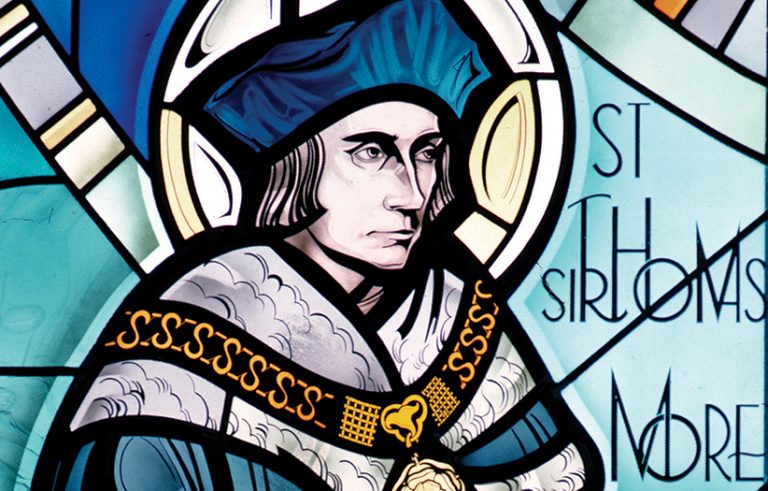
Thomas More’s dying words teach us that zeal for God is compatible with loving, even zealous, service to less than utopian political rulers and realms.
The current debate about gay Christianity traces back to a centuries-old dispute between Protestants and Catholics about the doctrine of man and the doctrine of sin. Roman Catholics do not regard involuntary desire for sin (concupiscence) to be sinful. Reformed Protestants do.
Loving America well means taking her seriously—working to preserve what is lovely about her and to fix what is not.