

















Underlying Paul Johnson’s historical writing was the sense that people possess an innate dignity. To Johnson, history was the story of people—flawed, creative, reasoning, exceptional—with the capacity for incredible achievement. People, he thought, were made with a purpose, and that meant history has a purpose.
I consider myself lucky to have gotten to know George Cardinal Pell a bit—and that after his 80th year.
“Masculinity is more socially constructed than femininity. The script is more important. It has to be nurturing, not in the same way as mothers, but by being similarly other-centered. Creating a surplus, caring for others, sacrificing for others. The question then is, what are we going to build that script around? That sense of being needed, giving, other-centered? My answer to that is fatherhood.”
The idea behind a March for Children is simple: if the institution of marriage is respected and strengthened, families—most of all children—will flourish. Just as the March for Life focused on the importance of legislative and judicial steps to protect unborn children, a March for Children would fight for legislative policies and judicial decisions that aim at strengthening the institution of marriage, which helps ensure the protection of all children.
For the United Nations Population Fund, a few key concepts—sex as integral to well-being, and the importance of caring for others, consent, and bodily autonomy—exhaust the moral significance of sex. Its recent statement implies that sex is nothing but a purely physical act between two bodies. But can sex be distilled so simply?
In the postmodern world, orthodox religion suffers less for being thought demonstrably false than from claiming the authority of truth at all. This absence of consensus about truth is reflected in the variety of perspectives contained in a collection of essays by seventeen thoughtful Orthodox Jews. Since their reflections on the causes and conditions of belief apply to all religions, all believers are likely to find something instructive in this book.
Instead of focusing on what the world has done to the Jews, it is far more worthwhile to investigate the way Jews have not only survived, but thrived.
There is a lot of mileage to be gained out of mockery, and nowhere more than in satire and parody. But successful parody depends on close study, intimate familiarity with the target, and that can often produce a certain gentleness and sympathy in the result.
For the most significant choices of our lives, we only learn what the decision entails after we make it. This creates something of a dilemma. We only get the information needed to make a well-informed decision after we have committed to a particular choice. We are confronted with choices whose outcomes, potential goods, and impact on our lives we cannot fully anticipate.
As efforts to chronicle the breadth of the problem, both Christine Emba’s Rethinking Sex and Louise Perry’s The Case against the Sexual Revolution are nearly unimpeachable. But neither goes far enough in recognizing exactly how deep the rot of this ideology goes. Both authors are reluctant to jettison or even criticize essential aspects of this worldview, which significantly limits their imagination when it comes to developing solutions beyond the obvious.
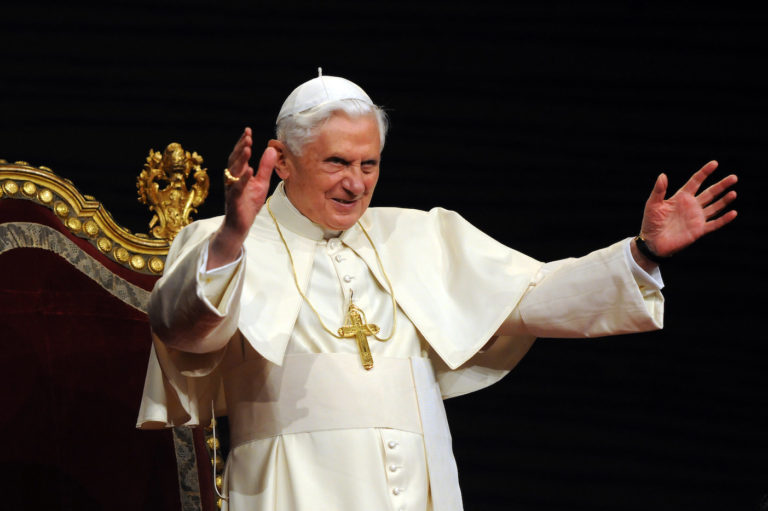
Jews and Christians both must rally around Benedict’s call to defend and celebrate the legacy of the West: the rule of law, the respect for the dignity of man, the institutions of marriage and family, the love of our neighbor, the one most like us, which becomes the basis for the love of the truly other, even—and especially—the one most unlike us. These are the gifts of the West.
As a social scientist, I have grave concerns about the methodological mess that has characterized this synod’s massive, unwieldy data-collection-and-analysis venture.
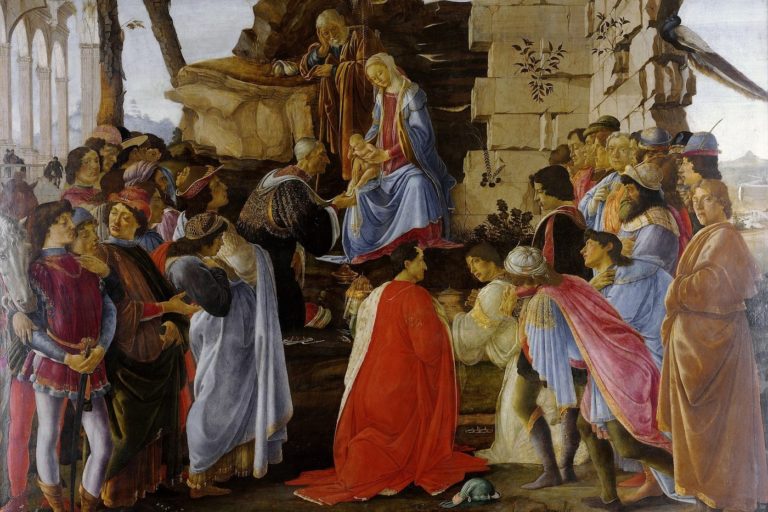
The story of Epiphany provides a timeless lesson on the corrosive influence of politics on religion and religious leaders, revealing the unique temptation faced by the religious establishment, at all times and places, to maintain prestige and power.
As our dependence on technology reshapes the moral imagination of our culture to see human beings as psychological wills that need not respect material limitations, so the old order that was built upon the vision of human beings as both body and soul will become increasingly implausible. The things that make Christianity stand out from the wider culture—belief in the incarnation, the resurrection, and embodied human nature as a real, universal thing with moral consequences—are antithetical to the terms of membership in the emerging world order.
In The Next American Economy, Samuel Gregg argues that the free market is the answer to what ails our economy. But much of what’s understood as the blessings of free markets and free trade is no less the result of politics and partiality. There are always competing interests involved; a policy that works for families or for workers might not work for entrepreneurs, and vice versa.
Benedict lived in a faithless time when people lost themselves and their hope. He reminded them of who they were, and who they could be—children and heirs of God. What good fortune we had to have lived at a time when a man such as this taught us.
What is most original in Koons’s book Is St. Thomas’s Aristotelian Philosophy of Nature Obsolete? is his argument that quantum mechanics is best interpreted as vindicating the Aristotelian hylomorphist’s view of nature. Koons is the first prominent philosopher to make the case at book-length, in a way that combines expertise in the relevant philosophical ideas and literature with serious and detailed engagement with the scientific concepts.
Christmas isn’t tasteful, isn’t simple, isn’t clean, isn’t elegant. Give me the tacky and the exuberant and the wild, to represent the impossibly boisterous fact that God has intruded in this world.
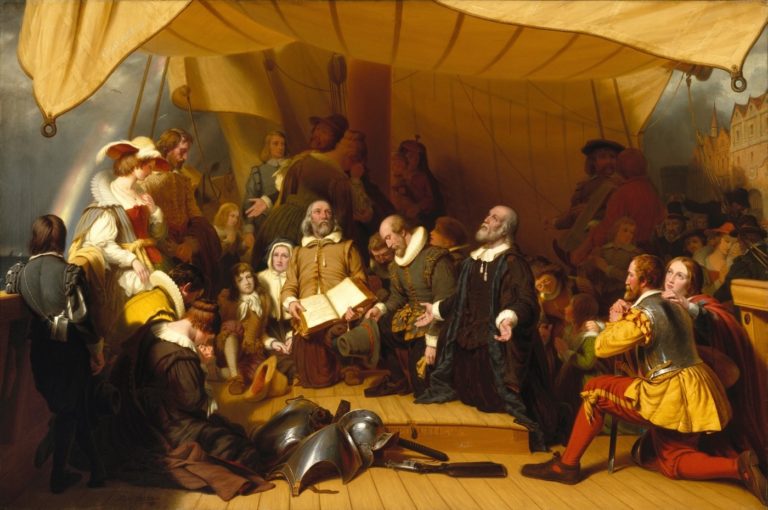
Perhaps as we modern Americans experience a cynical hangover after the giddy confidence of the “unipolar moment,” revisiting the Puritans’ nuanced notion of what it means to be an exceptional people can bring needed perspective, and restrain us from falling for triumphalism or despair.
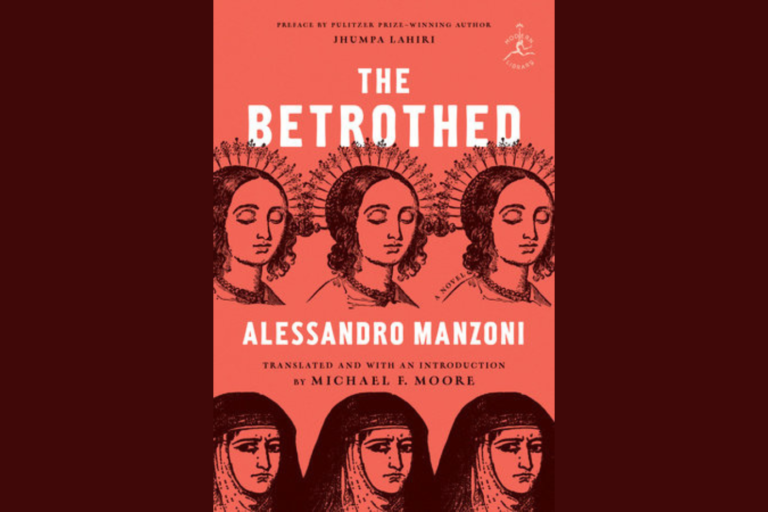
In Alessandro Manzoni’s recently translated novel, The Betrothed, the world is regularly pitted against the sanctity of a few. The novel often asks the reader, an implicit echo, how do you live as a faithful Christian when so much evil persists in the world? But more than anything, it shows us the reality of forgiveness and the possibility of fulfilling Jesus’s most challenging commandment: love your enemies.
A call to repentance or prayer would not preclude action, but it would certainly force necessary and prudent reflection about the very problems Wolfe diagnoses and what the first response should be. Creating a deplorables basket of enemies on the political Left, while ignoring spiritual enemies, makes the project more political for sure, but not more Christian.
Stephen Wolfe’s dedication to read, mark, learn, and inwardly digest two centuries of sources for a popular audience is impressive. However, if scholarly recovery alone were the aim of the book, it is doubtful that Wolfe would have written it, Canon would have published it, or American Protestants would buy it. Why not? Wolfe wants his admittedly idiosyncratic vision to improve the future, not simply engage academic specialists. That turns out to be a mixed blessing.
Reading recommendations from Public Discourse and the Witherspoon Institute.
While the digitized promises of meta-man may entice us, they are ultimately false promises based on a rejection of fundamental aspects of human embodiment. There is an integrated wholeness to man that requires both resting in the givenness of human identity and actively engaging with the world.