















Archives - Page 94 of 175 - Public Discourse

Contemporary America faces continued racial discord that throws into question our mutual seriousness about the natural rights tradition and our commitment to the demands of republican citizenship. In an effort at self-scrutiny, conservatives should ask ourselves what our first response is in the face of evidence of institutional racism, and then ask ourselves what it should be.
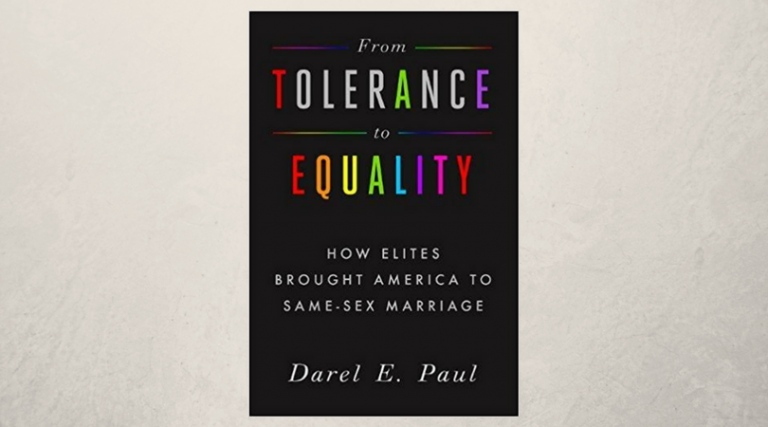
Darel Paul’s meticulous, courageous account of how the elites brought same-sex marriage to America deserves to be read by all who would understand where we are and where we're going.
Joseph Pieper knows what Rob Riemen has forgotten: the existential poverty of the West cannot be evaded or solved through humanism, for no ersatz god gives meaning to our poetry, song, dance, and drama. Absent God, it is all vapor, lacking the goodness to which we respond in wonder, delight, joy, and feasting.
Women are deeply effective in the transmission of mores, as are the churches, schools, and civic organizations that they serve and lead. If these institutions were touched by white supremacy even into the 1970s, how can those educated by such institutions escape the influence of these opinions in their own interpretations of contemporary racial politics?
Same-sex parenting advocates are calling on states’ rights to define the legal relationship between parent and child. What they seek is the power to write the record of a child’s origins and to determine a fundamental aspect of a child’s identity.
Surrogacy is no April Fools’ joke. It’s no laughing matter at all. It’s a big business that exploits, uses, abuses, preys on, and commodifies women. It turns children into products to be designed, selected, and purchased, while it profits handsomely. And it is willing to fight like mad to protect its moneyed interests.
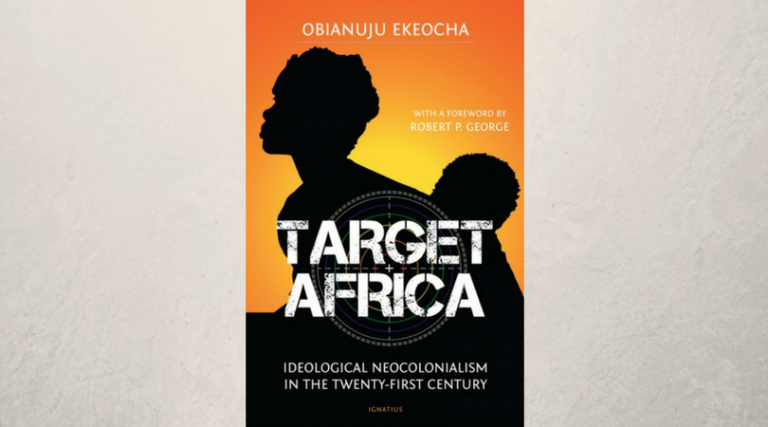
Aside from the importance of fighting ideological neocolonialism, building up the pro-life movement in Africa is essential given how politically and economically influential Africa is likely to become over the next century. Obianuju Ekeocha is doing this admirably and effectively on a shoestring budget.
A recent conference on Christianity and liberalism brought together high-profile Catholic scholars who strongly disagree about whether Catholicism is compatible with liberalism in general and the American version of it in particular.
When it comes to the Catholic Church, there’s a quiet sense that the Vatican thinks in centuries, that a thirty-year crisis will hardly matter in time. Perhaps this time is different. But we don’t know, and Ross Douthat is honest enough to leave us hanging, waiting for the next installment of the Church’s story to be told.
The foundation is being laid for widespread legalization of physician-assisted suicide.
A new book on the hookup culture describes its harms in great detail. But the author fails to understand the implications of her own data, ignoring the fact that we’re in the middle of a cultural sexual crisis that exists because we’ve told ourselves that sex can be casual.
I Am Jazz contains both false information and very troubling omissions. Children who are experiencing gender dysphoria will likely be harmed by this book, as will children who do not have the condition.
In his biblical interpretation, Jordan Peterson re-presents in powerful and fresh ways the stories that have animated Western culture. Christians have much to learn from him, even as his own engagement with the Bible could be enriched by the Christian tradition.
Originalism is the commonsense, traditional American approach to constitutional interpretation, not a contemporary conservative invention.
Religious freedom in America is caught between opponents on the left and the right. The second in a two-part series.
Westerners should neither exaggerate our problems and forget how good we have it nor exaggerate our blessings and neglect the defense of religious freedom. We’re not inherently better or more deserving of religious freedom than anyone else in the world, and we should not take our good fortune for granted. The first in a two-part series.
We are more than our driver’s licenses, Social Security numbers, and credit cards.
A study of consensual, overlapping sex partners unwittingly reveals the strengths of monogamy.
Billy is not the first who turned to a transgender identity to escape pain and trauma. It’s time for psychotherapists to seriously address the unique causes of each individual’s gender dysphoria before encouraging them to pursue hormones and surgery.
Members of iGen suffer from serious intellectual and moral deficits: they are ill-informed, uninterested in pursuing relevant information, passionate without being active, afraid of debate with those who disagree, and uninterested in learning or exploration.
Religious belief and activity—particularly prayer—matter in important ways. They make a deeply practical difference in how husband and wife interact with each other in daily life.
The Christian quest for the common good is not reducible either to the simple aggregate of individual goods or to the promotion of the needs of the collective at the expense of the one.
Should we determine whether a person is fit to be a judge based on his or her religious beliefs or opinions on contemporary policy debates? Or should the Senate approve judges based on their reputation for fairness, their ability to follow and apply law, and their record of judicial wisdom?
While the economic arguments for free trade remain compelling, the political rationale requires a long-overdue overhaul.