

















We are using our genius to degrade ourselves into nothing much at all, and the existential results are anxiety and shame at how small we have become. 
If the witch crazes of recovered memory and multiple personalities are making a comeback, perhaps now aided by social contagion online, we would do well to gird ourselves with a sound understanding of psychiatry’s vulnerability to misdirection—and of the harm it can do to the souls under its care.
Dorothy Day’s radical call to love rings louder for us today than Zohran’s Servile State solution ever will. 
Conservatism, if it deserves the name, cannot be merely a marketplace of grievances or a contest of personalities. It must be a training ground for judgment ordered to the good of persons, families, communities, and the political order.  
The human future, if there is to be one worth having, will be normal; that is to say, it will conserve the things that have always been good for the human to have, hold, cherish, and sometimes fight for.
The job of present-day conservatives isn't to tear down, lament, and criticize. Instead we should attempt to preserve the good, while mending those things that are broken.
This book invites spouses to look beyond themselves to better understand the greatness of the gift they have received and make it fruitful.
Unlike the Iraq war, Trump’s Iran war is being fought without a clear plan or congressional approval. For these and other reasons, it plainly does not meet the conditions for a morally acceptable war, as set out by traditional just war doctrine. 
The collapse of the late Roman republic came not in an instant but over time: through a period of profound internal fracture and systemic chaos. As we approach the 250th anniversary of the American founding, we find ourselves in a similar period of civic fragmentation and disengagement.
America is great because America is good: that is the proposition. But is the proposition plausible? And “good” means ... what?
The conservative legal movement has come far, but we’re just getting started. 
The University of Notre Dame does not and ought not have the luxury of relegating moral and theological questions to the margins.
More than the squabbles of party politics, conservatives ought to be concerned with defending our civilization’s way of life and the ordered liberty that sustains it.
The culture of self-censorship, cancellation, and lack of exposure to viewpoints has adversely affected the university. The increasing ideological skew of the faculty is largely responsible. Universities need to address these issues to help restore their truth-seeking mission. 
The confessions are not a ball and chain. They are a covenant—public, binding, and liberating. 
The joy of reading good books well is to better ponder and embrace them all. 
Can We Restore Hope in Women’s Healthcare? 
The Hebrew Bible offers a “political realism” that may assist both religions, and hence Western civilization, to survive. 
If Sinclair Lewis were writing today, would his Babbitt look markedly different?
America’s constitutional tradition recognizes parents as primary educators. To honor this, policymakers must safeguard private school autonomy and ensure funding follows students to their families’ chosen learning environment.
Pascal’s theology is sublime, beautiful, and all-consuming. But it reflects the life of a celibate mystic rather than that of the statesman who must transmit Christian culture. Statesmen after all must wager. 
Richard Weaver’s bestselling work is his worst book. But an author with his contempt for mass democracy would probably appreciate that irony. 
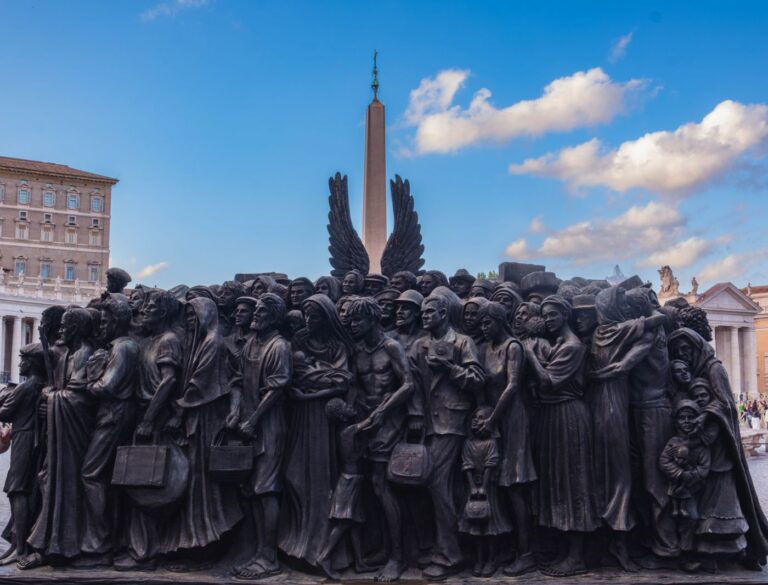
The Church has a long tradition of generous care for migrants, while allowing room for legitimate regulation.
Lent ought to be the training ground for how to approach things of value with proper reverence. In other words, Lent retrains our loves.