The Bookshelf: Let’s Review

A book review is not an opening-night party for a book’s author, and it is not a quarrel carried on with brass knuckles. It is an exercise in considered, contextualized judgment for the benefit of readers.
Artificial Mediocrity: The Hazard of AI in Education

Many students may not appreciate the importance of applying themselves rather than using AI, but we must encourage those who do. We should fortify promising students with the assurance that excellence in education is worth pursuing but requires taking a hard road.
What Makes Us Human?

At the moment, large language models are nothing like us, however easy it is for us to anthropomorphize their outputs. But as AIs develop, it will become increasingly necessary to ask: How much do we want them to become like us? Answering that question will certainly require human wisdom.
In Defense of Individuality: A Friendly Critique of Carl Trueman’s The Rise and Triumph of the Modern Self

In his impressive 2020 book, Carl Trueman rightly exhorts readers to solidify their commitments to God and moral truth in a world of “expressive individualism.” But by reading human nature through the Marxist-Hegelian lens of Alasdair MacIntyre and Charles Taylor, he undermines the true individualism at the heart of the ethics that he wants to defend.
The Entanglements of Science and Religion

Nicholas Spencer’s new book is an important resource for anyone who wishes to understand the scientific and religious entanglements that have shaped, and continue to frame, our views of God, humanity, and the cosmos.
The Liberal Anti-Liberal? On John Henry Newman’s Political Thought
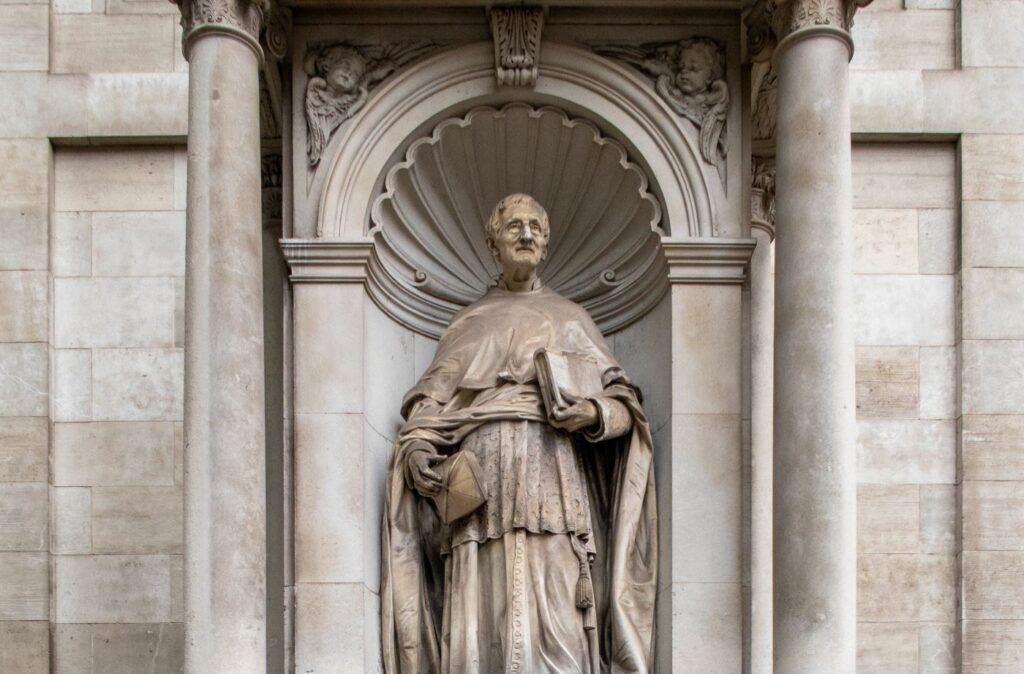
For Newman, the discovery of any reasonable political settlement would first require what both the Letter to the Duke of Norfolk and the Oxford Movement had hoped to do: prepare the public imagination for an apostolic church, an institution in which obedience without mental slavery was married to liberty without self-will.
Timeless and Timely: A Defense of the Great Books

A liberal education pursued in good faith, that is, with civility, generosity, humility, and an earnest desire (among teachers and students) to think for oneself and to learn from and with others, tends to render us all more thoughtful, reflective, and humane.
Classical Education’s Remedy for America’s Loneliness Epidemic

Classical schools embrace an older understanding of education, one that prepares students for festivity and friendship, rather than socially handicapping them. Like their ancient and medieval predecessors, classical educators maintain that a crucial purpose of education is to liberate students from a calculative, utilitarian mindset by teaching them how to enjoy intrinsically worthwhile activities for their own sake.
The Merits of a Franciscan Liberal Arts Education

The point of a Christian liberal education is to take on the mind of God and to be conformed to Christ, or at least to begin to do so, for such a project is endless. This means that a Christian liberal arts school will seek to impart to its students some measure of wisdom and holiness.
In Defense of the Liberal Arts and the “Queen of the Sciences”

The problem with the way that discussions surrounding university education are often framed is that they seem to accept as inevitable a pernicious anthropology that presumes students are autonomous subjects, consuming in order to be consumed. But we are more than what we achieve, more than we produce, more than our billable hours.
Subsidiarity and the Ethics of Attention

If our immediate surroundings and concrete responsibilities constitute the arena in which we are most uniquely competent, then reserving our attention for those objects is not quietism, but the pinnacle of activism.
Christians Need Stronger Conventions, Not State Power, to Influence Culture

Deep, broad cultural change often results not primarily from government imposition or propagation of ideas, but from committed social entrepreneurs who pilot alternative conventions. Public pronouncement of Christian values, absent change in underlying social conventions, is a poor substitute for deeply rooted change internal to the church.
Tech Evangelists: The AI-Made Pseudo-Religions of Tomorrow Sound Uncannily Like Those of Yesterday

Treating data centers, just like fleshly human bodies, as irrelevant or inconvenient, and claiming the world wide web, not the material world, as sovereign over our “true” selves, makes this kind of thinking into a form of techno-theology.
Conservative Wisdom or New-Right Dreams?
We do not need more self-conscious crusaders for the nation or even for Western Civilization, but instead more priests, teachers, businessmen, artists, writers, and parents who perform their own activities faithfully, serving—to borrow a phrase from Russell Kirk—as “leaven for the whole lump.”
In a Fallen World, Scarcity Is a Gift

In our fallen condition in which we are detached from relationship with God, our mortality is a gift. Scarcity grants meaning to our decisions, provides a merciful conduit for us to know the love of God and one another, and pushes us toward relationships broken by the Fall.
Pius XII and the Politics of the Mystical Body

Pope Pius XII exhorts the faithful to participate in daily Mass, frequent confession, personal prayer, mortification, and works of mercy. These practices are not minor, weak, or irrelevant responses to a world crisis; on the contrary, the pope believes they are powerfully efficacious and necessary, strengthening the bonds uniting the mystical body of Christ and sowing the seeds of peace. His counsel is spiritual in nature, but socio-political in its effects.
The Hidden Riches of the Desert

In her new book A Philosopher Looks at the Religious Life, Zena Hitz situates her philosophical ponderings within the context of her own life, here spotlighting a crisis precipitated by her conversion to the Catholic faith. Like Abraham about to sacrifice his son Isaac at the Lord’s behest, Hitz realizes that unconditional love of God, “wholehearted commitment without compromise,” might demand the renunciation even of what she has held most dear.
Procreating Alone

If sexual attraction is one powerful force that God built into the world to counteract the individual’s inclination to self-absorption, then the combination of technological and cultural assaults on this urge doesn’t threaten only the formation of families, the basic unit of society. It also threatens something even more foundational: the nature of the person as a social being.
For the 2024 Election, We Must Relearn to Be Citizens

As 2024 approaches, there will be tremendous temptations to go still further in taking the gloves off in an attempt to prevail by any means necessary. There will be power at stake, but also tremendous profit as the purveyors of opinion seek to build audiences and sell advertisements. But we are not helpless. We can be more fair to each other and thus create the conditions for a more fruitful discourse.
How to Justify the Study of Literature

John Guillory’s Professing Criticism is a thorough and complex work of scholarship. It’s also a bracing call for literary scholars to significantly reform how they think about their profession, and its relationship to their students and reading public in general. At its core is a challenge that is simultaneously reasonable and radical: professors of literary study must be more modest in their aims and promises to suit the realities of their field in the twenty-first century.
How Gender Activists Defaced Pediatric Medicine: An Interview with Miriam Grossman, MD
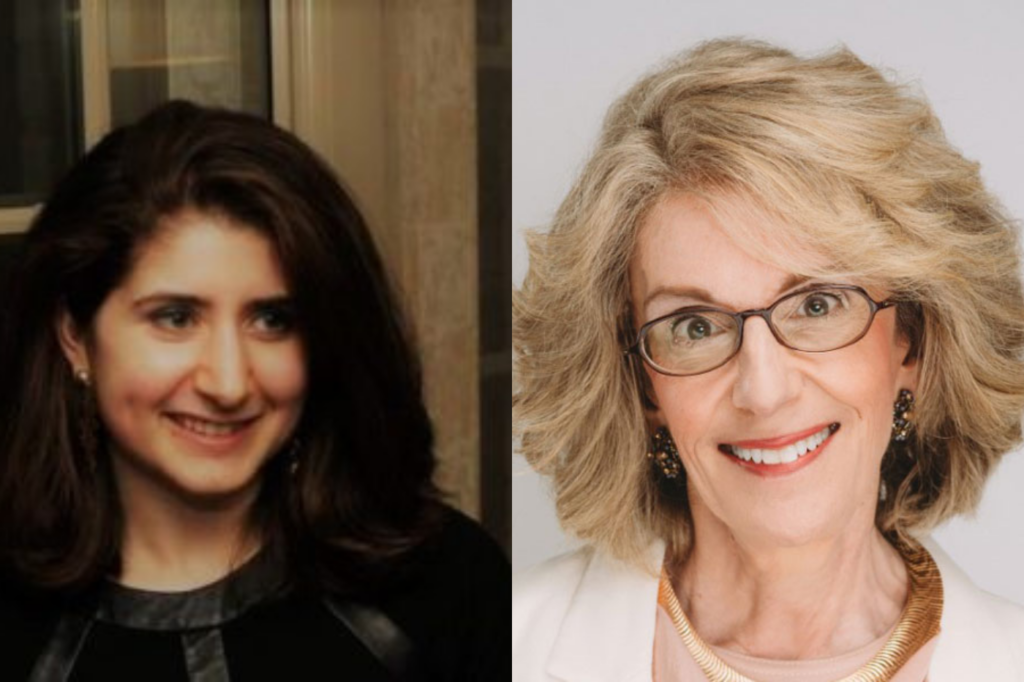
“My book is based on a series of dangerous ideas that have led us to where we are now. Beginning with the insidious theories of John Money, these ideas progressed through the fields of psychology and psychiatry and eventually infiltrated our educational and legal systems—corrupting many of the country’s most powerful institutions.”
How to Lose Sight of the Constitution
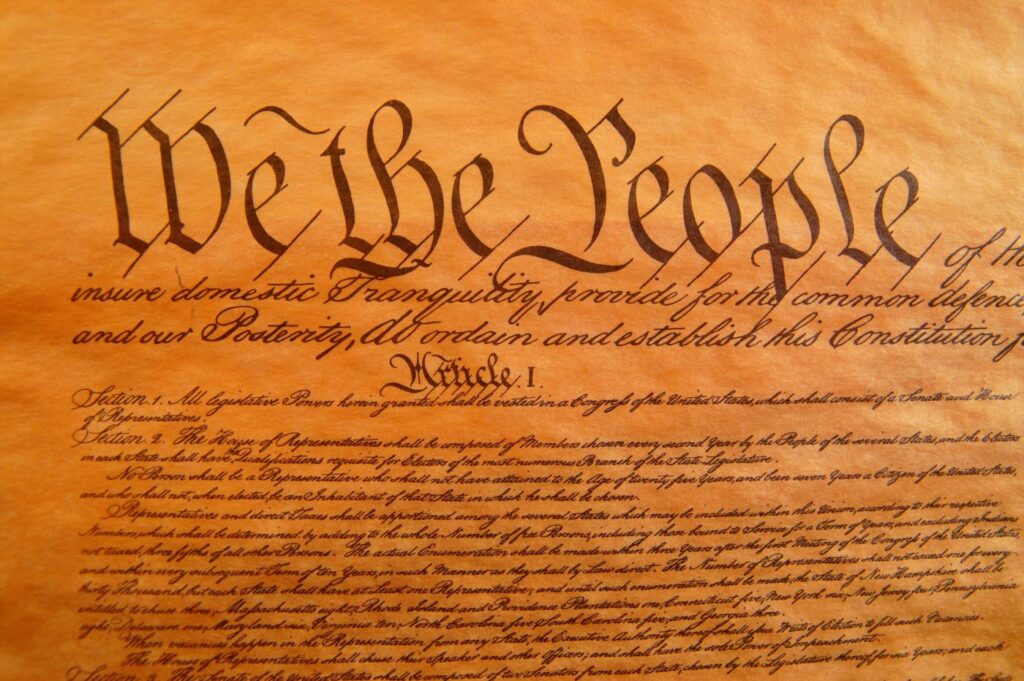
Such a substantial proportion of this book is devoted to textualism, originalism, and traditionalism that it is hard to escape the sense that Sunstein protests too much by repeatedly claiming that his moral-philosophizing “reflective equilibrium” is “the only game in town.” And in truth, he leaves his own preferred approach woefully underdeveloped.
Ronald Reagan: An Imperfect, Indispensable Leader

In his new book, William Inboden clearly regards Reagan as indispensable to something coming close to a miraculous chain of events surrounding the peaceful end of the Cold War. He rejects the popular notions of Reagan as clueless, all form and no substance, gullible, or hopelessly and sentimentally patriotic. This is a sympathetic biography, but one that is copiously researched and laden with fresh and insightful nuances that treat Reagan as a complex figure, a man with limitations, paradoxes, and weaknesses.
Elon Musk and the Reproductive Revolution

What the sexual revolution began by upsetting gender roles and obscuring the necessary link between marriage and procreation, the reproductive revolution continues, shattering our conceptions of motherhood and fatherhood and severing the bond between parents and children.