Witherspoon Institute
2026 Summer Seminars
Held in Princeton, NJ
For rising high school juniors and seniors, undergraduates, and graduate students.
Keep up with the conversation! Subscribe to Public Discourse today.
Book Reviews
The values America’s elites cherish are not the incontestable truth of things, and they may even run counter to the deeper truths of American politics and human life. Those who aspire to lead our country—and to deserve to lead it—would do well to ponder these lessons by reading Tucker Carlson’s Ship of Fools.
By Casey Chalk
Fifty years ago, Josef Pieper accurately prophesied the most defining dilemmas of our age and pointed us to the virtue of pietas to solve them.
By Glenn Moots
In eighteenth-century political reasoning and rhetoric, ministers and statesmen were not obliged to choose between pragmatism or piety, orthodoxy or heterodoxy, reason or revelation. As we grapple with the role of religion in the American Revolution, we should not impose false dichotomies routinely used by modern scholars but were unknown to their subjects.
In Alienated America, Tim Carney paints a picture of a nation riven by a social capital divide, a divide that has led to the rise of populism and socialism. Our task is to rebuild civil society. This work need not wait for enabling legislation, the seizing of the means of production, or a national declaration of fealty to Rome. It can—and should—be undertaken today.
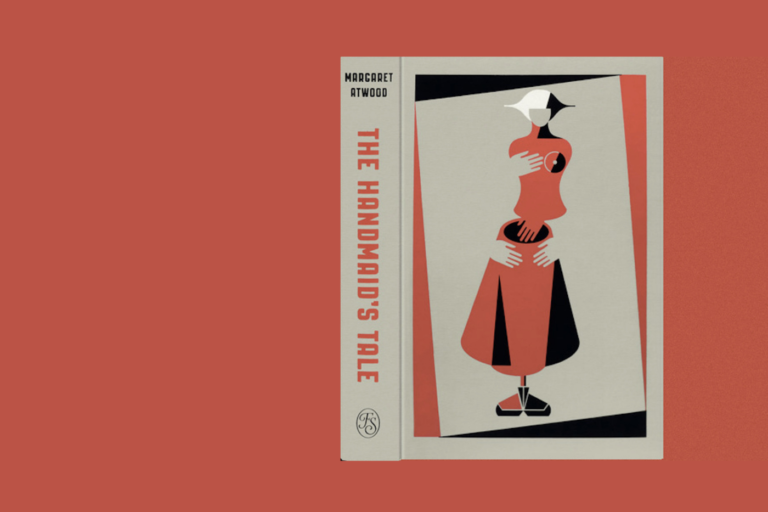
The Handmaid’s Tale is at best a thought-provoking literary work, and at worst a straw-man argument against traditionalism and conservative values. Atwood fails to deliver an intelligent critique of conservative Christian values, and her book does not reach the caliber of Orwell’s tales.
Members of Back Row America are rooted in a particular neighborhood or town that they do not want to abandon in pursuit of the American Dream. Or they are churchgoing Christians who find hope in their faith. But neither place nor faith is part of the mental geography of the Front Row.
Helena Rosenblatt’s The Lost History of Liberalism correctly identifies liberalism’s need for moral virtue, but does not draw the further conclusion that her book suggests: liberalism is failing because it has rejected orthodox Christianity.
One might expect a book by Ben Shapiro to be about the task of “owning the libs” or “drinking liberal tears.” In fact, the reader comes away with a starkly different impression. In The Right Side of History, Shapiro argues that the cultural and political malaise of contemporary America is due to its being severed from its Judeo-Christian roots.
Wilfred McClay’s new textbook on American history outshines the competition, thanks to its balanced approach, its superb narrative style, and its reintroduction of topics and themes that have long since fallen from the pages of most classroom editions.