

















Once we recognize the insufficiency of liberal political theory, we should turn back to classical political philosophy, which offers us a deeper understanding of the American tradition and invaluable guidance in reforming our contemporary politics.
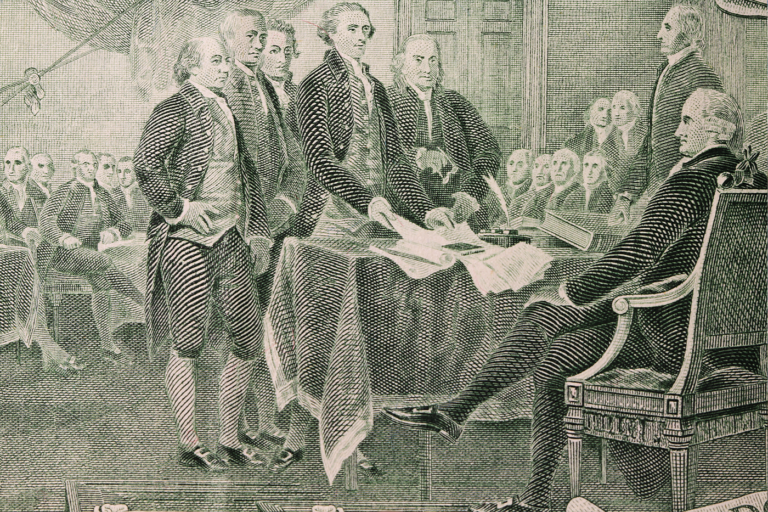
Conservative critics of “liberalism” are right to identify major flaws in liberal theory. But a deeper appreciation of those flaws should prevent us from blaming the American political tradition for them. Liberal theory is so erroneous that neither the Founders nor any other Americans could ever really put it into practice.
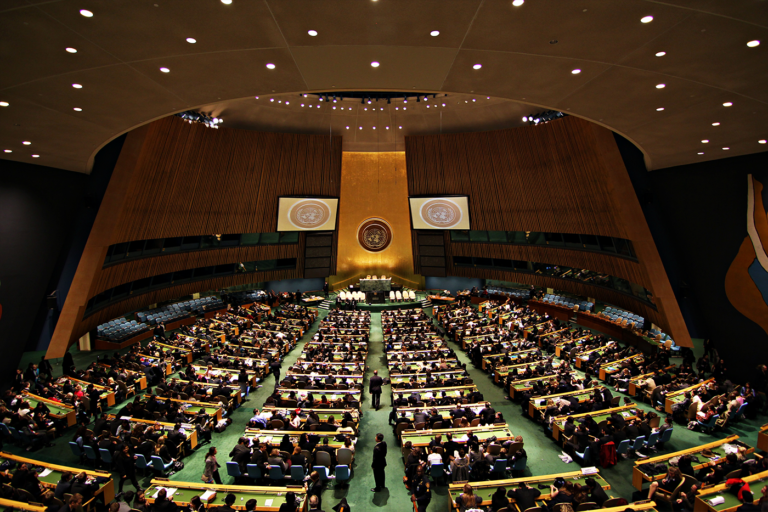
The first recommendation of the U.S. Commission on Unalienable Rights should be directed to the same State Department that houses it: Stop using the UN to advance sexual ideologies that have no basis in international human rights law.
Unless they acknowledge a divine transcendence, our universities, like our culture at large, are sentenced to pointless “debate,” full of sound and fury, no matter how free our speech is. The marketplace of ideas alone cannot save education.
Pope Francis’s theology of the people gives us a new ecclesial lens and paradigm through which to understand earthly politics. And the clerical abuse scandal, like the Church’s loss of temporal power, may well do Catholics a service in the long run, freeing us up to a better, more “ground-up” conception of how societies and their economies work.
The life of the murdered Sicilian judge Rosario Livatino serves as a testimony of honesty, moral righteousness, and charity. He serves as an example to many people around the world, especially to those involved in law and politics.
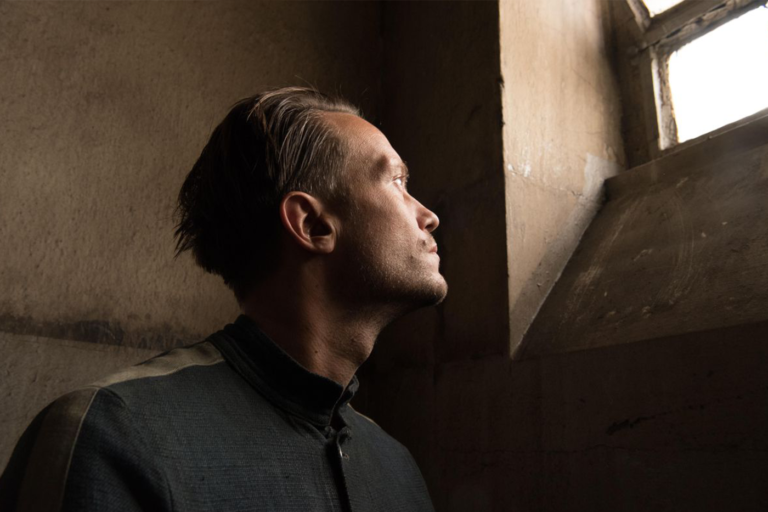
How does one film the work of the conscience, hidden as it is? How does one capture the internal struggle to speak when confronted by the demand for conformity? Terrence Malick successfully recreates this struggle for us in his latest film, A Hidden Life; and while his story focuses primarily on the struggle of one historical individual, the experiences Malick captures on film deepen our understanding of and sympathy for the precarious condition we all share.
Transgender performance of femaleness can only be a parody, because no amount of “bottom surgery” will make a male into the kind of human being who has the natural power to bear a child. The woman has the spontaneous, natural power to make space for the other, which embodies the spiritual reality to which all human beings are called.
Without a proper understanding of human beings that is grounded in natural law, human rights will always fall short of the lofty goals set by the Universal Declaration of Human Rights. If the U.S. Commission on Unalienable Rights is to help the U.S. protect human rights, it needs first to try to understand their nature.
Rather than teaching children to identify based on how well they fit prevailing cultural expectations on sex, we should be teaching them that the truth of their sexual identity is based on their bodies, and that sometimes cultural associations attached to the sexes are misguided or simply too narrow. There is a wonderfully rich array of ways of expressing one’s embodiment as male or female.
Mindful business leadership must connect mindfulness to the moral principles of the traditions in which it originated. It must also situate itself convincingly in relation to models of leadership, either assimilating into an existing model or offering a new one. And it ought to show how a mindful leader might concretely figure into a corporate governance structure in a way that is reasonably expected to advance the firm’s social responsibilities.
Were the criminal sentencing reforms that began in the 1970s too harsh? Rachel Barkow’s new book says they were. But most Americans would likely call these changes progress: our worst offenders now get something closer to what they should get than in the days when the experts were more in charge of punishment. Perhaps the real question is whether we should ground our criminal law more on justice as retribution.
The Church must exercise its authority over temporal matters in a way consistent with its spiritual mission, of which the exercise of temporal jurisdiction is a betrayal. The human person is drawn by nature to seek out and hold the truth whose fullness is revealed in God’s revelation in Christ, but this vision of human fulfillment implies a human subjectivity whose freedom must be respected as it seeks out the truth which fulfills it.
Patient freedom would not survive a single-payer federally controlled health care system. The right to life would not survive a single-payer health care system. The right of religious freedom and faithfully Catholic health care would not survive such a federally controlled single-payer system.
The case against compelled affirmation policies needs to be more explicitly and vividly sexualized. The argument against these policies must be rooted in the civil liberties of objecting students and the right not be forced to be the object of another’s sexual gaze. Opening intimate facilities to anyone of the opposite sex imposes psycho-sexual trauma on countless non-consenting youths, and constitutes a form of sexual exploitation.
We must resist the sense that gratitude has no place in this era of frequently justified outrage. In fact, gratitude may be exactly what can help us distinguish justified from unjustified outrage. And, in any case, gratitude is the proper disposition toward all the good we have been given that we have done so little to earn.
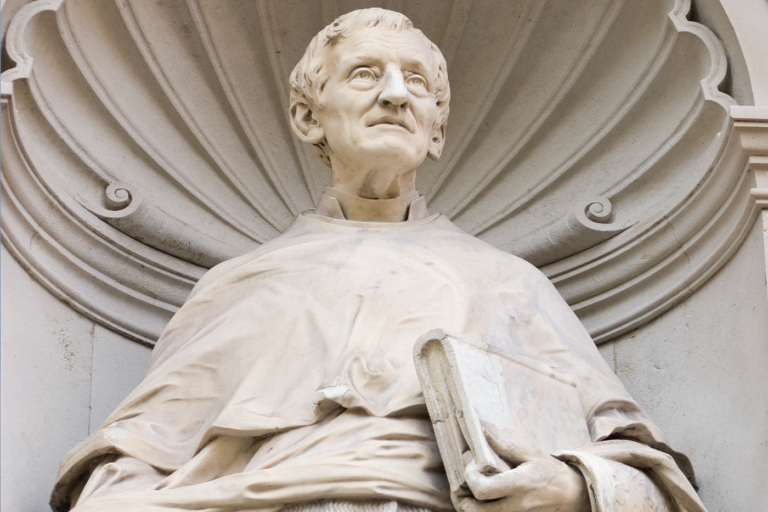
Faith and Reason, Saint John Henry Newman argues, are not opposed mental actions, but a similar intellectual act operating on different grounds. Faith reasons not from direct empirical evidence placed before us, nor from principles that the intellect has grasped on its own, but from grounds of trust or probability based on inclinations and dispositions of the heart.
The self-sacrificing love of friends has a religious origin, even if it has secular expressions. Precisely by putting us in touch with the sacred, with a perception of reality that transcends our day-to-day existence, such values give human life its meaning and make our “secular” civilization possible. Attempts to censor expressions of these values show how difficult it can be to disentangle their religious and secular uses.
Debates over judicial review and constitutional interpretation only stand to benefit from deeper reflection on the type of political community the Constitution established. The Political Constitution invites us to take the word republic, and its vision of self-government, seriously.
Growing up in the culture of sociology taught me—and others of my generation—to engage in a set of behaviors to ensure that we would “always be wanted.” Although the term “wantedness” was a quality originally assigned to births, the concept began to touch all aspects of children’s lives, teaching us to engage in a dangerous—sometimes deadly—dance of perfectionism.
The Hippocratic Oath rightly prohibits doctors from giving deadly drugs, even if autonomous patients ask for them. By assisting in the suicide of a terminally ill patient who wants to determine the manner of his death, the physician inappropriately medicalizes mortality itself. He also jeopardizes the welfare of other vulnerable patients.
War has the complexity of most of the human condition—so complex, indeed, that it often behaves like a force of nature, but with a human face. And that renders the question of determining the justice of a war a little like determining the justice of a tornado.
As a transgender woman, the most loving and compassionate help offered to me came from people who pointed me toward Jesus. Affirming false cross-gender identities is not love; helping someone reclaiming their true identity in Christ is.
Given the risks of assisted reproductive technologies and gene-editing technologies for both individuals and society as a whole, a hands-off, libertarian approach to these issues is ethically irresponsible. Because these technologies imply a radical transformation in our understanding of the meaning of parenthood and our approach to the next generation, we must ask ourselves what sort of world these technologies are creating, and whether it is the sort of world that we want for our children and grandchildren.