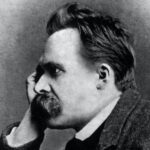
Patristics, theology, and right sense in public discourse lost a giant. On June 6 of this year, Robert Louis Wilken passed from this life at the age of eighty-nine. He leaves behind his beloved wife of sixty-six years, Carol, their family and loved ones, and many admirers who know him through his books.
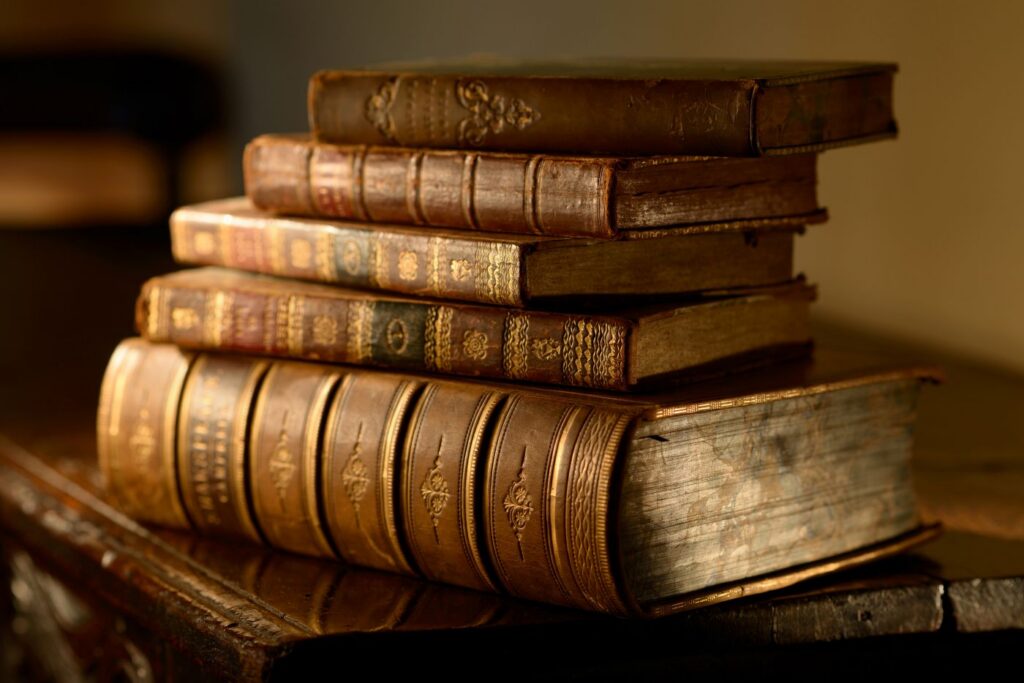
Before he was a prolific author, Robert was an avid reader. He loved books. In an act of great generosity, he emailed me on April 29, 2022: “The time has come to dispose of my library. Is it possible that the Dominican House of Studies would be interested?” My Pontifical Faculty at the House of Studies in Washington, DC was very glad to receive well over 1,500 books and other library materials from him. I told the librarians that if they saw underlining and marginalia inscribed in the books, they should realize that the books were made even more valuable. Those scribbles were the marks of Robert Wilken!
Robert’s life traces a fascinating intellectual and spiritual journey. Raised in a devout Lutheran family, he wanted at a young age to go into ministry. After attending a Lutheran prep school in Texas, Robert went to Concordia Seminary in St. Louis where he studied under his early mentor, Arthur Carl Piepkorn. Piepkorn himself had done doctoral studies at the University of Chicago, and Robert followed his example. Robert became not only a Lutheran pastor, but also a well-trained professor specializing in the Fathers of the Church. In 1994, in the little St. Thomas Chapel of the Dominican House of Studies in Washington, D.C., Robert entered into full communion with the Catholic Church. By doing so, he became one of the Catholic Church in America’s leading scholars.
Robert held a unique place in the academy. No other person served as president of these three societies: the North American Patristics Society (1985-86), the American Academy of Religion (1989), and the Academy of Catholic Theology (2012-13). He received many honors, including a Festschrift aptly titled In Dominico Eloquio—In Lordly Eloquence: Essays on Patristic Exegesis in Honor of Robert Louis Wilken (Eerdmans, 2002). He taught for about a quarter of a century at the University of Virginia, where he was the William R. Kenan Jr. Professor of the History of Christianity. There, while forming a generation of scholars, he led a group in founding the St. Anselm Institute for Catholic Thought. He also held positions at many other institutions through his fruitful life: Lutheran Theological Seminary in Gettysburg, Fordham University, the University of Notre Dame, Hebrew University in Jerusalem, and Providence College. After many decades of teaching, he retired to Washington, but for many more years continued to be active in writing and speaking. Robert served as the chairman of the board of the Institute on Religion and Public Life, founded by his dear friend Richard John Neuhaus in 1990, and contributed much to the flourishing of its journal, First Things.
Moving to Washington to begin teaching at the Dominican House of Studies in the summer of 2010, I invited Robert to be a guest lecturer for my Patrology course that fall semester. Robert knew that he had a captive audience of those in formation to be preachers. He began his lecture by asking, “Why is it that so many Catholic priests begin their homilies with a personal story? The Gospel was just read! Why don’t they focus our attention immediately on the Word of God?” Years later, when I wrote The Power of Patristic Preaching: The Word in Our Flesh, the first person that I wanted to endorse it was Robert. I emailed him with the manuscript and told him that I knew he was passionate about preaching. He gave his endorsement, words I will always treasure.
Start your day with Public Discourse
Sign up and get our daily essays sent straight to your inbox.Robert had a way with words—especially in his emphasis on the words of Scripture. Words matter. God has spoken to us. Can we listen? When Robert gave the Commencement Address at the Dominican House of Studies in 2014, he said:
The words of Scripture touch us more deeply than other words, even the words of a great poet. Perhaps you recall the way St. Augustine begins Book Twelve of the Confessions. “In my needy life, Lord, my heart is much exercised under the impact made by the words of your holy Scripture.”
The more I read the Scriptures, the more I have understood the profound truth of what Augustine says. It is the words of the Scripture that stir the mind, enflame the heart, and move the will. The words of the Bible, more than ideas, sometimes even more than stories, sink deeply into our soul.
Robert then continued to focus on the words “steward” and “faithful” from the Apostle Paul in 1 Corinthians 4:1-2. By doing so, he gave a lesson by demonstration of faithful stewardship of what had been entrusted to him. Robert knew that these sacred words were for the lives of early Christians, outstanding in faith and teaching, and for our lives.
Considering the Fathers of the Church, Robert once wrote, “Augustine surpasses measurement. More than any other Christan author in the early centuries, he is a world.” Possidius, one of Augustine’s closest episcopal friends, wrote his Life. In closing that captivating remembrance, Possidius commented that Augustine would always be found alive in his books. Possidius believed in the resurrection of the dead and life everlasting, of course. But he wanted people to appreciate Augustine in the best way that they could. Possidius had the advantage not only of seeing him preach many times, but of living with him in Hippo. Yet if you did not have that personal experience, so Possidius reasoned, you could still take consolation in reading the books that he left. Possidius even created the handy Indiculum, which lists Augustine’s writings. Robert found Augustine alive in his books, and we can find Robert alive in his books.
Robert’s Judaism and the Early Christian Mind: A Study of Cyril of Alexandria’s Exegesis and Theology marks a watershed in patristic scholarship. While Cyril was known as a dogmatic controversialist in the Nestorian controversy, Robert underscored that Cyril wrote as a scriptural exegete. Robert’s interest in showing early Christian relations with Judaism, in their various complexities, came not only in that monograph, but also in many other studies, such as John Chrysostom and the Jews: Rhetoric and Reality in the Late 4th Century and The Land Called Holy: Palestine in Christian History and Thought. Robert gave thought-provoking attention to freedom to worship in his later books, the Père Marquette Lecture The Christian Roots of Religious Freedom and Liberty in the Things of God: The Christian Origins of Religious Freedom. In one of his early books, he recalled that his wife, Carol, reminded him that “there are things in life more important than writing books.” Indeed. Books help form lives; they are not life itself. Yet Robert’s books have assisted and will continue to assist the lives of many readers. Because of their wise and eloquent appeal to wide audiences, I want to focus on recommending two of Robert’s books that have influenced my life.
The first is The Spirit of Early Christian Thought: Seeking the Face of God. Robert set out to write a sequel to his The Christians as the Romans Saw Them. By focusing on the Romans in the earlier book, Robert featured critics such as the Greek philosopher Celsus and the Emperor Julian, and he originally intended to write a book about the Christian response to such critics. But Robert turned from an apologetic stance to capturing what most mattered to early Christians—seeking the face of God. He let readers hear Origen, Gregory of Nyssa, Augustine, Maximus the Confessor, and other early Christian voices speak about their faith in Jesus Christ, crucified and risen from the dead, their hope by the Holy Spirit in everlasting life, and their love for God and neighbor. Another Dominican friar recommended The Spirit of Early Christian Thought to me in 2003, and I soon read it. One year ordained a priest, I was sent in 2003 to teach in Nairobi, Kenya, where I guided my students from different parts of Africa in theology, such as to learn from the Fathers of the Church with help from Robert.
The second book that I most recommend is The First Thousand Years: A Global History of Christianity. With Gillian Clark, Warren Smith, and Kavin Rowe, I was invited to contribute to a symposium on the book in the journal Nova et Vetera (Fall 2015). I titled my review essay “The Undivided Church: Myth and History.” Robert’s history is much better than the myths that surround early Christian unity. He begins Chapter 4, “Divisions Within,” in this way:
It is tempting to romanticize the early Church and imagine a golden age of peace and harmony. In truth there was never a time, even in the first decades, that Christianity had no differences. Because Christian faith holds that certain things are true (there is one God, creator of all that exists), controversy over what is to be believed as well as how the faith was to be practiced was present from the beginning.
The book is a page turner. In thirty-six brief chapters, Robert tells the stories of the first millennium and emphasizes in succinct expressions not only what Christianity was, but what Christianity is: “a culture-forming religion,” “transcultural and migratory,” “inescapably social,” “a form of wisdom,” “an affair of things,” and “an eastern religion.” By returning to the first thousand years, we who are beginning the third Christian millennium can have a better sense of the universality of this religion.
I praise God for Robert Louis Wilken, not only for the books that he authored and for the many hundreds of books that he donated to my school’s library, but for the witness of his life. May he now see the face of God he sought.