









Search Results For:

Search Results for: founders

The Founders feared tyrannies, especially majority tyrannies. We remain free not because of the Bill of Rights, but because of the dynamic checks and balances in our national and state constitutions. 
It’s an error for conservatives to see the American Founding’s emphasis on natural rights as necessarily fostering extreme individualism in contemporary America. Eighteenth-century Americans would have viewed the notion that rights could be exercised contrary to natural law as ridiculous.
The political theory of the American founding is not quite the “cure for what ails us,” but, as Thomas G. West’s books demonstrate, it can serve as a kind of preventive medicine against the psychological sickness of radical individualism.
Leslie Rubin’s brilliant study argues that the fault, dear America, lies not in our stars but in ourselves—our repudiation in the past century of the moderate liberal philosophy of Federalists and Anti-Federalists alike, which was steeped in Aristotelian wisdom about favoring the decent republican virtues of a middle class.
The pardon power is the most significant and strongest power of the president, and the Constitution places almost no limits on it. In using it, the president can unilaterally nullify the legitimate authority of the legislative and judicial branches.
If there is one truth that the entire philosophic tradition—including America’s Founders—may be said to embrace, in spite of all its disagreements, it is this: reason teaches that it is unreasonable to expect people to act by reason alone.
Our nation was founded on biblical principles as a haven for devoutly religious dissidents. We forget our Judeo-Christian origins and the founders’ commitment to freedom of religion at our peril.
It is often alleged that the American founders lacked a unified and coherent political theory. To the contrary, a recent book by Thomas West shows that the founders broadly agreed on a philosophy of natural rights, calling for both the protection of liberty and the promotion of virtue.
The plan of our nation’s capital and the architecture of its core buildings and monuments must carry on the classical vision the Founders intended as the physical manifestation of America’s form of government and political ideals.
Judicial supremacy is inimical to the separation of powers, to republicanism, and even to constitutionalism and the rule of law. The upcoming confirmation hearings for Sonia Sotomayor should force citizens to reconsider the place of the Court in our political life. The first in a two-part series.
The Hebrew Bible offers a “political realism” that may assist both religions, and hence Western civilization, to survive. 
America’s constitutional tradition recognizes parents as primary educators. To honor this, policymakers must safeguard private school autonomy and ensure funding follows students to their families’ chosen learning environment.
For years, perhaps the most serious threat to religious organizations’ freedom to live according to their faith has been the ever-growing specter of nondiscrimination laws. The Ninth Circuit’s decision here offers perhaps the strongest opportunity we have seen yet to affirm the constitutional right of religious organizations to hire according to their faith. 
We cannot expect to preserve a liberal democracy until each generation learns to embrace its civic responsibilities.
The legalization of sports betting, especially at the college level, is a corruption not only of athletics and of education but of American society in general.
My oath, with God as witness, to uphold the rule of law must matter more than the judgment of any peer or historian.
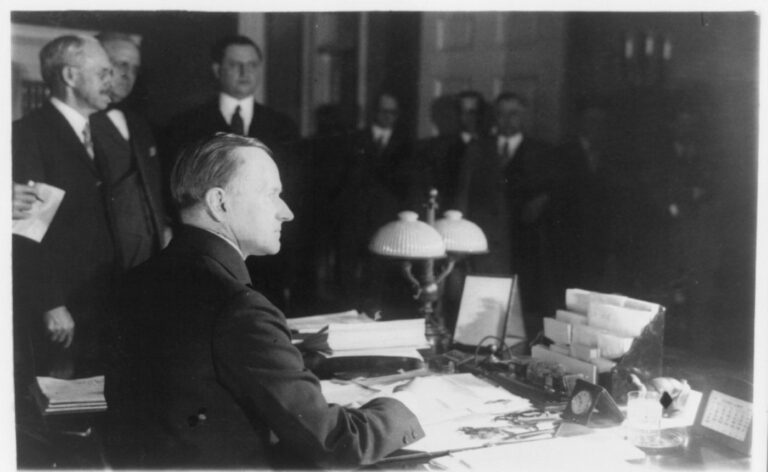
Henry Ford sought to mainstream anti-Jewish sentiment in the United States. In a 1925 address, Coolidge decisively broke with Ford’s movement. 
You need people to have the tenacity, the wonder, and the willingness to say, “I can do some things better than what is currently being done in the marketplace.” And that’s the nature of entrepreneurship.
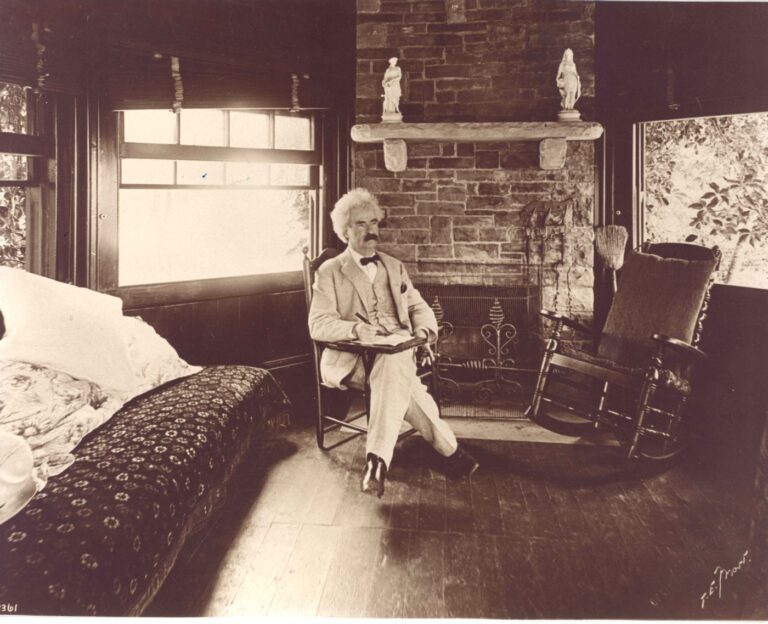
Chernow’s biography denies us the gift that Mark Twain would so generously bestow on his fellow Americans. For her 250th birthday, America deserves better. 
Death must never be reduced to content. To promote the general welfare in our age means to place the soul of the nation above the gatekeepers of the algorithm.  
I have been strongly drawn to pick up several recent books of history and historiography that tackle anachronisms and reifications, because such clarifying works can keep us from making facile conclusions about the past—and about its effect on the present.
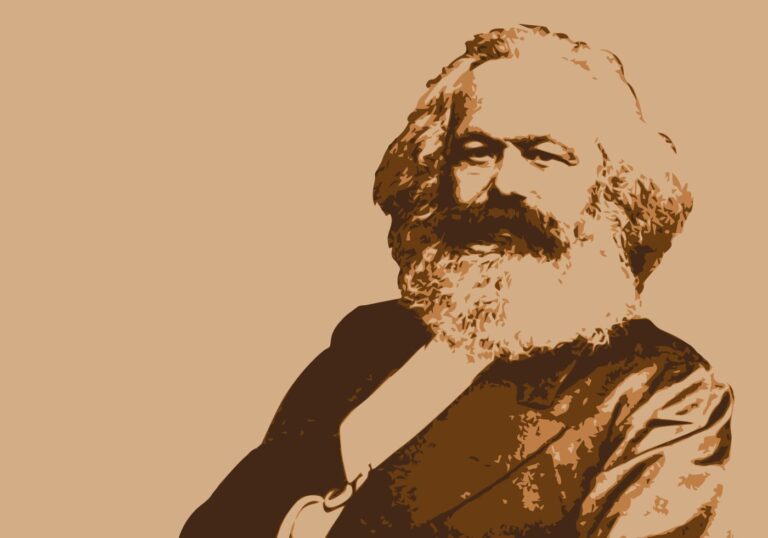
Carl Trueman has delivered an invaluable explanation of Marxist critical theory, and of why it resonates with so many in our troubled times. 
As parents, may we each choose what is real, no matter the cost, that we may come to know real love and pour it out for our children.
Teachers are doing the best that they can. At the same time, I want to be clear that the conflict thesis is about as out of step with our current historical knowledge as scientific creationism is with contemporary biology. Continuing to teach its myths as fact is educational malpractice.