More and more, the proper celebration of our national holidays requires a deliberate effort. These holidays—as befits holy days—began with a serious and lofty purpose: to call to mind, to celebrate, and to transmit some precious aspect of our national identity. Over time, however, these holidays are trivialized, treated as occasions for pleasures that, though certainly innocent, are not lofty or dignified. The Fourth of July is about watching fireworks. Memorial Day is a day off from work on which to grill burgers and hot dogs. Thanksgiving is a day for a big meal with the family. Perhaps this tendency to trivialize the serious is natural. It is generally hard for humans to maintain any serious purpose—and especially hard for humans who have been as pampered by luxury and comfort as Americans have been.
But the triumph of such trivialization is not inevitable. We have the records of the origins of our holidays, and so we have what we need to recall their serious meaning. This deliberate effort at recollection, moreover, is undoubtedly the duty of the good citizen. Our regime has been a blessing to our people. We therefore have a duty to preserve and to transmit it to the next generation. This cannot be accomplished, however, without a real effort to recall the vital aspects of our way of life that are memorialized in our national holidays.
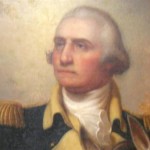
In the case of Thanksgiving, we can do no better than to turn to the nation’s first presidential proclamation of a day of Thanksgiving, authored by our first president and the greatest man among the great generation of Founders: George Washington. Here we encounter a vision of what America is and what America aspires to be that is both challenging and balanced, embracing all the goods that we should seek to preserve for ourselves and our posterity, and so just as relevant now as when it was first written.
Washington’s Thanksgiving Proclamation offers a useful corrective to some recent popular sources of confusion about America’s national identity. Many contemporary voices speak of America as a secular nation dedicated to the protection of individual rights. There is, of course, truth in this claim; but it is not the whole truth. Any dogmatic claim of the comprehensive truth of this account of our national identity cannot survive a reading of the first sentence of Washington’s proclamation.
Washington begins with the claim that “it is the duty of all nations to acknowledge the providence of Almighty God, to obey his will, to be grateful for his benefits, and humbly to implore his protection and favor.” Accordingly, and in keeping with the request of the Congress of the United States, Washington assigned Thursday the 26th of November as a day to be set aside for “public thanksgiving and prayer to be observed by acknowledging with grateful hearts the many signal favors of Almighty God.” America, it would seem, was not conceived by our Founders as a purely secular nation, godless in its public square.
Start your day with Public Discourse
Sign up and get our daily essays sent straight to your inbox.Washington’s Thanksgiving Proclamation, of course, has serious implications not only for our understanding of this holiday, but also for our understanding of the Constitution, our fundamental law, and especially the First Amendment and its rule that “Congress shall make no law respecting an establishment of religion.” Beginning in the middle of the twentieth century, the Supreme Court committed itself to a doctrine of “strict separation of church and state.” This doctrine was first announced in 1947 in Everson v. Board of Education. Although it worked no harm in that case, it was not long before the Court used the doctrine to strike down nondenominational prayer in public schools. Such practices, though not required of the students and therefore noncoercive, were, the Court held, a violation of the First Amendment’s Establishment Clause, which requires a “wall of separation between church and state,” which in turn requires American governments under the Constitution to maintain a strict neutrality between religion and irreligion.
This understanding, which the Supreme Court has never formally repudiated, continues to influence American thinking about the completely secular character of our regime to this day. To be sure, the Court had some impressive supports for its doctrine. The “wall of separation” phrase comes from Thomas Jefferson, and there is powerful evidence that James Madison, too, thought that American governments should take no “cognizance” of religion at all in their legislation. Nevertheless, the precedent set by Washington’s Thanksgiving Proclamation provides powerful counterevidence of the public understanding of the proper relationship between religion and government for the Founding generation.
Evidently, the majority of statesmen of that generation saw nothing improper in a Proclamation, like Washington’s, declaring a day of prayer and encouraging Americans to pray. Of course, this Thanksgiving Proclamation was issued before the First Amendment was ratified, so one could contend that it has no bearing at all on the question of what is included in the prohibition on an “establishment of religion.” Nevertheless, it is hardly credible that the same Congress that drafted the First Amendment would have launched the nation’s public life by requesting a presidential proclamation that it thought would be shortly prohibited by a newly minted constitutional provision. In addition, of course, the subsequent history of presidential Thanksgiving Proclamations further indicates the Founding-era consensus that such acts were not violations of the First Amendment, which in turn was not understood to establish a government that was authorized to act only in the service of secular or worldly interests.
We need not worry that the Founders’ willingness to use government for religious purposes is a threat to individual rights in general or to religious liberty in particular. This is evident from Washington’s Proclamation itself. Among the goods for which Washington asked his fellow Americans to give thanks, he listed “the civil and religious liberty with which we are blessed.” And this religious liberty is also acknowledged by the way the Proclamation is framed. Washington was careful to “recommend” the 26th day of November as a day of prayer and Thanksgiving. Evidently, Washington’s confidence that all nations have a duty to acknowledge God does not authorize governments to compel this duty. The Proclamation is an official act, but not an act of authority, much less of coercive power. The Proclamation thus embodies both the nation’s reverence for God and its respect for the individual right to religious liberty.
Related to the idea of America as a secular nation is the idea of America as a commercial nation—a nation of acquisitive individualists out to win the maximum possible degree of worldly wealth and comfort. Again, it would be foolish to deny that there is some considerable truth in this view of America. Indeed, the Proclamation itself lends some support to it, since Washington encourages Americans to give thanks for their experience of a “great degree of tranquility, union, and plenty.” In a similar vein, Washington calls his fellow citizens to give thanks for the “means of acquiring and diffusing useful knowledge” and to ask God to promote the “increase of science” in America. All of this supports the idea of America as a nation of worldly strivers, a pragmatic people intent on improving their material lot.
Once again, however, this is not the whole story. Washington’s Proclamation does not present such goods as the entirety of the goods that should concern human beings. The basic form of the Proclamation, after its introduction, is a call upon Americans to thank God for his blessings and to ask him for additional blessings. To that extent, then, the Proclamation serves as a roadmap to the kinds of goods that Washington and his fellow citizens thought necessary for a just and happy nation. Those goods, moreover, include not only material wealth and comfort, but also higher goods such as the peaceable establishment of self-government, the performance of our public and private “duties,” and the “knowledge and practice of true religion and virtue.” That material goods are not the sole or supreme aim of human life is emphasized by the Proclamation’s conclusion, which asks God to “grant unto all mankind such a degree of temporal prosperity as he alone knows to be best.”
Washington’s Proclamation can also serve as a useful guide in our recent perplexities about the nation itself and about nationalism. Some modern thinkers have regarded the nation as a purely artificial contrivance, devised and existing purely to promote the interests of individuals. In this view, the nation is not a natural community with a real hold on the hearts of human beings as something good in itself and worthy of our respect and service. Some have thought this debunking of the nation was morally necessary in view of the great evils caused by the hyper-romantic and aggressive forms of nationalism that appeared in the mid-twentieth century.
Washington’s Proclamation offers no support to such modern, allegedly enlightened views. On the contrary, Washington treats the nation as something fundamental and precious. The reality and importance of the nation in the moral order of things is suggested by its moral character, that it is capable of having moral duties, and indeed duties to the supreme reality, God himself. Moreover, the Proclamation surely presents the nation as a good when it urges Americans to thank God for the protection he gave to the American people when they were on their way to becoming a nation. In this view, the nation is the completed form of “peoplehood,” the telos of a people, the standing they have when they are able to rule and protect themselves and carry on a common way of life that is good in itself and worthy of preservation.
Nevertheless, while implicitly affirming the nation as a real good, the Proclamation lends no support to the kind of irrational fanaticism that elevates the nation to the status of the supreme good. Such an understanding is impossible in light of the Proclamation’s opening affirmation that all nations must acknowledge and worship God. God, not the nation, is presented as “great and glorious,” the “Almighty,” the source of all good that has been, is, or will be.
Washington also properly qualifies his American nationalism by reminding his fellow citizens that other nations than our own have a call on our concern and care. Thus Washington asks all Americans to ask God “to protect and guide all sovereigns and nations (especially such as have shown kindness unto us) and to bless them with good government, peace, and concord.” Similarly, Washington’s prayer for that degree of prosperity that God alone knows to be good is also made on behalf of “all Mankind.” We ought, Washington teaches us, to love and cherish our own nation but also seek the good of all other nations, to the extent that we can. Washington was not one for slogans, but it is likely that he would have regarded “America first” as an intelligible and defensible proposition. But he would also certainly have found “America only”—a slogan some have ventured in recent years—to be immoral, contemptible, and corrupting of our national character.
The Proclamation’s moderate nationalism—presenting the nation as good and venerable, under God—can also help us to free ourselves from a mistaken notion that has too much distorted our thinking: “American exceptionalism.” This idea has taken two forms, one more prominent and obvious than the other. The first form of American exceptionalism, expressed mostly on the political right in recent decades, treats America as the most righteous nation in the history of the world and as an unalloyed force for good in international affairs. This is a dangerous attitude, since it encourages us to think that we do not need to submit our foreign policy to any serious moral scrutiny. This is not a healthy posture for any nation, let alone one of great military and economic might. The other form of “American exceptionalism” can be found on the political left, with its perverse and totally groundless presentation of America as a uniquely bad nation, a pure system of oppression with a uniquely sinister and shameful history. This view is dangerous to the extent that it saps the will of Americans to defend their own nation and because of its revolutionary tendency to destroy support for institutions and principles that have in fact done much to improve the condition of those who have been so blessed as to live in America.
With simple dignity, Washington asks his fellow citizens to “beseech” God to “pardon our national and other transgressions.” This is as realistic and constructive an approach as anyone could ask for.
Washington’s Proclamation supports neither the cheerleading nor the self-lacerating form of American exceptionalism. With simple dignity, Washington asks his fellow citizens to “beseech” God to “pardon our national and other transgressions.” This is as realistic and constructive an approach as anyone could ask for. Our nation has sinned. Its sins are not unpardonable. Their remedy lies in prayer and in a renewed commitment to the pursuit of justice within the political framework we have been blessed to inherit.
We should revisit our nation’s first Thanksgiving Proclamation this year and every year because it offers a complete account of the national identity that we should wish to preserve, an account that transcends the needless dichotomies that have distorted our thinking so much in recent times. We have been told that we must choose between respect for God and respect for individual liberty, between prosperity and piety, between patriotism and love of mankind, between national pride and national repentance. We do not in fact have to make such choices. All of these things are good and all must be affirmed in proper measure, as the wise and good father of our country took pains to teach us.