Today, when we speak of “prudence” we often mean sheer pragmatism or simple cautious moderation. In reality, it is neither of these things. Prudence is making good decisions and implementing them effectively. In his book Politics for the Greatest Good, Clarke Forsythe, Senior Counsel at Americans United for Life, uses insights from philosophy and history to restore a rightful understanding of the virtue of prudence. In so doing, Forsythe offers powerful advice for current political activists—particularly those involved with the pro-life movement.
In the beginning of the book Forsythe discusses the philosophy of prudence. He describes the thoughts of a number of philosophers, including Aristotle, Augustine, and Aquinas, on prudential reasoning and prudential judgment. While the philosophical arguments are interesting, Forsythe’s main interest is trying to make a practical case for prudence. He does this through analyzing the history of two important political movements—the efforts by William Wilberforce to abolish the slave trade in Great Britain in the 1800s and efforts by President Lincoln to abolish slavery in the United States.
Specifically Forsythe chronicles Wilberforce’s career in public service and favorably comments not only upon his strategic decisions, but on Wilberforce’s charisma and winsome nature. He also describes the legislative steps Wilberforce advocated which ultimately led to the abolition of the slave trade in Great Britain. Wilberforce promoted three types of incremental legislation, bills that prohibited slave exports from specific parts of Africa, bills that prohibited the importation of slaves to specific foreign colonies, and bills that would require more humane treatment of slaves, such as those that reduced the number of slaves that could be carried per ship.
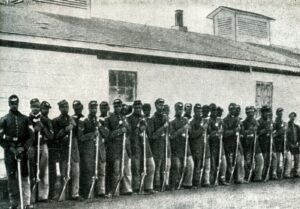
Forsythe also details how Lincoln used prudential judgment in nine of the most important decisions of his Presidency. These include the decision to use force to restore the Union, his 1861 decision to resupply Fort Sumter, and the timing of the Emancipation Proclamation. Throughout the book, Forsythe rightly notes that these incremental measures advocated by both Wilberforce and Lincoln were helpful in allowing both men to achieve their respective long term goals of ending the slave trade in Great Britain and abolishing slavery in the United States.
Forsythe then uses these historical examples to defend the strategy of incrementalism that has been pursued by a number of pro-life groups. Specifically, in the years following the Roe v. Wade decision, many in the pro-life movement realized that it would be politically impossible to enact a constitutional amendment that would ban abortion. As such, many pro-life groups pushed for incremental legislation that would either prevent abortion in certain circumstances or create obstacles that would abortions more difficult to obtain. Such legislation included bans on the public funding of abortion, parental involvement laws, and partial birth abortion bans.
Start your day with Public Discourse
Sign up and get our daily essays sent straight to your inbox.Those promoting this strategy of incrementalism have always argued that it will advance the long term goal of providing legal protection for all unborn children. However, this strategy of incrementalism has still been controversial. Some pro-lifers feel that the passage of incremental laws regulating abortion legitimizes the practice of abortion. Some also think that incremental legislation providers political cover for elected officials who want to court pro-life voters while still keeping abortion legal.
However, in his book Forsythe presents a robust defense of incrementalism. He argues that pro-life efforts to enact incremental laws have accomplished a number of worthwhile objectives. For instance, the debate over incremental laws has served, and continues to serve, an important educational purpose. For instance, the debate in the 1990s about banning partial birth abortion informed millions of Americans about the extreme nature of abortion policy in this country. Incremental laws have also kept the abortion issue alive politically. Most importantly, some incremental pro-life laws, such as parental involvement laws and public funding bans, have been effective at lowering abortion rates.
While Forsythe’s book contains important lessons for all civically engaged citizens, his main audience is clearly people involved with the pro-life movement. Since the Roe v. Wade decision, the pro-life movement has certainly had a tumultuous history. Early on, one could certainly argue that many decisions made by some pro-lifers lacked prudence. Most notably, the bitter fights during 1970s and early 1980s on the proper way to design a Human Life Amendment crippled pro-life progress and caused long-term damage to the pro-life movement.
In the years after the Roe v. Wade decision, many people who joined the pro-life movement had little previous involvement with either politics or policy. To a certain extent, some previous mistakes can be excused due to the lack of political experience of these newly minted pro-life activists. However, in the past 35 years, the pro-life movement has achieved a greater degree of experience, maturity, and sophistication. Good incremental progress has been made on a number of fronts.
In particular, the pro-life movement has made some impressive gains in public opinion with a number of surveys indicating that for the first time, more Americans are willing to describe themselves as “pro-life” rather than “pro-choice.” More importantly, these public opinion gains have been the largest among America’s youth. Planned Parenthood is receiving more scrutiny because of the recent GAO investigation and Lila Rose’s undercover investigative reporting. More states are enacting incremental pro-life laws. Most importantly the number of abortions is declining, between 1990 and 2005 the number of abortions performed in this country fell by 22 percent.
Despite this incremental progress, many pro-lifers are frustrated. Furthermore, while the divisions in the pro-life movement are less visible today than they were 30 years ago, they still exist. As such, imprudent strategies and proposals which hold the promise of big gains can often find a welcome audience, even when a substantial number of veteran pro-lifers express serious skepticism.
In his book, Forsythe diplomatically tries to engage those pro-lifers who are either hostile or skeptical toward an incremental strategy. He ably shows that many leading philosophers and theologians find nothing objectionable about incrementalism. Practically speaking, Forsythe also demonstrates that incremental gains helped bring about the end of both the slave trade in Great Britain and slavery in the United States.
Overall, the pro-life movement is neither blessed with abundant material resources nor substantial influence in elite circles. For this reason, unity is important, and pro-lifers should cooperate as often as they can. Furthermore, pro-lifers should always make an effort to be diplomatic to other pro-lifers pursuing strategies that some might find questionable. However, as we continue our efforts to restore legal protection to all unborn children, all pro-lifers would do well to heed Forsythe’s advice and pursue their work with prudence.