Witherspoon Institute
2026 Summer Seminars
Held in Princeton, NJ
For rising high school juniors and seniors, undergraduates, and graduate students.
Keep up with the conversation! Subscribe to Public Discourse today.
Book Reviews
By Joshua Katz
Life’s biggest questions are almost never resolved to everyone’s satisfaction, and if we don’t study the differences between the Epicureans and the Stoics, between Locke and Rousseau, and between legal originalists and non-originalists, we are missing out on our own music: sometimes a battle of the bands, sometimes cacophony, always fascinating.
The modern story of “argument” might seem troubling to many. Debate too often seems emotion-driven, and laden with fallacies and quarrelsome noise. By exploring the significance of argument for both individuals and society, Lee Siegel’s Why Argument Matters reminds us why to be human is to argue—and why that is something to celebrate.
In The Scandal of Holiness, Jessica Hooten Wilson suggests that we shift from passive, uncritical acceptance of cultural mores and entertainment to active formation in virtue, leading toward a life of sainthood. To do this, we need stories of sanctity that do not elide the messiness of everyday reality. These stories are neither saccharine accounts of cheap piety nor dry philosophical and moral theories.
In the postmodern world, orthodox religion suffers less for being thought demonstrably false than from claiming the authority of truth at all. This absence of consensus about truth is reflected in the variety of perspectives contained in a collection of essays by seventeen thoughtful Orthodox Jews. Since their reflections on the causes and conditions of belief apply to all religions, all believers are likely to find something instructive in this book.
By Edward Feser
What is most original in Koons’s book Is St. Thomas’s Aristotelian Philosophy of Nature Obsolete? is his argument that quantum mechanics is best interpreted as vindicating the Aristotelian hylomorphist’s view of nature. Koons is the first prominent philosopher to make the case at book-length, in a way that combines expertise in the relevant philosophical ideas and literature with serious and detailed engagement with the scientific concepts.
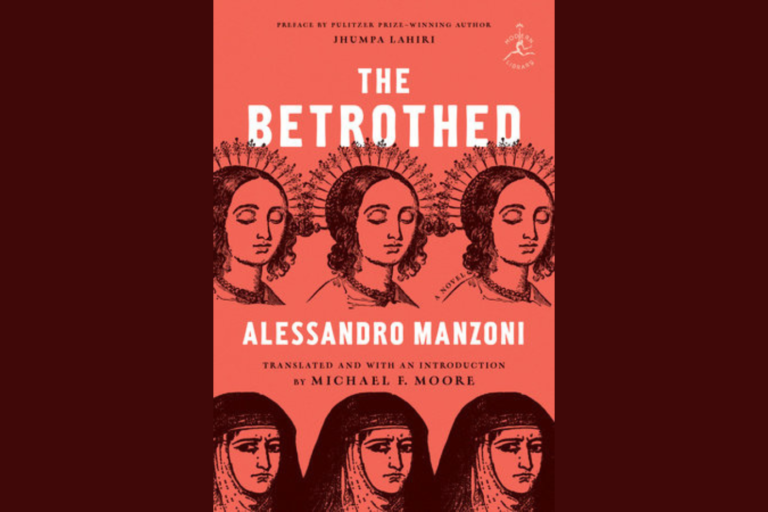
In Alessandro Manzoni’s recently translated novel, The Betrothed, the world is regularly pitted against the sanctity of a few. The novel often asks the reader, an implicit echo, how do you live as a faithful Christian when so much evil persists in the world? But more than anything, it shows us the reality of forgiveness and the possibility of fulfilling Jesus’s most challenging commandment: love your enemies.
By Glenn Moots
A call to repentance or prayer would not preclude action, but it would certainly force necessary and prudent reflection about the very problems Wolfe diagnoses and what the first response should be. Creating a deplorables basket of enemies on the political Left, while ignoring spiritual enemies, makes the project more political for sure, but not more Christian.
By Glenn Moots
Stephen Wolfe’s dedication to read, mark, learn, and inwardly digest two centuries of sources for a popular audience is impressive. However, if scholarly recovery alone were the aim of the book, it is doubtful that Wolfe would have written it, Canon would have published it, or American Protestants would buy it. Why not? Wolfe wants his admittedly idiosyncratic vision to improve the future, not simply engage academic specialists. That turns out to be a mixed blessing.
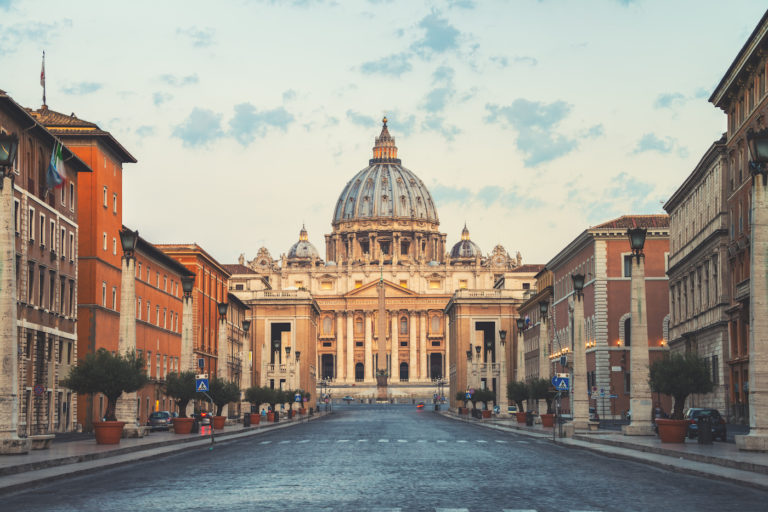
George Weigel’s book on the meaning and legacy of Vatican II is persuasive as a history of ideas, but in focusing on context and content it seems to miss the sense in which the Council is an unfolding event that calls Catholics to encounter Christ and walk away changed and challenged.